

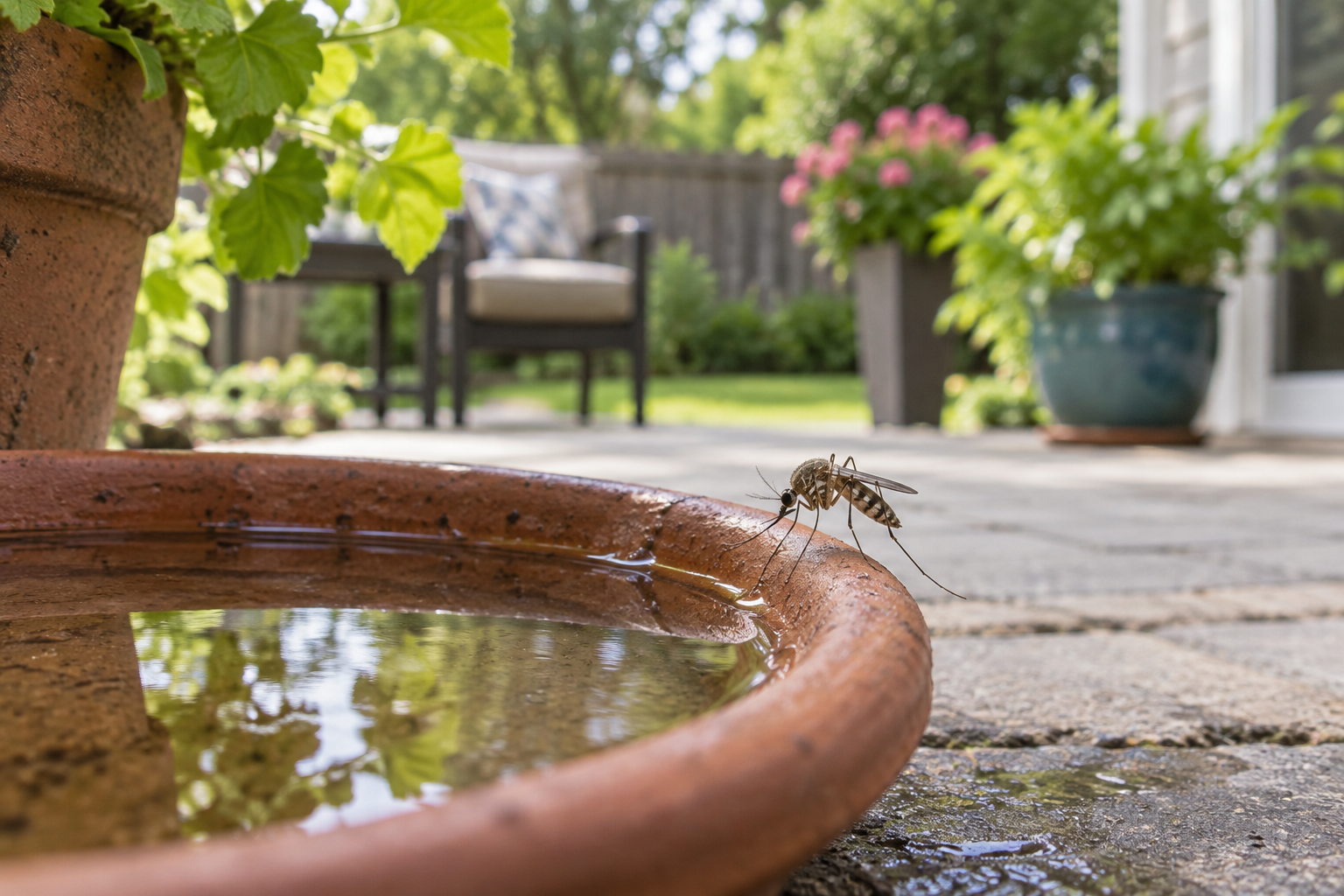
To get rid of mosquitoes around your home, start by removing the water where they develop. Remove standing water every week, repair damaged screens, and use a fan or registered repellent for temporary bite protection. Don’t begin by spraying the entire yard. Sprays cannot correct breeding water, and any pesticide must be labeled for mosquitoes and the exact place where you plan to use it.
Start with a standing-water inspection
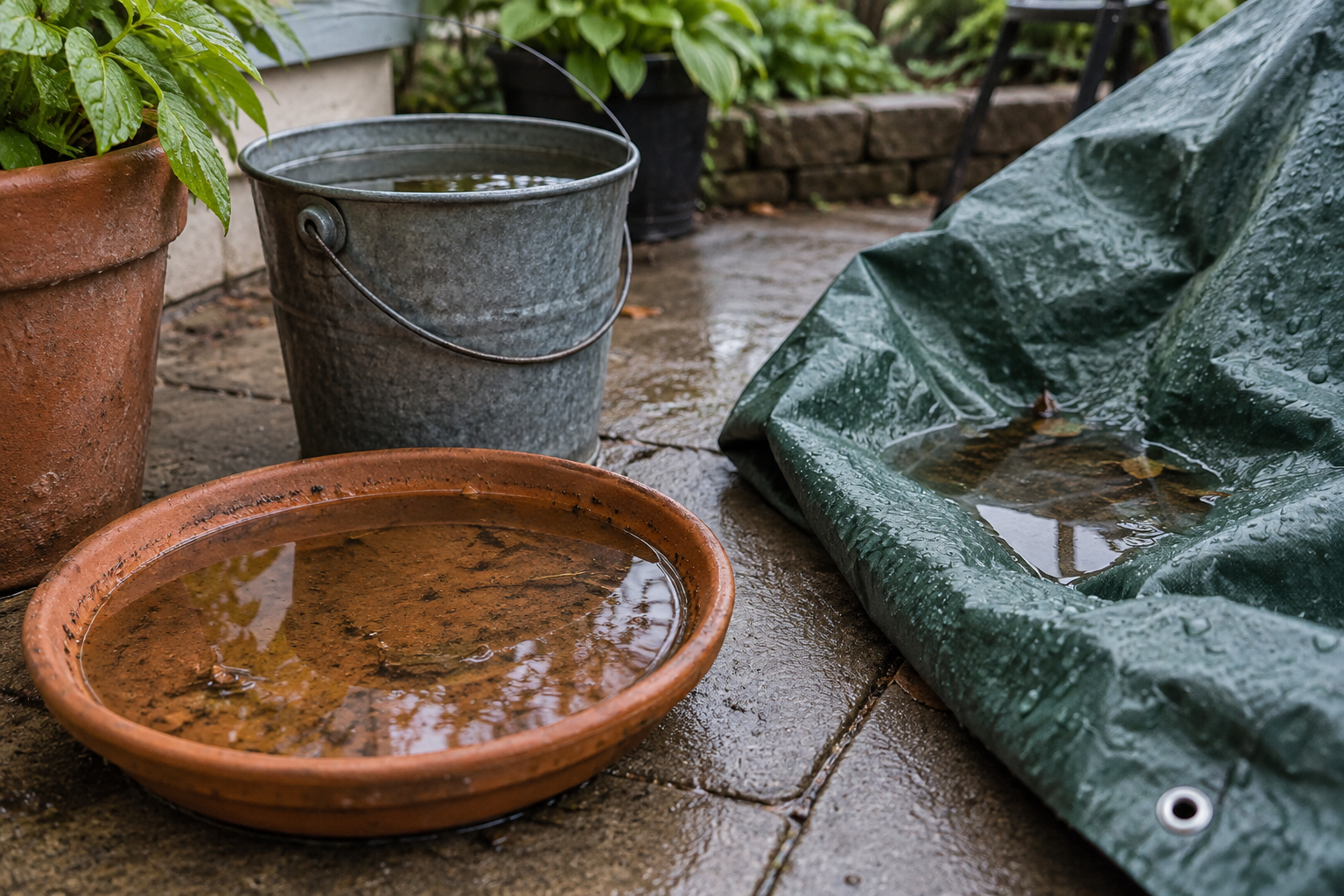
Walk around the property and look for anything holding even a small amount of water. Mosquito larvae develop in water, so eliminating these sites can prevent new adults from emerging nearby.
Check common and easily overlooked sources:
- Flowerpot saucers, buckets, watering cans, and wheelbarrows
- Toys, tarps, outdoor furniture, and folded covers
- Birdbaths and pet-water areas
- Trash cans, recycling containers, and loose lids
- Rain barrels and other stored-water containers
- Clogged gutters and poorly draining downspout areas
- Pool covers and neglected water features
- Irrigation leaks or low spots that repeatedly collect water
Empty and scrub containers rather than merely pouring out the water. Mosquito eggs can remain attached to the inside surfaces after the water is gone. Turn containers upside down, store them under cover, or discard items you no longer need.
Replace birdbath water and clean the basin regularly. Maintain swimming pools through normal pool-care practices, and prevent covers from collecting stagnant water. Keep rain barrels and similar containers tightly covered or screened so adult mosquitoes cannot enter.
Repeat this inspection every week and after rain. New water can quickly collect in forgotten objects. The CDC home-control guidance explains the weekly routine and indoor exclusion steps.
Confirm that mosquitoes are the problem
Finding moving, wriggling larvae in standing water is useful evidence of a local breeding source. Adult mosquitoes are slender flies with long legs, narrow wings, and an extended mouthpart.
Bites, buzzing, or an unclear insect photo cannot confirm mosquitoes by themselves. Small flies around drains, windows, or houseplants may be a different pest. If identification remains uncertain, ask a local extension office, mosquito-control program, or pest professional for help before selecting an insecticide.
Get rid of mosquitoes indoors
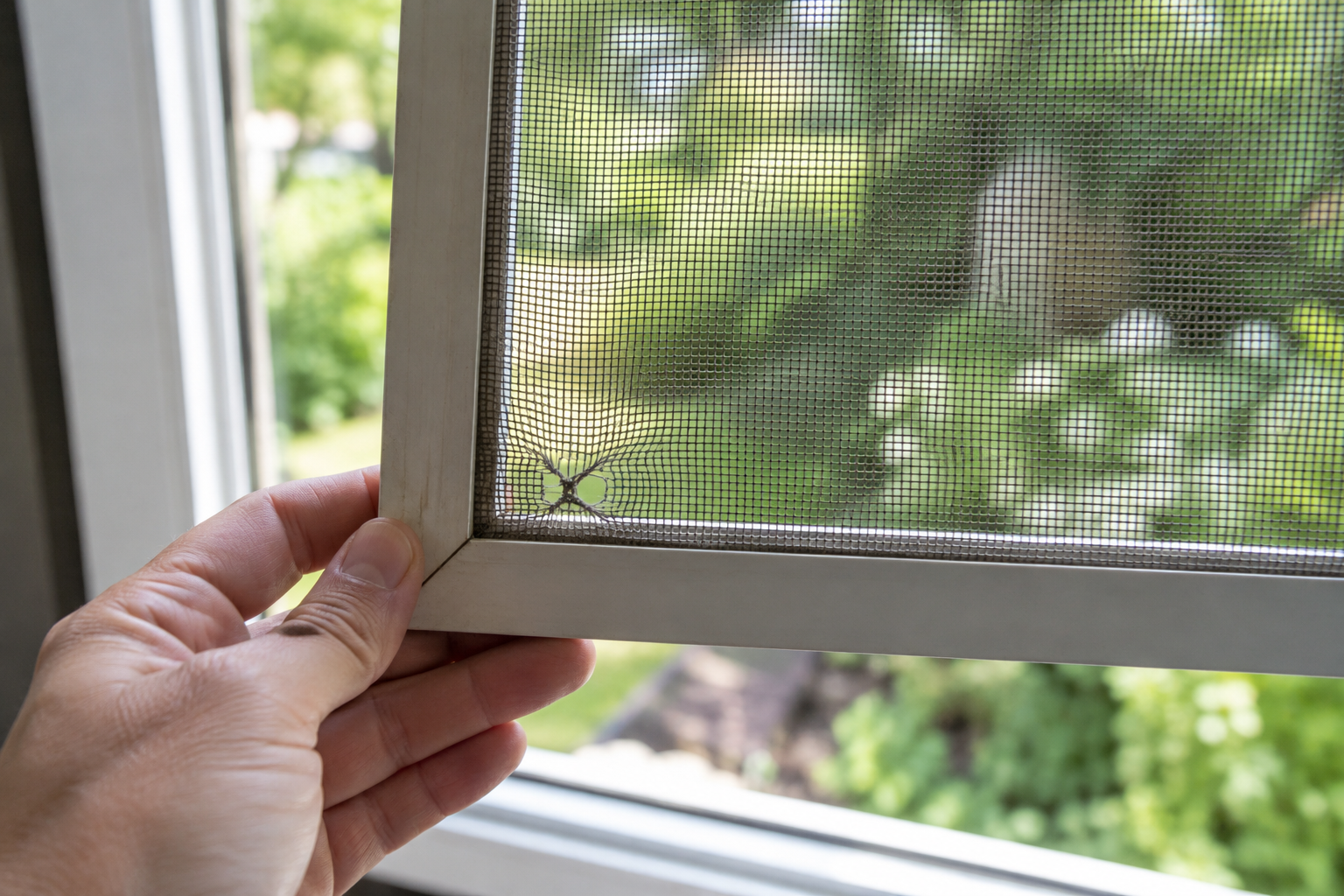
Block entry before treating indoor rooms. Repair holes in window and door screens, close gaps around screen frames, and avoid leaving exterior or garage doors open.
Check vases, plant saucers, and other indoor containers for water. If adult mosquitoes remain, inspect dark, humid areas where they may rest, including laundry rooms, closets, under sinks, and behind furniture.
An indoor insecticide may temporarily reduce adults, but it won’t resolve an open entry point or breeding source. Use only a product labeled for indoor mosquito control. Follow all directions concerning people, pets, food, fish tanks, ventilation, and re-entry.
Handle water that cannot be emptied
Consider a larvicide only when water cannot reasonably be drained, covered, or corrected. Larvicides target immature mosquitoes before they become flying adults.
Some residential products contain Bti, a bacterium used to control mosquito larvae. However, that doesn’t mean every Bti product belongs in every pond, barrel, drain, pet bowl, or water supply. The current label must specifically permit the product’s use for mosquitoes in that type of water and setting. EPA guidance on Bti explains why permitted uses differ between products.
Never add oil, bleach, soap, or a homemade pesticide mixture to standing water. Don’t treat storm drains, septic systems, public land, or other areas you don’t control.
Reduce bites while source control takes effect
Place an outdoor fan so air moves across a porch or seating area. Mosquitoes have difficulty flying in moving air, although a fan protects only the immediate occupied space. University of Minnesota Extension recommends moving air for seating areas.
For personal protection in the United States, use an EPA-registered skin-applied repellent and follow its complete label. Pay attention to directions for children, clothing, exposed skin, and reapplication. Repellent reduces contact with mosquitoes; it doesn’t eliminate the source. Outside the United States, choose a repellent approved by your local regulator. See the CDC bite-prevention guidance for personal protection.
Use outdoor sprays only as a secondary measure
An outdoor adulticide can reduce adult mosquitoes in labeled resting areas, but its effect may be temporary. Rain, untreated hiding places, and mosquitoes arriving from nearby land can limit the result.
Choose only a product labeled for adult mosquitoes and the intended outdoor location. Keep people, pets, toys, food, flowering plants, pollinators, ponds, and other sensitive areas protected as the label directs. Never apply extra product, combine pesticides, or treat more often than permitted.
Skip ultrasonic devices and bug zappers as primary controls. They don’t replace water removal, screens, repellents, or carefully selected treatments. Decorative plants and unverified homemade remedies are also unlikely to control mosquitoes across a yard.
Monitor results and know when to seek help
Continue inspecting weekly, even after activity falls. Mosquitoes can arrive from neighboring properties, roadside drains, wetlands, or other places beyond your control.
Professional or local mosquito-control help may be appropriate when:
- Activity remains high after repeated water removal and screen repairs.
- The suspected source is an inaccessible gutter, catch basin, septic opening, abandoned pool, or drainage system.
- Mosquitoes keep appearing indoors despite intact screens and closed doors.
- Treatment would be near ponds, pollinator habitat, food gardens, or play areas.
- The problem extends across several properties.
- You cannot confidently identify the insect.
Renters should report damaged building screens, neglected pools, drainage defects, and inaccessible common-area water to the property manager. Don’t climb onto roofs, enter septic systems, or apply pesticides to drains or property you don’t control.
Mosquito control is separate from medical care. Seek urgent medical help for breathing difficulty, facial or throat swelling, faintness, or another severe reaction after a bite. Discuss illness following mosquito exposure with a qualified healthcare professional.
Start with the containers nearest the door or seating area where you notice mosquitoes. Note what you empty or repair, then revisit those same spots during your next weekly check.
