

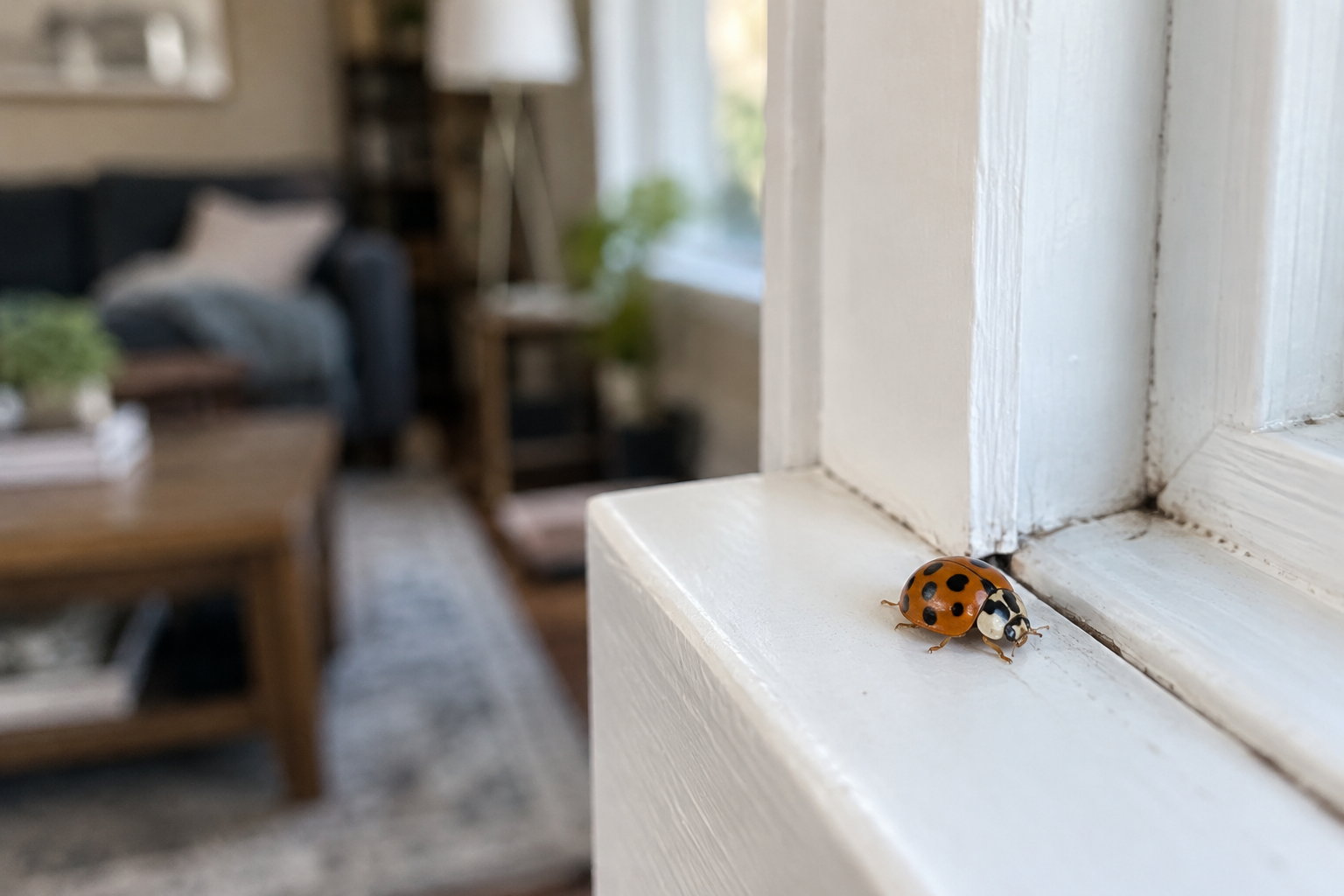
To get rid of Asian lady beetles in your house, vacuum visible insects without crushing them. Then find and seal the gaps where they’re emerging. Indoor sprays and bug bombs rarely solve the underlying problem because more beetles may remain hidden inside walls, attics, or exterior siding.
Make Sure They’re Asian Lady Beetles
Asian ladybugs and multicolored Asian lady beetles are the same insect, a species of ladybug. “Asian beetles” is less precise. Penn State Extension explains these common names.
Look for several clues rather than relying on color or spot count:
- A rounded, dome-shaped body about 1/4 to 1/3 inch long
- Yellow-orange, orange, red, or occasionally dark wing covers
- Anywhere from no black spots to many spots
- A pale area behind the head, often with a dark M- or W-like marking
- Groups gathering near sunny walls, windows, ceilings, attics, or trim
- Indoor activity during fall, winter, or early spring, especially on warm days
Use several clues together. Ask an extension office or pest professional for identification help before choosing a pesticide.
Asian lady beetles usually enter buildings for protected winter shelter. They generally aren’t breeding indoors, eating the structure, or indicating that the house is dirty.
Remove Asian Lady Beetles With a Vacuum
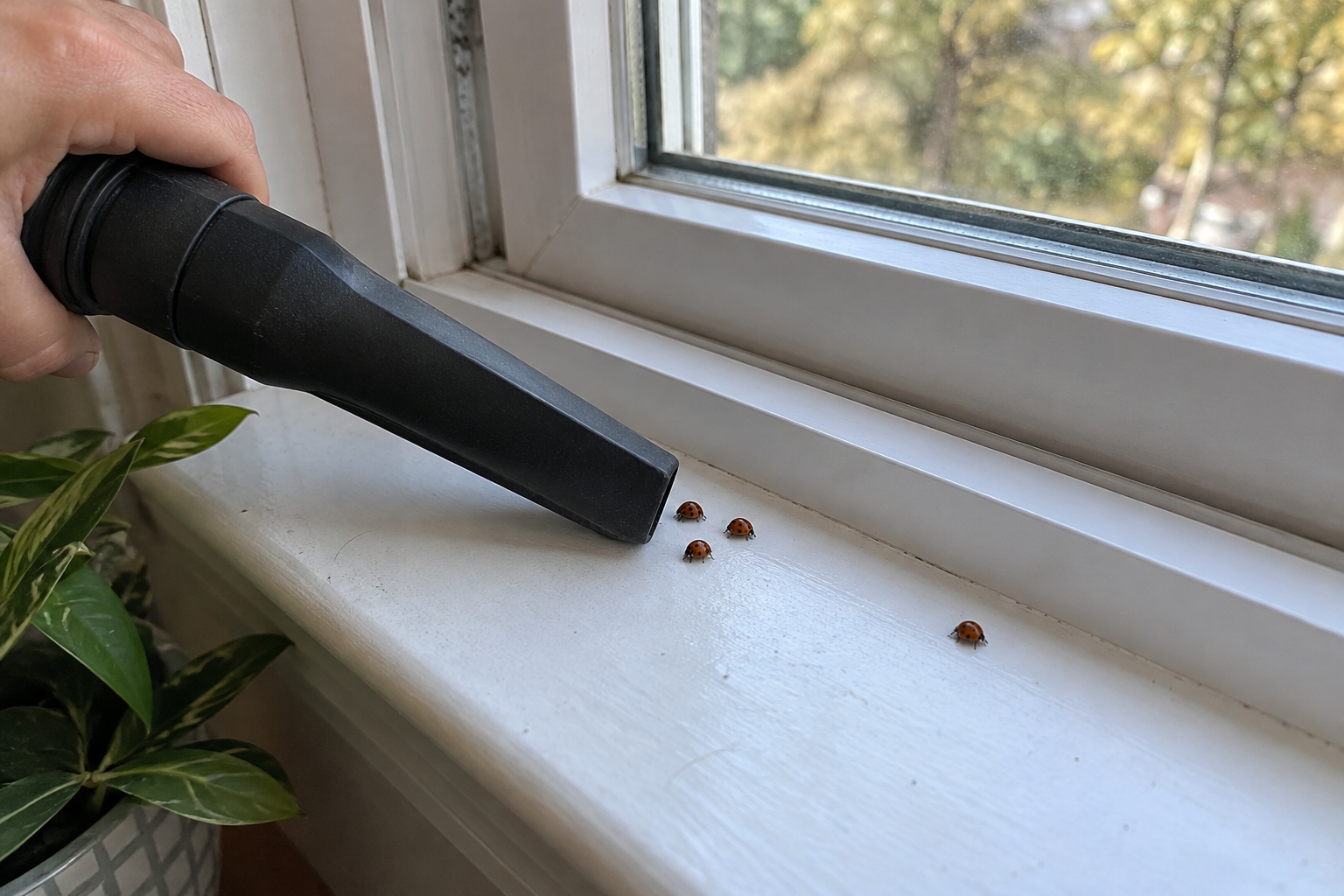
Use a vacuum hose to collect beetles from window sills, walls, curtains, and other reachable surfaces. Move slowly to avoid scattering them.
Empty the canister or remove the bag promptly outdoors, and contain the beetles in a closed disposal bag. Vacuuming may not kill them. If exposure triggers a known allergy, have someone else handle removal.
Avoid crushing or swatting the beetles. When disturbed, they can release a yellow-orange defensive fluid that smells unpleasant and may stain paint, fabric, or upholstery.
More may emerge from concealed winter shelter after cleanup. Their reappearance doesn’t mean they are breeding indoors. University of Minnesota Extension explains this overwintering behavior.
Find Where the Beetles Are Emerging
Inspect the room where beetles repeatedly appear. Concentrate on small gaps connecting the living space to walls, ceilings, or the attic.
Check around:
- Window and door trim
- Baseboards and molding
- Attic access panels
- Ceiling fixtures and exhaust fans
- Pipe and cable openings
- Cracks where walls and ceilings meet
Seal reachable, nonessential cracks with a material suited to the surface.
Don’t dismantle electrical fixtures, open walls, or seal functional vents to reach beetles. Avoid any repair that requires roof access or unsafe ladder work.
Prevent Asian Lady Beetles From Entering Again
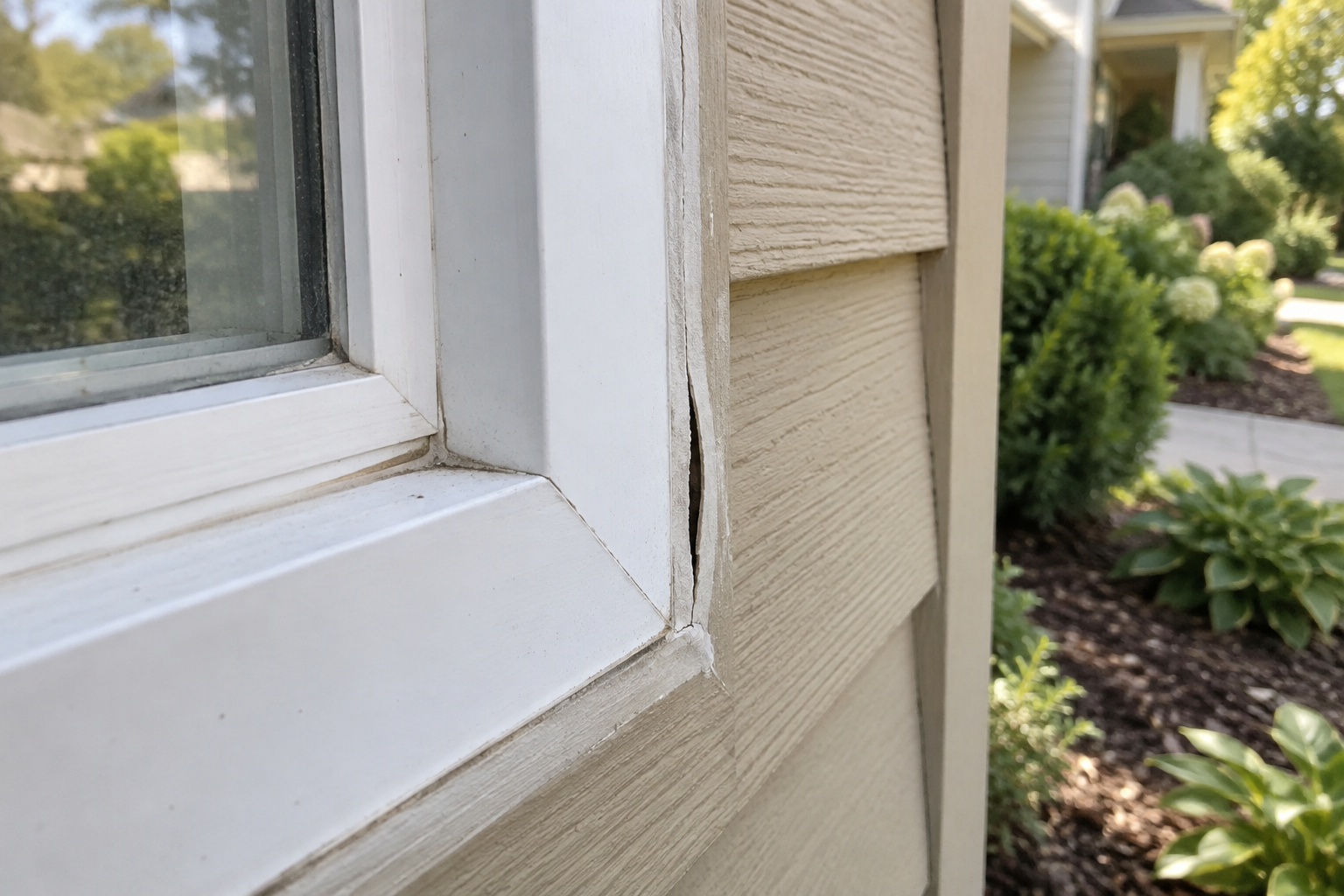
Repair exterior entry points before the local fall gathering period. University of Kentucky guidance emphasizes sealing openings to prevent entry.
Prioritize gaps around windows, doors, siding, utility lines, garage doors, and roof edges. Replace damaged screens and weatherstripping, and repair loose thresholds or door sweeps.
Use suitable screening over openings that must remain ventilated. Never block a combustion vent, drainage opening, or other working building component without confirming the correct repair method.
If you rent, photograph recurring beetles and suspected exterior entry points. Send the documentation to your landlord or property manager when the needed repairs are outside your control.
Skip Bug Bombs and Routine Indoor Spraying
Bug bombs, broad indoor spraying, and spraying cracks where beetles emerge aren’t reliable long-term solutions. They don’t close exterior openings or necessarily reach insects hidden throughout the structure.
Don’t treat attics or wall cavities as a general DIY project. Hidden dead beetles may attract scavenging insects.
For heavy, recurring invasions, ask a licensed professional whether a preventive exterior treatment is appropriate. Timing matters: it must happen before beetles enter.
In the United States, any pesticide must be EPA-registered and labeled for the pest and location. Elsewhere, check local approval. Follow the complete label, including precautions for people, pets, and the environment. Never use an outdoor-only product indoors.
When to Get Professional Help
Contact a qualified pest professional or building specialist when hundreds of beetles keep returning despite practical sealing, or when they emerge from several rooms or inaccessible spaces. Professional help also makes sense when inspection or repair would involve high rooflines, tall ladders, electrical fixtures, active vents, or opening walls.
Get identification help before using pesticides if the insects don’t match the expected appearance and seasonal behavior.
Seek urgent medical help for breathing difficulty, facial swelling, or another severe reaction after exposure.
After removing today’s beetles, mark the rooms and gaps where they appeared. Those locations provide a practical starting point for sealing the house before the next fall migration.
