

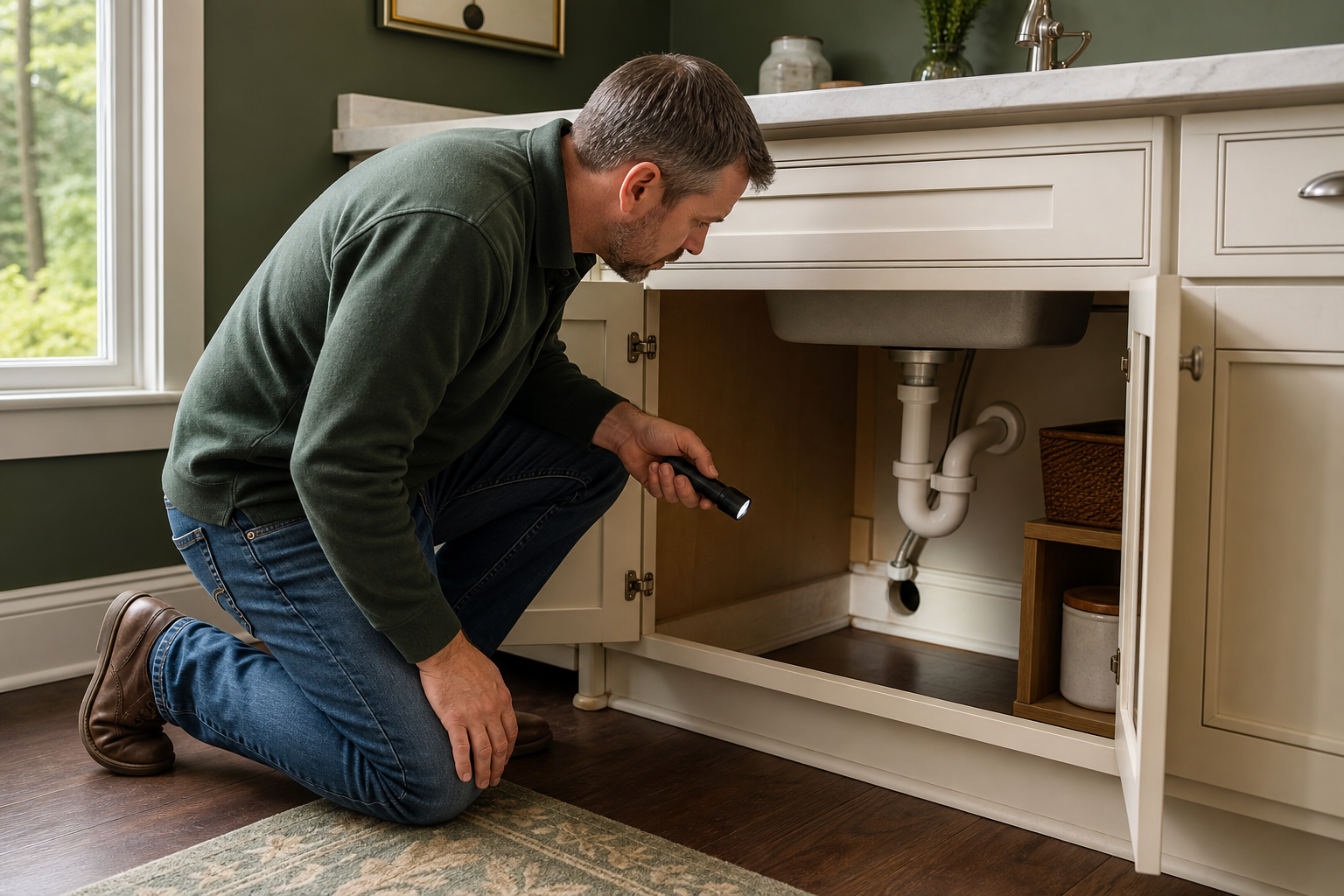
The strongest signs of rats in your house are repeated droppings, gnaw marks, greasy rub marks, nighttime noises, and food damage along protected routes. Don’t handle droppings or nesting material with bare hands. First, inspect without disturbing contaminated areas and look for several signs together.
Quick answer: One dropping or noise doesn’t confirm rats. Look along walls, behind appliances, inside cabinets, and near utility lines for multiple signs. Fresh evidence appearing after cleanup or monitoring suggests current activity.
Common Signs of Rats in a House
Rats usually move near walls and hide in quiet, enclosed areas. Concentrate on edges and overlooked spaces rather than the middle of a room.
Droppings
Rat droppings are generally dark, capsule-shaped, and larger than typical mouse droppings. Size and shape vary, so droppings alone cannot confirm the species.
Fresh droppings may look dark or shiny. Older ones often become dull, gray, and crumbly. Avoid touching or sweeping them to test their age.
Gnawing and food damage
Look for torn food packages, chewed plastic containers, and tooth marks on wood. Rats may also gnaw around doors, wall openings, pipes, and wiring.
Damaged wiring can create a fire risk. Turn off power to the affected area if you can do so safely, then have the wiring assessed by a qualified electrician.
Greasy marks and worn paths
Rats repeatedly follow sheltered routes along walls. Oil and dirt from their fur can leave dark smudges on baseboards, pipes, beams, or the edges of openings.
You may also notice flattened insulation, disturbed dust, or narrow paths through stored materials. A mark by itself could be ordinary dirt, so check for nearby droppings or gnawing.
Sounds after dark
Scratching, scurrying, or gnawing inside walls and ceilings can indicate rodents. Rats are often most active after dark, when the house is quiet.
Sound does not identify the animal. Mice, squirrels, and building movement can produce similar noises. Note the time and location, then inspect the nearest accessible area in daylight.
Nests and shredded material
Rats build nests from paper, fabric, insulation, and other soft material. Possible nest sites include wall voids, attics, basements, cabinets, stored boxes, and spaces behind appliances.
Do not reach into a hidden nest or disturb a large contaminated area. That can expose you to bites, parasites, and contaminated dust.
Where to Inspect for Rats
Use a flashlight and check areas where rats can find food, water, shelter, or a route through the building:
- Behind the refrigerator, stove, dishwasher, and water heater
- Under sinks and around pipes entering walls or floors
- Inside lower cabinets, pantries, and pet-food storage areas
- Along basement and garage walls
- Around floor drains, crawl-space access points, and utility lines
- In attics near insulation, stored boxes, and roof openings
- Near damaged vents, doors, foundations, and attached garages
Rats can enter through surprisingly small gaps. Inspect both the inside and outside, but don’t climb onto roofs or enter unsafe crawl spaces.
Rat Signs Versus Mouse Signs
Correct identification matters because the entry points, trap size, and likely travel routes differ.
- Droppings: Rat droppings are usually noticeably larger and thicker. Mouse droppings are smaller and often pointed at one or both ends.
- Gnaw marks: Rats tend to leave larger tooth marks and may damage sturdier materials.
- Noises: Heavier movement may suggest rats, but sound isn’t reliable enough for identification.
- Openings: A larger hole may fit a rat, yet both rodents can enlarge existing gaps.
If you cannot tell which rodent is present, photograph the evidence without handling it. A licensed pest professional can identify the likely species and inspect hidden routes.
Check Whether the Activity Is Current
Monitor suspected routes before assuming an old sign means an active problem. Place unbaited snap traps or rodent monitoring devices along walls where you found evidence, following their instructions and keeping them inaccessible to children and pets.
Don’t place loose food, powder, or tracking substances around the home as a test. They can create contamination or exposure risks.
Recheck the area daily. New droppings, fresh package damage, triggered devices, or repeated nighttime sounds indicate continuing activity. If you use traps, choose ones intended for the suspected rodent and place them exactly as directed.
Clean Droppings Without Stirring Up Dust
Never vacuum or sweep dry rodent droppings, urine, or nesting material. This can send contaminated particles into the air.
Ventilate the area if practical, then wear rubber or plastic gloves. Wet the droppings and surrounding area thoroughly with an appropriate disinfectant, following its label, and allow the stated contact time. Wipe up the material with paper towels, place the waste in a covered trash container, disinfect the area again, and wash your gloved hands before removing the gloves. Wash bare hands afterward.
Contact a professional for heavy contamination, widespread nesting, contaminated ventilation systems, or cleanup in places you cannot safely reach. Seek medical advice if you become ill after significant rodent exposure. For a suspected pesticide or rodenticide poisoning, contact Poison Control or emergency services promptly.
Remove Attractants and Block Entry
Store food, birdseed, and pet food in sturdy containers with tight lids. Clean spills, remove accessible trash, fix leaks, and avoid leaving pet food out overnight.
Seal confirmed entry points with durable, rodent-resistant materials only after considering whether animals could be trapped inside. Rats may chew through foam, plastic, and other soft fillers. Openings involving roofs, wiring, plumbing, or structural damage are better handled by the appropriate qualified professional.
Avoid scattering poison bait indoors. If a pesticide is considered, use only a product labeled for the confirmed rodent and exact location, and follow the complete current label. Household risks, building layout, and local rules can change what is appropriate.
When to Call a Professional
Arrange a rodent inspection when you find repeated fresh evidence, hear activity in inaccessible walls, or cannot identify the animal. Professional help is also the safer next step when:
- Several rooms or apartment units show signs
- Rats remain active despite sanitation, exclusion, and correctly placed traps
- Wiring, ducts, insulation, or structural materials are damaged
- Children or pets could reach traps or bait
- You find a large nest or extensive contamination
- Safe removal requires roof, crawl-space, or confined-space work
For renters, report the evidence and locations to the property owner or manager promptly. Keep dated photos and monitoring notes. Your next step is to inspect the nearest food, water, and wall-edge routes without disturbing droppings, then act on fresh evidence rather than one uncertain clue.
