

Termites can remain hidden inside wood, walls, and soil, so visible insects are only one possible sign. Photograph anything suspicious, save a loose insect or wing if practical, and arrange a professional inspection rather than spraying or opening walls. One clue cannot show how widespread the problem is.
Quick answer: The clearest warning signs include indoor termite swarmers, piles of discarded wings, narrow mud tubes, damaged or hollow-sounding wood, and small piles of dry pellets. Moisture damage and other insects can create similar evidence, so identification matters.
The most useful signs of termites
1. Winged insects or discarded wings indoors
Winged reproductive termites, called swarmers, leave established colonies to form new ones. You may find them near windows, doors, lights, vents, or other bright areas.
After a short flight, swarmers shed their wings. Look for small piles of similarly sized wings on windowsills, floors, or around door frames. An indoor swarm or discarded wings inside the living space deserves prompt attention.
A swarm outside does not prove termites are inside your house. However, activity close to the foundation is a good reason to inspect accessible areas and reduce conditions that favor termites.
2. Mud tubes along foundations or wood
Subterranean termites build narrow, soil-colored tubes that help protect them while traveling between soil and wood. These tubes may cross:
- Foundation walls
- Support piers and posts
- Floor framing in accessible basements
- Sill plates above the foundation
- Gaps around pipes and utility lines
- Porch, step, or deck connections
A tube may be active, abandoned, or made by another soil-building insect. Photograph it and leave it in place for an inspector. Breaking the tube and waiting to see whether it returns can miss hidden activity elsewhere.
3. Wood that looks damaged from within
Termite-damaged wood may sound hollow when lightly tapped or feel unusually thin beneath the painted surface. In exposed areas, you might see layered galleries running through the wood.
Don’t rely on tapping alone. Wood rot, carpenter ants, beetles, and construction gaps can produce similar sounds or damage. Avoid aggressively probing framing because that could worsen weakened material or hide useful evidence.
Paint that bubbles, cracks, or appears sunken can sometimes cover damaged wood. It can also result from an ordinary leak or humidity problem, so it is not a termite diagnosis.
4. Small piles of pellets
Drywood termites can push hard, grain-like fecal pellets from tiny openings in infested wood. The pellets may collect beneath trim, window frames, furniture, roof framing, or other wooden materials.
These piles are easy to confuse with sawdust, debris, or evidence from wood-boring insects. Save a small sample in a sealed container or take a close, well-lit photograph for identification. Don’t sweep everything away before documenting where it appeared.
5. Changes in floors, trim, or doors
Advanced damage can sometimes contribute to sagging areas, loose trim, sticking doors, or uneven floors. Those changes have many possible causes, including moisture movement and ordinary structural settling.
If a floor, stair, beam, or support appears weakened, stop probing or loading the area. A termite professional can evaluate pest activity, while a qualified building professional should assess structural safety and repairs.
Termites or flying ants?
Flying ants are commonly mistaken for termite swarmers. If you can safely collect an intact insect, compare these features:
- Termite swarmers: straight or gently curved antennae, a broad waist, and two pairs of wings that are roughly equal in length.
- Winged ants: elbowed antennae, a pinched waist, and front wings that are noticeably longer than the rear wings.
These features can be difficult to see on a damaged specimen. A local extension office or licensed pest professional may be able to identify a clear sample or photograph.
Where to inspect without damaging the house
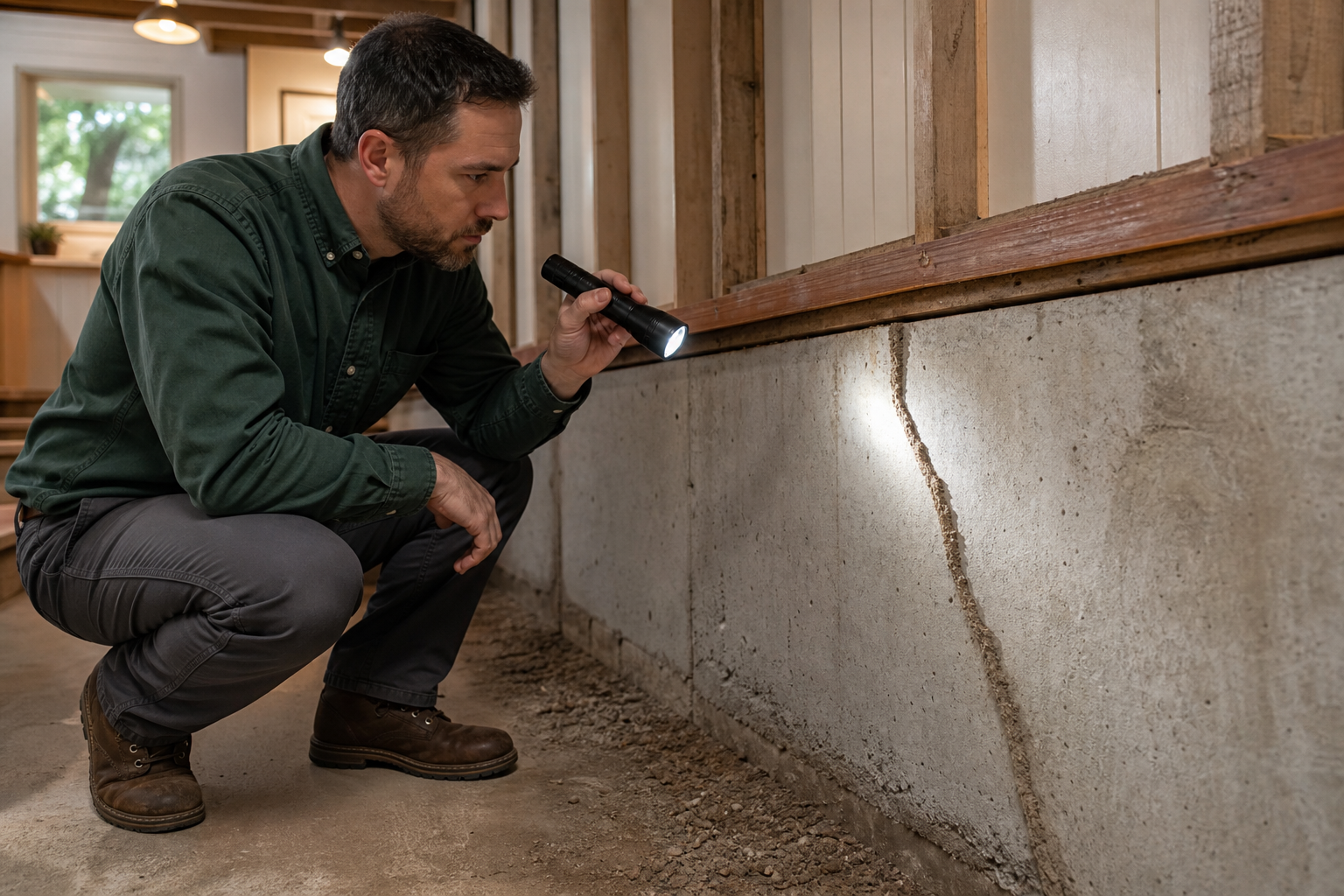
Use a flashlight to check accessible, dry, well-lit areas. Do not crawl into tight spaces, disturb electrical equipment, or remove finished walls.
Focus on places where wood, moisture, and soil come close together:
- Examine the visible foundation around the exterior.
- Check accessible basement or crawlspace edges from a safe position.
- Look around plumbing leaks, utility entrances, and damp framing.
- Inspect wood attached to porches, decks, steps, and fences.
- Check windowsills and floors where winged insects gathered.
- Note firewood, lumber, stumps, or cardboard touching the house or soil.
Hidden activity may exist without visible mud tubes or swarmers. A clean-looking inspection does not rule out termites.
What to do after finding a suspicious sign
Document the exact location before cleaning or making repairs. Photograph the sign from several distances and save an insect, wing, or pellet sample when you can do so without direct handling.
Next, address obvious moisture and wood-contact problems:
- Repair plumbing, roof, gutter, or drainage leaks.
- Keep firewood and loose lumber off the ground and away from the structure.
- Avoid leaving cardboard or scrap wood against the foundation.
- Correct direct contact between soil and structural wood with qualified help.
- Keep foundation inspection areas visible rather than covering them with stored items.
These steps can make the property less favorable to termites, but they do not eliminate an established colony.
Don’t spray visible swarmers, pour pesticides into holes, or apply a general lawn or indoor insect product as a substitute for inspection. Termite control depends on the termite type, construction, activity location, and local rules. Any pesticide must be labeled for the confirmed pest and application site, with the complete current label followed.
When to arrange a professional termite inspection
Professional inspection is the sensible next step when you find indoor swarmers, discarded wings, mud tubes, pellet piles, or suspected structural damage. It is also appropriate when signs recur after earlier treatment or appear in areas you cannot safely reach.
Ask the inspector to explain:
- What evidence was found and where
- Whether the termites appear active
- What areas could not be inspected
- Which treatment approach fits the termite and building
- What repairs or moisture corrections are separate from treatment
- How follow-up monitoring will work
Treatment may involve bait stations, soil treatments, direct wood treatment, or whole-structure methods, depending on the species and setting. These approaches are not interchangeable, and some require licensed equipment or application.
If you rent, photograph the evidence and notify the landlord or property manager promptly in writing. If wood appears seriously weakened, also seek an appropriate structural assessment. The most useful next action is to preserve the evidence and have the suspected termites identified before damage is covered or treatment begins.
