

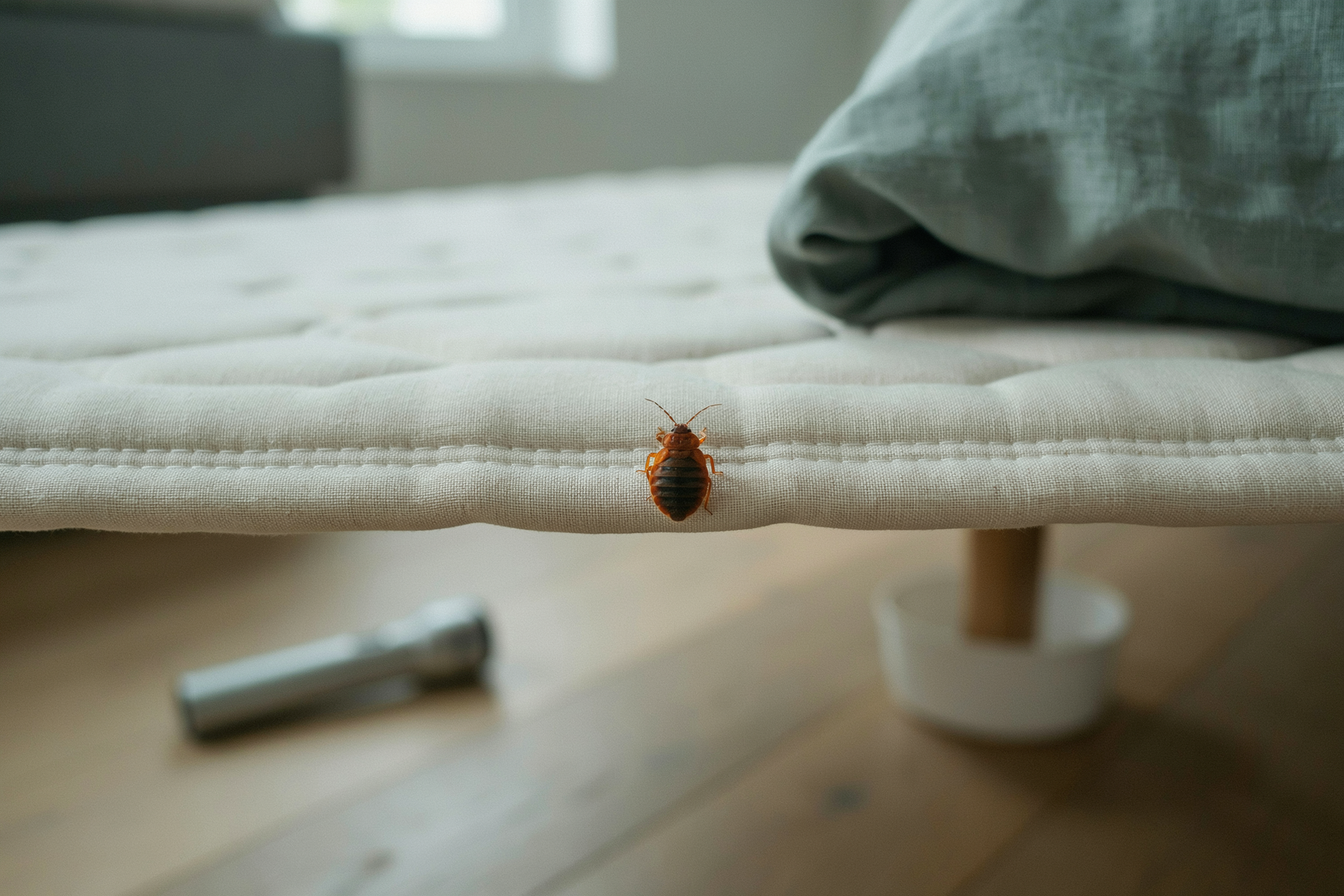
If you’re comparing bed bugs DIY treatment with professional help, the deciding factors are the infestation’s size, your housing type, and whether you can repeat detailed work. Start by confirming the insect and preventing items from moving between rooms. Bites alone cannot identify bed bugs, and random spraying can make the problem harder to track.
Quick answer: You may be able to handle a small, recently discovered bed bug problem yourself. Success requires careful inspection, heat-treating suitable belongings, vacuuming, encasements, monitoring, and repeated follow-up. Multiple rooms, shared housing, uncertain identification, or failed treatment usually calls for professional help.
When bed bugs DIY treatment is realistic
DIY treatment is most reasonable when all or most of these conditions apply:
- You have found a live bed bug or other strong physical evidence.
- Signs appear limited to one sleeping area.
- You discovered the problem early.
- You can reach and inspect the bed, nearby furniture, and room edges.
- You can dry suitable fabrics on high heat without damaging them.
- You can keep cleaned belongings separate from untreated items.
- Everyone in the home can follow the same containment plan.
- You are prepared to inspect and monitor repeatedly.
DIY is less realistic if bed bugs are appearing in several rooms, inside walls, or in furniture you cannot inspect. It is also difficult when clutter prevents access or household members cannot safely complete the work.
Apartments, dormitories, and other connected buildings need special caution. Bed bugs can move between units, so treating one room may not address the full problem. Notify the landlord, property manager, or housing authority promptly and follow applicable lease terms and local rules.
Confirm that you are dealing with bed bugs
Don’t begin pesticide treatment based only on itchy marks. Skin reactions vary widely, and several insects and non-pest conditions can produce similar marks.
Look for several types of evidence around beds and resting areas:
- Live, flat, oval insects about the size of an apple seed when fully grown
- Smaller pale nymphs, which are immature bed bugs
- Shed skins in mattress seams or furniture joints
- Tiny pale eggs or eggshells in protected cracks
- Dark spotting along seams, slats, or headboards
- Rust-colored stains on bedding
Inspect mattress piping, box-spring seams, bed-frame joints, headboards, nearby furniture, and baseboard gaps. Use a flashlight and check slowly rather than immediately dismantling the room.
If you find an insect, preserve it in a sealed container or take clear photographs. A local extension office, qualified pest identifier, or licensed pest professional may be able to confirm it.
Start with containment and physical removal
Avoid carrying untreated bedding or furniture through the home. Moving belongings can spread bed bugs into rooms that were not previously affected.
Use this sequence:
- Bag fabrics before moving them. Place bedding, clothing, curtains, and other washable items in sealed bags while they are still in the affected room.
- Use a clothes dryer where appropriate. High dryer heat can kill bed bugs and eggs when items receive enough exposure. Follow the item’s care instructions. Washing by itself may not be enough.
- Store treated items separately. Put dry, treated belongings into clean, sealed bags or containers until the infestation is controlled.
- Vacuum accessible bugs and debris. Concentrate on seams, cracks, bed-frame joints, and furniture edges. Seal the vacuum contents in a bag and discard them outdoors promptly.
- Reduce hiding places. Remove unnecessary clutter without carrying loose items to another room. Seal clean or inspected belongings before relocating them.
- Install bed-bug-proof encasements. Use intact encasements designed for mattresses and box springs, and leave them in place according to their instructions.
- Isolate and monitor the bed. Move it slightly away from walls, keep bedding off the floor, and place bed bug interceptors under the legs when the bed design allows.
Vacuuming removes only the bugs you reach. Encasements and interceptors help simplify inspection, but they are not complete treatments on their own.
Be cautious with heat and pesticides
Do not try to heat an entire room using space heaters, fireplaces, ovens, or other improvised equipment. These methods can cause fires, carbon monoxide exposure, burns, or property damage while leaving cooler hiding places untreated. Freezing household items outdoors is also unreliable because temperatures may not remain low enough for long enough.
Avoid rubbing alcohol, gasoline, kerosene, homemade mixtures, agricultural pesticides, and products meant for outdoor use. They can create poisoning or fire hazards and may not control hidden bugs.
Total-release foggers, often called bug bombs, should not be used as the main bed bug treatment. The pesticide may not reach the cracks where bed bugs hide, and incorrect use can cause dangerous exposure or fire.
If you choose a pesticide in the United States, use only an EPA-registered product whose current label specifically lists bed bugs and the intended indoor location. Follow the complete label, including placement, protective measures, ventilation, re-entry, storage, and disposal directions. Never apply a product to skin, bedding, mattresses, or furniture unless the label explicitly permits that use.
Pesticide resistance is common in bed bugs. Applying more product or combining products does not overcome resistance and can increase risk.
Monitor instead of assuming they are gone
Bed bug control rarely ends after one cleaning session. Eggs or well-hidden insects may survive individual measures, so inspect the same locations and check interceptors regularly.
Keep notes about where and when you find:
- Live insects
- New spotting or shed skins
- Bed bugs in interceptors
- Activity in another room
Don’t judge success by bites alone. Skin marks may appear for reasons unrelated to current bed bug activity, while some people do not react visibly to bites at all. Physical evidence and monitors provide more useful information.
When to call a bed bug professional
Professional help is the more practical choice when:
- You cannot confidently identify the pest.
- Bed bugs are present in multiple rooms.
- You regularly see bed bugs during the day.
- The infestation involves connected apartments or neighboring units.
- Bugs appear to be inside walls or other places you cannot reach.
- Clutter, mobility limits, or health concerns prevent thorough preparation.
- DIY work has not produced a clear decline in monitored activity.
- You are considering whole-room heat treatment or another specialized method.
Ask how the company will confirm activity, inspect adjoining areas, combine nonchemical and pesticide measures, and monitor after treatment. A realistic plan usually includes follow-up rather than promising that one visit will solve every infestation.
For a small, confirmed problem, begin by bagging fabrics, using the dryer where suitable, vacuuming accessible hiding places, and setting up monitors. If evidence spreads or continues despite consistent work, stop adding treatments and arrange a qualified inspection.
