

The best way to reduce spiders in the house is to remove the ones you find, cut down their insect food, and close the gaps they use to enter. Start with a vacuum rather than a pesticide. If you suspect a black widow, brown recluse, or another medically important spider, don’t handle it or rely on a photo alone for identification.
Quick answer: Vacuum spiders, webs, and egg sacs. Reduce indoor insects, fix moisture problems, clear clutter, and seal openings around windows, doors, pipes, and screens. Monitor quiet areas with carefully placed sticky traps. Use pesticides only when the product is labeled for that spider and indoor location.
First, check where the spiders are coming from
One spider does not necessarily mean you have an indoor infestation. Some wander inside through an open door or damaged screen. Others settle where insects and sheltered spaces are available.
Inspect the room where you found the spider, focusing on:
- Window frames, door thresholds, and torn screens
- Baseboards and corners behind furniture
- Closets, basements, garages, attics, and storage areas
- Gaps around pipes, cables, vents, and utility lines
- Cardboard boxes, stored clothing, and items left undisturbed
- Damp areas near sinks, drains, crawl spaces, or leaking pipes
- Outdoor lights and windows where flying insects gather
Webs can help locate spider activity, but they do not identify the species by themselves. Some spiders do not build capture webs at all.
How to get rid of spiders in the house step by step
1. Vacuum spiders, webs, and egg sacs
Use a hose attachment to remove reachable spiders and their webbing. Vacuum along ceiling corners, baseboards, window trim, and behind furniture.
Remove visible egg sacs with the web rather than opening or crushing them. Empty the vacuum into a sealed bag outside promptly, following the vacuum manufacturer’s instructions. Avoid picking up an unknown spider with bare hands.
A cup and stiff piece of paper can work for releasing a harmless spider outdoors, but only when you are comfortable approaching it and confident it is not a medically important species.
2. Reduce the insects spiders eat
Spiders remain where prey is available. Addressing flies, moths, ants, cockroaches, and other small insects often produces a more lasting improvement than repeatedly removing webs.
Clean crumbs and spills, keep food in closed containers, and empty indoor trash regularly. Repair leaks and dry persistently damp areas. At night, switch off unnecessary exterior lights near doors and windows, and close curtains if indoor light attracts insects to the glass.
If insect activity is substantial, identify that pest before choosing a treatment. Broad spraying without knowing the source may add exposure without fixing the problem.
3. Remove sheltered hiding places
Reduce clutter in quiet areas, especially piles of paper, clothing, bags, and cardboard boxes. Store seldom-used belongings in closed containers and leave enough space to inspect along walls.
Wear ordinary work gloves when moving stored materials in garages, sheds, basements, or other places where unseen spiders may be present. Shake out shoes, gloves, and seasonal clothing that have been stored undisturbed.
4. Seal likely entry points
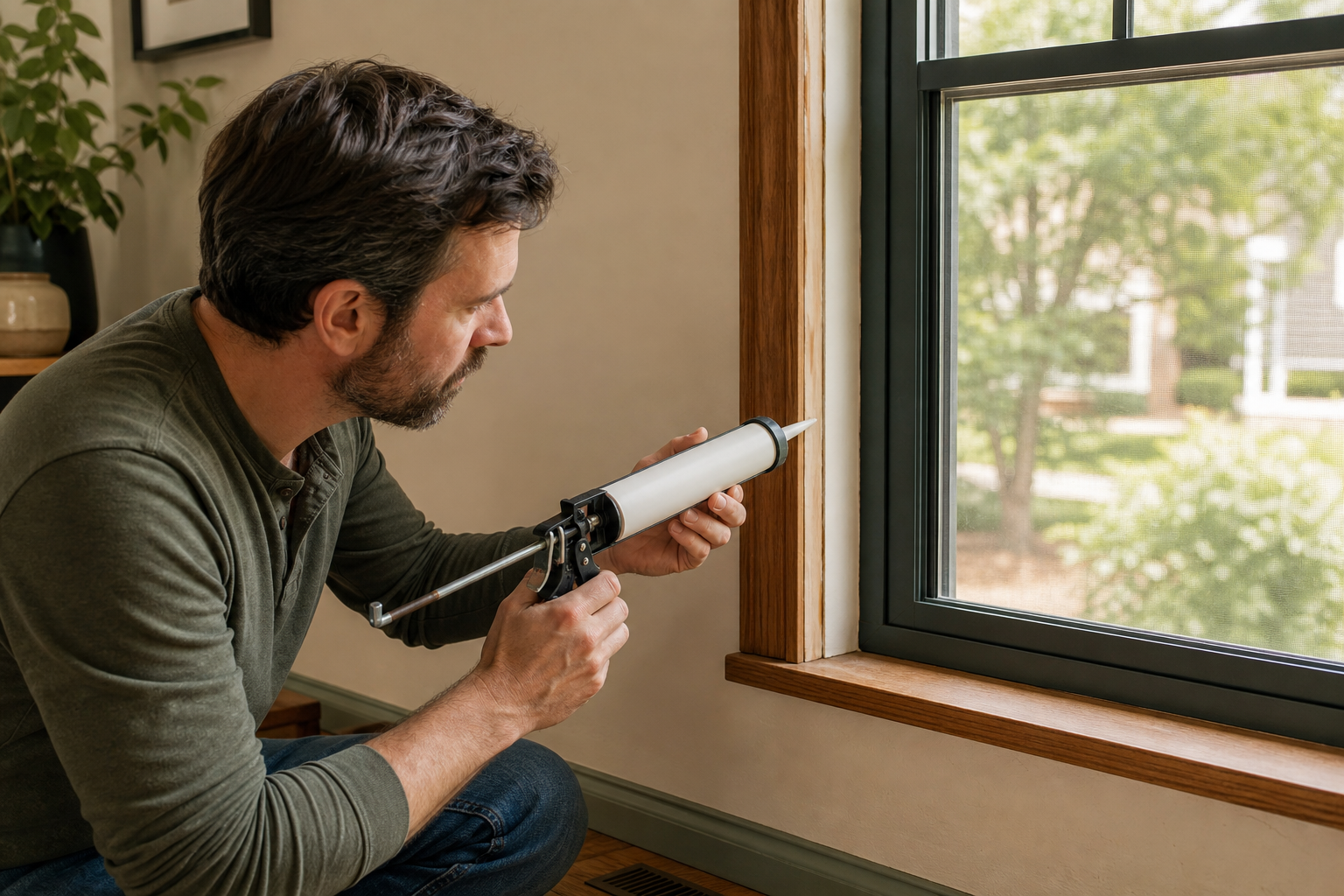
Repair loose screens and add door sweeps where daylight is visible under exterior doors. Seal small gaps around window trim, siding joints, pipes, cables, and vents with a material suitable for that part of the building.
Trim plants that touch the siding and move firewood or stored materials away from the foundation when practical. Do not reach blindly into woodpiles, wall voids, or dark storage spaces.
Renters should report damaged screens, persistent leaks, or building gaps that require structural repair to the property manager.
Monitor after cleaning and sealing
Place unbaited sticky monitoring traps along walls in quiet, dry locations, such as behind furniture or beside storage areas. Keep them where children and pets cannot reach them. Check the traps regularly and follow their directions for placement and disposal.
Monitoring helps show whether spiders are still entering and where activity is concentrated. It may also capture the insects supporting them. A trap catch can help an extension office or pest professional examine the spider, but avoid handling the specimen directly.
Continue checking for fresh webs and new sightings over the next few weeks. Repeated activity in one area usually points to an unsealed opening, abundant insect prey, or a sheltered space that has not been reached.
Should you spray for spiders?
Indoor pesticide use is rarely the best first step for an occasional spider. Spraying baseboards or an individual spider does not correct open screens, insect prey, moisture, or clutter.
If monitoring shows persistent activity and you choose a pesticide, use only a product whose current label lists the spider and the specific indoor location. Follow every label direction, including placement, ventilation, protective measures, storage, and when people or pets may return. Never apply extra product, combine pesticides, or use an outdoor-only product indoors.
Avoid total-release foggers, sometimes called bug bombs. They can create fire, exposure, and residue hazards when used incorrectly, while failing to reach the sheltered places spiders use.
When to get professional help
Contact a qualified local pest professional or identification resource when:
- You repeatedly find many spiders despite cleaning and sealing
- Activity appears to come from wall voids, an attic, crawl space, or another place you cannot safely reach
- You cannot identify a spider that may be medically important
- You find multiple suspected black widows or brown recluses
- A household member cannot safely inspect or clean storage areas
- Spider activity continues because another insect problem remains uncontrolled
Seek medical advice for a suspected bite with worsening pain, spreading symptoms, or other concerning changes. Call emergency services for trouble breathing, fainting, or another severe reaction. For possible pesticide exposure, contact your local poison-control service.
Your next practical step is to vacuum the active area, inspect the nearest windows and doors, and note whether new spiders or webs appear after those openings are sealed.
