

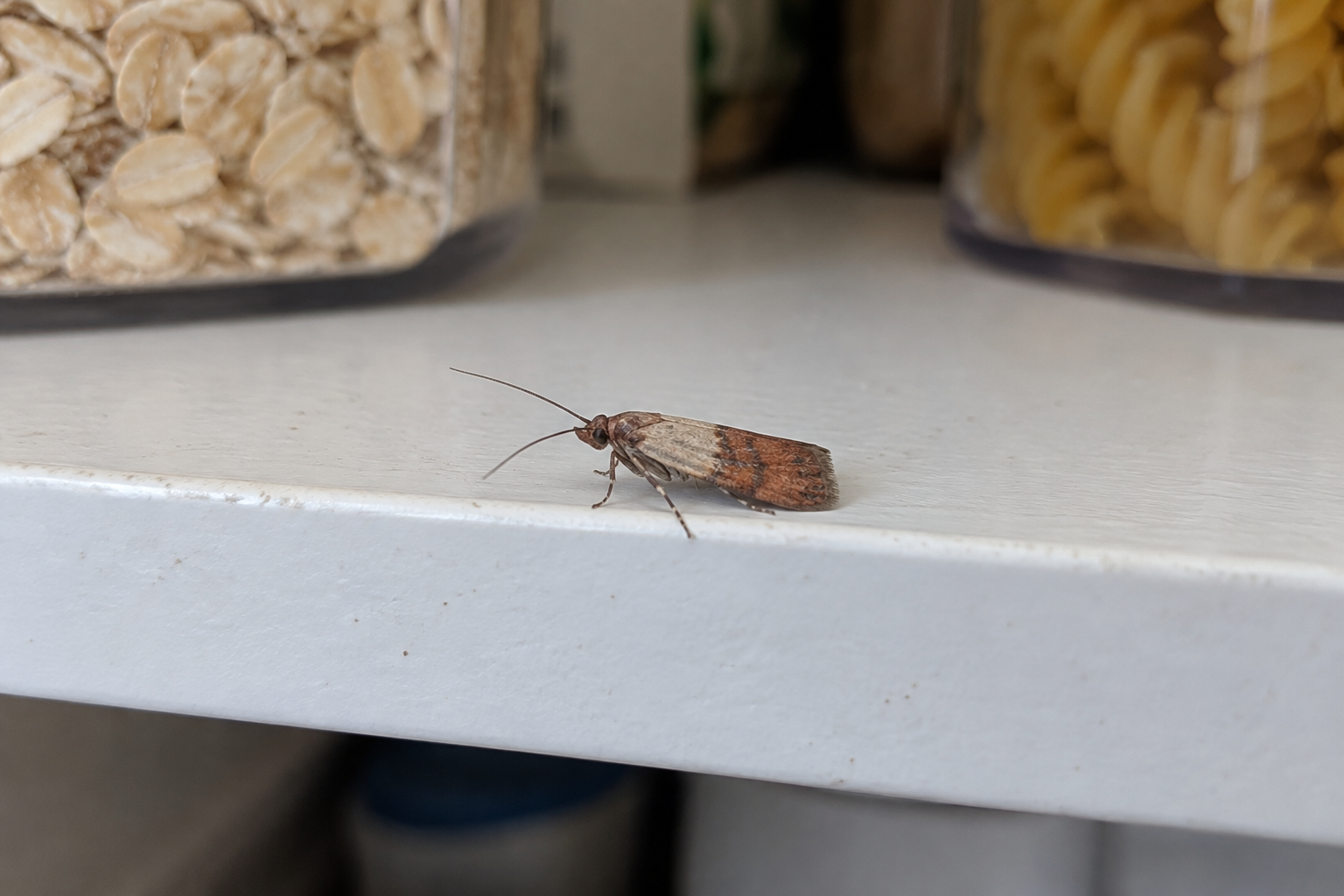
Pantry moths often return because one infested dry-food source was missed or because new food is stored in packaging they can enter. The useful response is a complete source check followed by storage changes, not repeated spraying in a food cupboard.
Inspect every likely dry good, including pet food and birdseed. Remove contaminated food, clean the storage area, then keep replacement food in tightly closed containers while you monitor.
Do one complete food check
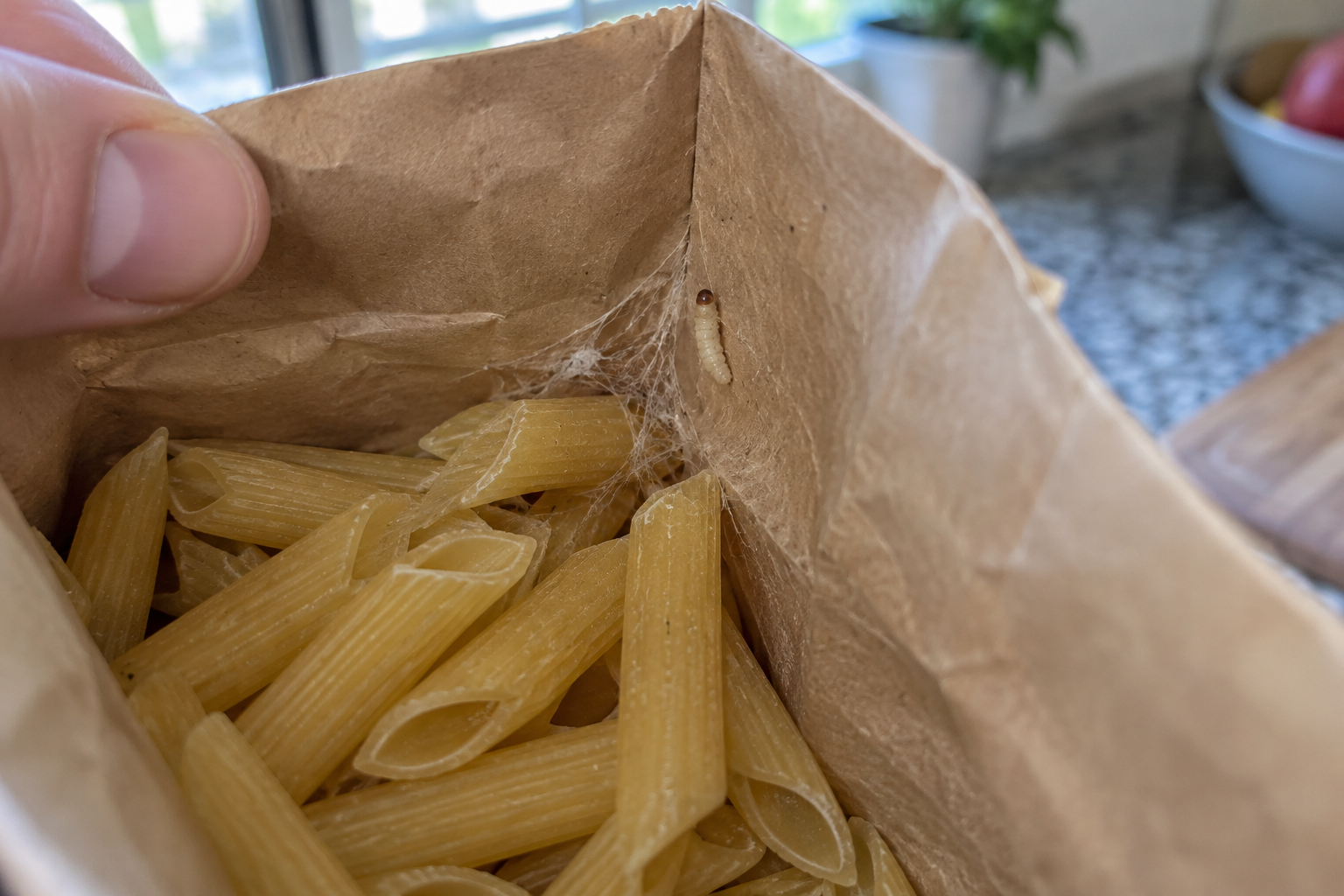
Pantry pests can be found in flour, cereal, rice, pasta, nuts, dried fruit, spices, pet food, birdseed, and other dry goods. Indianmeal moth larvae can leave silky webbing in a package, but adult moths may also be seen away from the food source.
Check opened and older packages first, then inspect unopened paper, thin cardboard, and lightweight plastic packages. Look at folds and seams, not just the front of the package. Keep a small box or bag for anything you need to discard so you do not move possible insects from one shelf to another.
Remove the source and clean the shelf
Discard food you know is infested. Vacuum shelves, cracks, corners, shelf supports, and the spaces around containers. Empty the vacuum or discard its bag promptly so material does not remain in the home.
Wiping is useful for ordinary food residue, but it does not replace finding the source. Strong cleaners, bleach, and folk repellents do not prevent pantry pests from returning, and chemicals around stored food can create another problem. Insecticide is generally not the answer for a food cupboard because it cannot reach insects inside packages.
Change how replacement food is stored
Use tightly closed glass, metal, or heavy plastic containers for dry goods you want to keep. Buy quantities you can use in a reasonable time, use older products first, and keep the pantry free of crumbs and spilled food.
Remember less obvious sources: dry pet food, birdseed, decorative plant material, and forgotten baking supplies. If you store these elsewhere, include those areas in the same inspection.
Expect a short monitoring period
Seeing an adult moth briefly after cleanup does not automatically mean the plan failed. Adults can emerge after the original source is removed. Continue checking traps or sightings against your food-storage areas instead of assuming every moth comes from the same shelf.
If you continue seeing moths well after a careful reset, search again for an overlooked package or ask a pest professional to help identify the insect. Not every small moth indoors is a pantry moth.
Build prevention into grocery day
Prevention is easiest when it happens as food enters the house. Check packages for damage, move opened staples into containers, and avoid building a large backlog of dry goods you may not use. Rotate older food forward so it is used before newer purchases.
If you share a pantry, use a simple rule: do not pour a new bag into a container that still holds old food. Finish, inspect, and clean the container first. That makes a future source check much clearer.
Keep monitoring without overreacting
Look around window sills, ceilings, and pantry corners during ordinary cleaning. A single adult moth does not tell you where it developed. Persistent sightings are the signal to recheck food storage, including pet food and supplies stored outside the kitchen.
Separate food storage from cleanup supplies
Keep food containers and cooking tools away from cleaning products while you reset the pantry. This avoids contaminating food and makes it easier to see crumbs or residue that need ordinary cleaning. Once the shelf is dry, return only inspected foods in closed containers.
If a package is questionable, do not donate or pass it along. Bag it securely for disposal and clean the area where it sat. This prevents a possible source from simply moving to another cupboard or home.
