

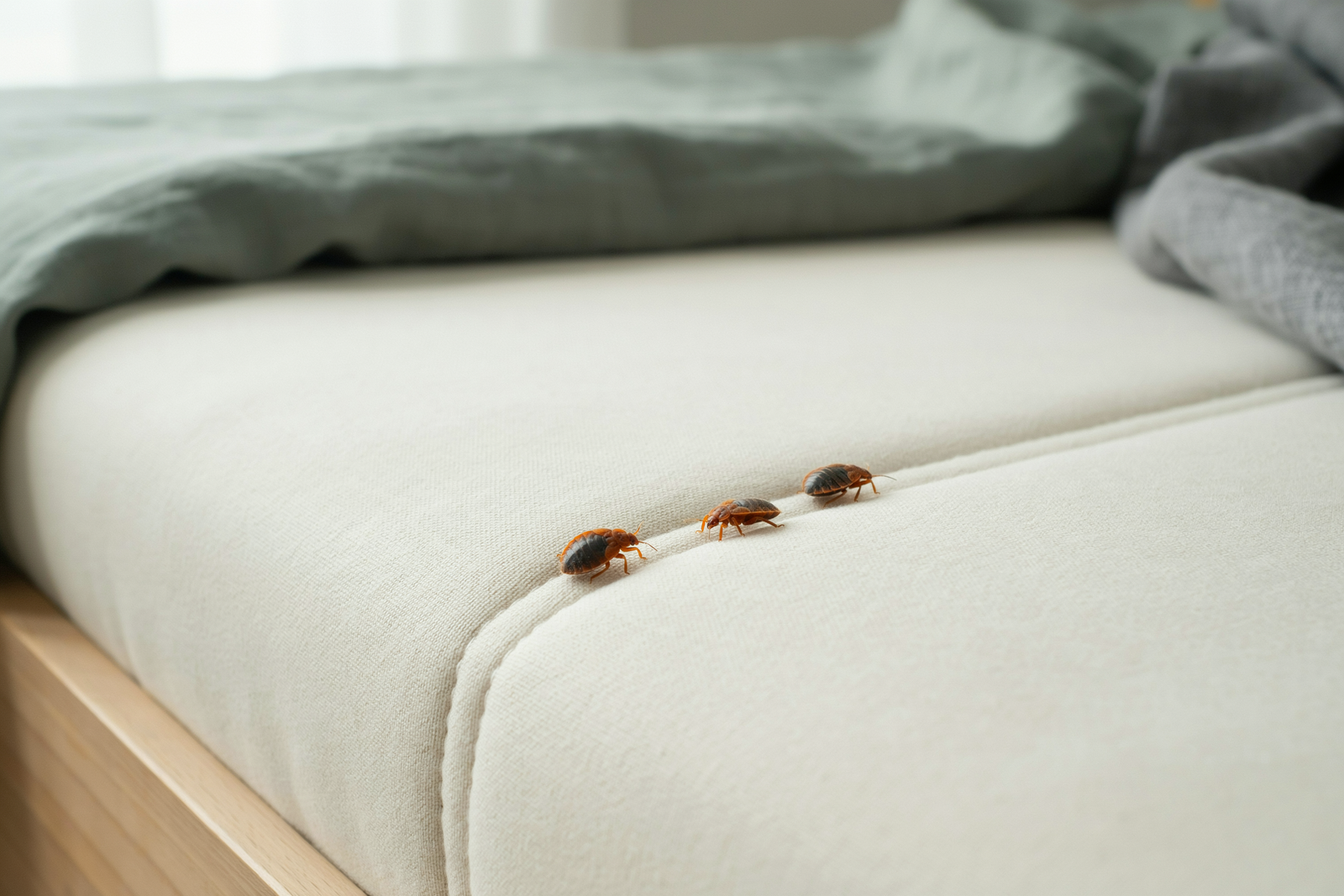
A bed bug infestation is best judged by physical evidence and how widely that evidence appears, not by bites alone. Start by inspecting the bed and nearby furniture with a flashlight. Don’t move belongings into another room, since that can spread hidden bugs.
Quick answer: Live bed bugs, eggs, shed skins, and fresh dark spotting are the strongest warning signs. Evidence in several rooms, repeated sightings, or bugs appearing after careful control attempts suggests a larger problem.
The most reliable signs of bed bugs
No single skin mark can confirm bed bugs. Mosquitoes, fleas, skin irritation, and several medical conditions can produce similar marks.
Instead, look for a combination of these signs:
- Live bugs: Adults are flat, oval, reddish brown, and roughly the size of an apple seed. Young bed bugs are smaller and may be pale or nearly translucent before feeding.
- Dark spots: Bed bug waste can leave small dark brown or black marks on mattress seams, fabric, wood, or nearby walls. These spots may soak into fabric like ink.
- Reddish stains: Small rusty stains can appear when a recently fed bug is crushed.
- Shed skins: Growing bed bugs leave behind pale, hollow skins shaped like the insect.
- Eggs and eggshells: Bed bug eggs are tiny, pale, and difficult to see without good lighting or magnification.
- Repeated trap catches: Bed bug interceptors placed beneath bed legs may reveal activity that a brief visual inspection misses.
Old stains and shed skins can remain after treatment, so they don’t always prove that bugs are still active. A live bug, newly appearing evidence, or repeated monitor catches gives you a clearer picture.
Where to inspect first
Begin close to where people sleep or rest. Bed bugs usually hide in narrow cracks and seams, emerging to feed before returning to shelter.
Use a bright flashlight to check:
- Mattress piping, labels, seams, and tufts
- The underside and edges of the box spring or foundation
- Bed-frame joints, screw holes, slats, and cracks
- The front, back, and mounting points of the headboard
- Nightstand joints and drawer tracks
- Upholstered chair or sofa seams
- Baseboards and carpet edges near the bed
- Cracks behind loose wallpaper or wall-mounted objects
Avoid tearing furniture apart unless you can do so without damaging it or scattering insects. If you find a possible bug, capture it in a sealed container or secure it beneath clear tape for identification. A clear photograph can also help a qualified pest professional distinguish it from carpet beetles, bat bugs, and other lookalikes.
How bad is the bed bug infestation?
The number of marks on your skin does not show infestation size. Some people develop noticeable reactions, while others show little or no skin response.
Use the distribution and freshness of physical evidence instead.
Possible but unconfirmed activity
You have unexplained skin marks or one questionable stain, but no live bugs, eggs, skins, or repeat trap catches.
Continue inspecting and monitoring rather than spraying on suspicion. Confirming the pest prevents unnecessary pesticide use and avoids overlooking another cause.
Confirmed but apparently limited activity
You find one or more correctly identified bed bugs or fresh evidence around a single sleeping area. This deserves prompt action, even if you have found only one bug.
“Limited” does not mean harmless or easy to eliminate. Bed bugs fit into very small spaces, and visible insects may represent only part of the activity.
Established activity
You find adults, young bugs, eggs, shed skins, or fresh spotting in several hiding places around the bed. Repeated monitor catches also suggest ongoing reproduction or movement.
At this stage, a coordinated treatment plan is usually more reliable than isolated DIY measures.
Widespread or difficult activity
Evidence appears in multiple bedrooms, living-room furniture, or neighboring units in a shared building. Continued sightings after treatment, bugs in places you cannot safely reach, or uncertainty about where activity began also raises the difficulty.
Daytime sightings can occur for several reasons and do not measure severity by themselves. Judge the problem from all the evidence, not one behavior.
What to do after finding evidence
First, keep sleeping in the same room unless a qualified professional advises otherwise. Moving to another room may encourage bed bugs to follow and broaden the affected area.
Then take these low-risk steps:
- Reduce hiding places carefully. Remove clutter near the bed, but seal items in bags or containers before moving them.
- Launder strategically. Place washable bedding and clothing directly into sealed bags for transport. Use dryer settings that the fabric can tolerate and follow current appliance and garment instructions.
- Vacuum visible bugs and hiding areas. Empty the vacuum into a sealed bag and place it in an outdoor trash container promptly.
- Isolate the bed. Move it slightly away from walls, keep bedding off the floor, and consider purpose-made interceptors beneath the legs.
- Monitor regularly. Record where and when you find live bugs or fresh evidence. This helps show whether activity is shrinking or spreading.
Don’t discard a mattress or sofa automatically. Moving unwrapped furniture can spread bed bugs through halls, vehicles, or other homes. Some items can be treated or protected with bed bug-rated encasements as part of a broader plan.
Avoid shortcuts that can spread or worsen the problem
Total-release foggers, sometimes called bug bombs, should not be used as the only bed bug control method. The pesticide may not reach the cracks where bugs hide, and improper use can create fire, explosion, or exposure hazards.
Don’t apply rubbing alcohol, fuel, outdoor pesticides, garden products, or homemade mixtures. Never heat a room with space heaters, ovens, fires, or other improvised equipment.
If you use a pesticide, choose only one currently labeled for bed bugs and the exact indoor location. Follow the complete label, including placement, ventilation, storage, and re-entry directions. More pesticide is not more effective.
When professional help is the better next step
Contact a licensed pest professional when identification is uncertain, activity appears in several rooms, or monitoring continues to find bugs after your first measures. Professional help is also sensible when furniture or wall voids cannot be inspected safely, or when pregnancy, asthma, young children, pets, or pesticide sensitivity complicate treatment choices.
In an apartment, condominium, dormitory, or other connected building, notify the property manager promptly according to your lease and local requirements. Bed bugs can move between units, so inspection and treatment may need to be coordinated.
If bites or skin irritation cause breathing trouble, severe swelling, signs of infection, or another concerning reaction, seek medical care. Skin symptoms can’t identify the pest, but a clinician can address the reaction while you continue evidence-based monitoring at home.
Your next step is to document any physical evidence, confirm the insect, and map every room where signs appear. That information will tell you far more about the infestation than bite counts alone.
