

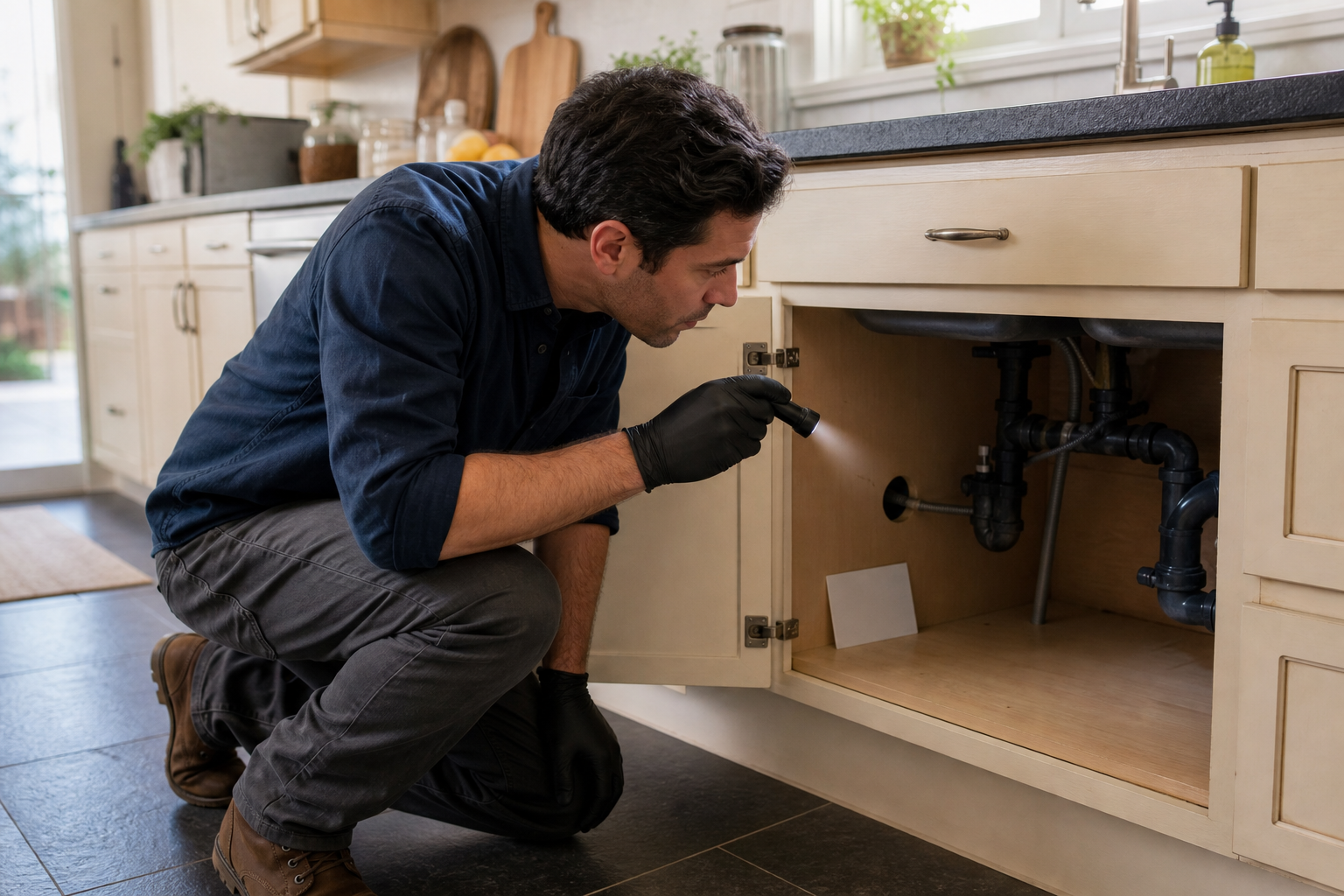
The clearest signs of a roach infestation are repeated sightings, droppings, egg cases, shed skins, and cockroaches caught in monitors. Start by checking kitchens and bathrooms with a flashlight, then use sticky monitors to learn where activity is concentrated. One insect doesn't reveal the infestation size, and droppings or damage alone cannot confirm the pest.
Quick answer: Frequent sightings, young and adult roaches, activity in several rooms, and repeated daytime sightings suggest a more established problem. A single nighttime sighting may be isolated, but it still deserves inspection and monitoring.
Common signs of a roaches infestation
Look for several types of evidence rather than relying on one suspicious speck or insect.
- Live cockroaches: Most household cockroaches hide during the day and become active at night. Check quietly with a flashlight several hours after the kitchen becomes dark.
- Droppings: Small species can leave dark marks resembling pepper or coffee grounds. Larger species may produce bigger, ridged droppings. Other pests and household debris can look similar.
- Egg cases: Cockroach egg cases are small, capsule-shaped coverings with a row of ridges. Their color and size vary by species.
- Shed skins: Young cockroaches shed their outer covering as they grow. Finding several skins near cracks or appliances can indicate a nearby hiding place.
- Unusual odor: A persistent musty or oily odor can occur with a substantial population, but odor alone is not a reliable identification method.
- Monitor catches: Cockroaches repeatedly caught on sticky monitors provide stronger evidence than an unexplained mark.
Small, wingless cockroaches are often immature nymphs rather than a separate species. Finding adults and multiple sizes of nymphs suggests that roaches are reproducing nearby.
Where to inspect first
Focus on tight, dark places close to food, water, and warmth. Cockroaches often travel along walls and cabinet edges rather than crossing open areas.
Check these locations:
- Under sinks and around pipe openings
- Inside empty lower cabinets and around hinges
- Behind or beside the refrigerator and stove
- Around the dishwasher, trash area, and pantry
- Along baseboards and wall-to-counter joints
- Near bathroom plumbing and damp utility areas
- Around cardboard boxes, paper bags, and stored clutter
Don't reach blindly into cracks or move a heavy appliance by yourself. Inspect around energized appliances without opening electrical compartments.
Take a clear photograph or capture a specimen in a sealed container if you can do so without direct contact. Species matters because some cockroaches mainly live indoors, while others may enter from drains, basements, sewers, or outside.
How to tell how bad the infestation is
There is no dependable severity score based on one sighting. Judge the problem by how often you find roaches, how widely signs are distributed, and whether monitoring shows continued activity.
Possibly limited activity
You saw one cockroach at night, find no other evidence, and monitors remain empty. This may be an isolated invader, but keep checking because roaches hide well.
Likely established infestation
You see roaches repeatedly, catch them on several monitors, or find adults and nymphs together. Egg cases, shed skins, and concentrated droppings near cabinets or appliances add to the evidence.
Potentially heavy infestation
Repeated daytime sightings, substantial monitor catches, activity in several rooms, or roaches emerging whenever cabinets are opened suggest a larger population. A persistent odor and activity inside places you cannot safely reach also support professional escalation.
Daytime activity raises concern because crowded or disturbed cockroaches may leave their hiding places. However, one daytime sighting does not prove that an infestation is severe.
Use sticky monitors to measure activity
Place unbaited sticky monitors against walls where roaches are likely to travel, not in the middle of a room. Useful locations include under sinks, behind toilets, beside appliances, and at cabinet edges.
Number and date each monitor, then inspect them on a consistent schedule. Follow the device instructions and keep monitors where children and pets cannot reach them. Compare catches by location and over time rather than treating one night's count as a complete answer.
Monitoring helps you find the busiest areas and shows whether your control steps are working. Continued catches after an initial decline mean the source may remain untreated.
Remove what roaches are using
Cleaning alone may not eliminate an established infestation, but removing food and water makes other control methods more effective.
- Store food, including pet food, in tightly closed containers.
- Clean crumbs, grease, spills, and residue beneath appliances.
- Empty trash regularly and clean recyclable containers.
- Repair leaks and dry sinks, counters, and damp cabinet interiors.
- Reduce cardboard, paper bags, and clutter near kitchens and bathrooms.
- Seal small gaps around pipes, cabinets, and baseboards where practical.
In an apartment or other connected building, report recurring activity promptly to the property manager or landlord. Cockroaches can move through shared walls and utility openings, so coordinated inspection may be necessary.
Choose targeted control carefully
If monitoring confirms cockroaches, a bait labeled for the identified cockroach and indoor location may be an appropriate DIY option. Use only a registered product whose current label permits that exact use. Follow every instruction for placement, household precautions, storage, and disposal.
Keep pesticides and bait placements away from children, pets, food, dishes, and food-preparation surfaces as directed by the label. Don't combine products or apply more than instructed.
Avoid total-release foggers, sometimes called bug bombs. Their pesticide may not reach the cracks where cockroaches hide, and incorrect use can create fire, explosion, and exposure hazards. Repeatedly spraying visible insects also fails to address hidden eggs and nesting areas.
When to call a pest professional
Professional help is a sensible next step when:
- Roaches appear repeatedly during the day.
- Monitors show activity in several rooms.
- You find numerous nymphs or egg cases.
- Activity continues despite sanitation, monitoring, and correctly used bait.
- Roaches are inside walls, appliances, or other places you cannot reach safely.
- The species is uncertain or may be moving between connected homes.
- Someone in the home has asthma or another condition that makes cockroach debris or pesticide exposure especially concerning.
Cockroach body parts, droppings, and saliva can contribute to indoor allergens, especially for people with asthma. This does not mean a cockroach sighting explains anyone's symptoms. Seek medical advice for breathing or allergy concerns, and get urgent help for severe breathing difficulty or a suspected pesticide poisoning.
Begin tonight by inspecting the kitchen and bathroom, documenting what you find, and placing monitors in protected locations. The pattern that develops will tell you far more than a single sighting.
