

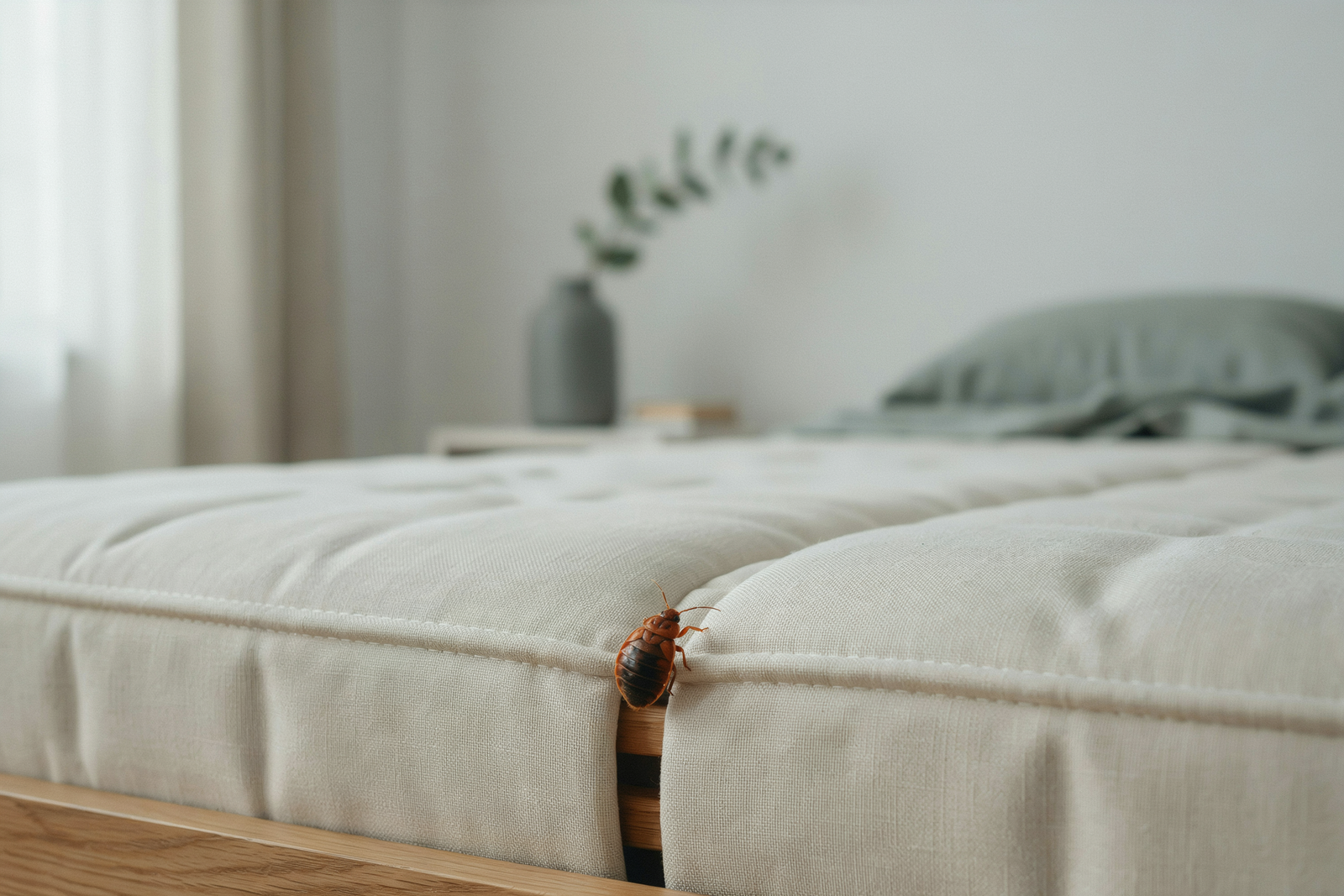
Where do bed bugs hide? Start with the mattress seams, bed frame, headboard, and nearby furniture. Bed bugs usually stay close to where people sleep or rest, but small gaps let them remain out of sight. Inspect with a flashlight and a thin card, and don't apply pesticides until you have reliable evidence.
Quick answer: Check every seam, joint, screw hole, crack, and folded edge within several feet of the bed. Look for live bugs, shed skins, eggs, or dark spotting. A skin mark alone cannot confirm bed bugs.
What bed bug evidence looks like
Adult bed bugs are flat, oval, wingless insects about the size of an apple seed. Young bed bugs are smaller and paler. Their eggs are tiny, pale, and difficult to see without careful inspection.
Look for several forms of evidence:
- Live or dead bed bugs
- Pale shed skins left as young bugs grow
- Tiny whitish eggs or eggshells in protected gaps
- Dark brown or black spotting on fabric or hard surfaces
- Small rusty stains on bedding
Dark marks, stains, and skin reactions have other possible causes. If you find an insect, trap it in a sealed container or secure it beneath clear tape for identification.
Where do bed bugs hide around a bed?
Use a bright flashlight and move slowly. A stiff card can help you check narrow seams, but avoid dragging it forcefully through fabric or cracks. Keep anything you remove from the room contained so you don't carry hidden bugs elsewhere.
1. Mattress seams and labels
Inspect the piping around the mattress edge, stitched seams, labels, handles, and fabric folds. Pay particular attention to the corners and the area nearest the sleeper’s head and shoulders.
You usually don't need to cut or tear the mattress. Damaging it can create more hiding spaces and make later treatment harder.
2. Box spring edges and underside
Check the seams, corner protectors, staple lines, and folds on the bottom fabric. Use care when lifting a box spring because it can be heavy.
If the thin underside covering is already loose, look around the opening without pulling it farther apart. Bed bugs may hide inside the frame where you cannot inspect safely.
3. Bed-frame joints
Examine every place where two frame pieces meet. Check bolt holes, screw heads, brackets, slats, casters, and cracks in unfinished wood.
Bed bugs can fit into very narrow spaces. A clean-looking frame may still hold insects deep inside a joint.
4. Behind and beneath the headboard
Inspect the front, back, lower edge, mounting points, and any decorative grooves. Wall-mounted or upholstered headboards can contain many protected spaces.
Don't remove a large or firmly attached headboard by yourself. Sudden movement could spread insects or damage the wall.
5. Bedding folds
Look along fitted-sheet elastic, duvet seams, pillow seams, and folded bed skirts. Bedding is less protected than furniture cracks, but bugs may remain there temporarily.
Place inspected washable items directly into a closed bag before moving them. Launder and dry them using the hottest settings the fabric can safely tolerate; the dryer’s heat is the important part.
6. Nightstands and bedside tables
Remove drawers one at a time and inspect their corners, joints, runners, undersides, and screw holes. Check beneath the furniture and along the back panel.
Avoid carrying an unchecked nightstand through the home. If it needs to be moved, contain it or wait for professional guidance.
7. Upholstered chairs and sofas
If someone regularly rests or sleeps there, inspect cushion seams, zippers, skirt folds, legs, and the joints beneath removable cushions. Recliners and sofa beds have internal areas that are difficult to reach.
Keep fingers away from reclining mechanisms and sharp staples. Extensive evidence inside an upholstered item is a good reason to seek professional help.
8. Baseboards and floor edges
Check the junction between the wall and floor, especially behind the bed. Look around loose trim, peeling wallpaper, cracked plaster, carpet tack strips, and gaps between floorboards.
Do not pry off sound trim just to inspect. That can scatter bugs and create unnecessary damage.
9. Curtains near the bed
Inspect hems, pleats, rod pockets, tabs, and folds that touch the wall or floor. Curtains are a lower-priority location unless they hang close to a sleeping area.
Bag washable curtains before carrying them to the laundry area.
10. Picture frames and wall decorations
Check the backs, corners, mounting hardware, and wall contact points of items near the bed. Focus on objects directly above or beside where a person sleeps.
Set inspected pieces on a clean, light-colored surface rather than another bed or sofa.
11. Luggage, bags, and stored clothing
Inspect suitcase seams, zipper folds, pockets, handles, and wheel housings. Check bags or clothing stored under or beside the bed.
Don't move suspect belongings into another bedroom. Keep them contained until they can be inspected or treated with a method appropriate for the item.
12. Wall openings and nearby electronics
Bed bugs may enter gaps around switch plates, outlets, cable openings, clocks, and electronics near a sleeping area. Do not insert tools, liquids, powders, or pesticides into electrical equipment or energized wall openings.
If evidence points inside a wall or device, leave that area to a qualified professional.
What to do after the inspection
Record each location and photograph clear evidence. Vacuuming visible bugs with a crevice attachment can reduce their number, but it won't eliminate bugs hidden deeper inside. Seal the vacuum contents in a bag and discard them according to local waste rules.
Reduce clutter near sleeping areas, but don't carry loose items from room to room. Bed-bug-rated mattress and box-spring encasements can simplify monitoring when they remain intact and fully closed. Interceptor monitors placed correctly beneath bed legs may also help reveal activity.
Avoid foggers, rubbing alcohol, improvised heaters, and pesticide mixtures. They can create fire, exposure, or dispersal risks without reaching every hiding place. If you use any pesticide, choose only one labeled for bed bugs and the exact indoor location, then follow the complete current label.
When professional help makes sense
Contact a licensed pest professional when identification is uncertain, evidence appears in several rooms, bugs are inside walls or complex furniture, or careful DIY measures haven't stopped activity. Apartments and other connected homes often require coordinated inspection because bed bugs can move between units. Renters should report suspected activity promptly using the process required by their lease and local rules.
Save a specimen if possible and keep your sleeping location consistent while arranging the next step. Moving to another room can give bed bugs a new place to follow and hide.
