

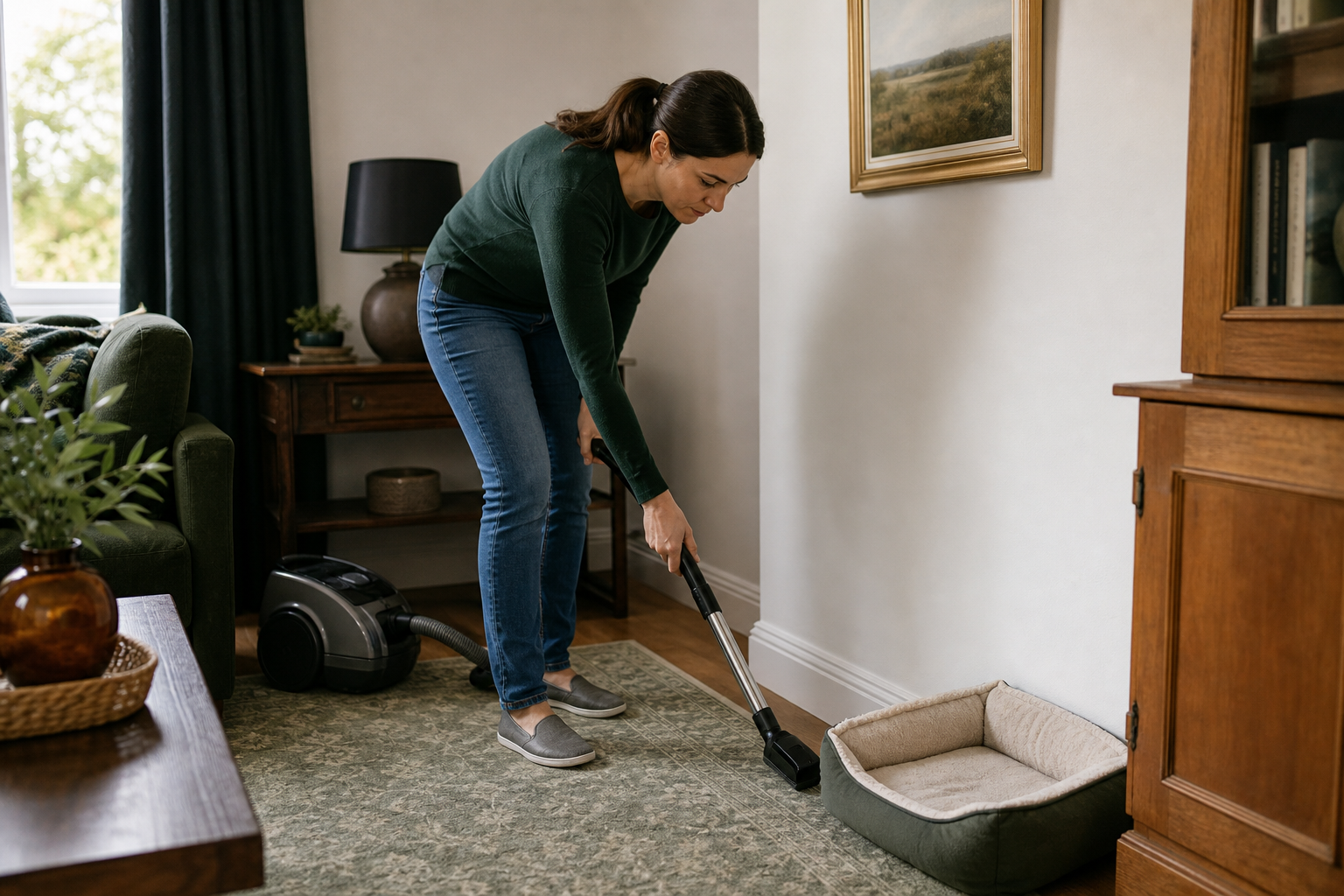
Getting rid of fleas in the house takes more than killing the adults you can see. Start by vacuuming the places where pets rest, washing washable bedding, and arranging appropriate flea care for every pet. Flea eggs, larvae, and pupae can remain in the home, so expect to repeat cleaning and monitor for several weeks.
Quick answer: Treat pets and the home at the same time. Vacuum floors, rugs, furniture, and edges regularly; wash pet bedding; and use only flea products labeled for the animal or indoor location. Follow the complete label, including any follow-up timing.
Make sure the signs fit fleas
Confirming the pest helps you avoid unnecessary pesticide use. Adult fleas are small, dark, wingless insects that move quickly and can jump. You may find them around pet bedding, upholstered furniture, rugs, or other places where an animal spends time.
Other possible signs include:
- Live, jumping insects in a pet’s coat or resting area
- Dark specks in the coat that turn reddish-brown when placed on a damp white paper towel
- Increased scratching or grooming by a pet
- Small insects caught during close inspection of floor edges and furniture
Scratching, skin marks, and dark specks alone do not prove fleas are present. Bed bugs, skin irritation, and other pests can create overlapping signs. Capture an insect in a sealed container or on clear tape if you need help identifying it.
Treat every pet at the same time
Pets are often the main food source for fleas indoors. Cleaning the house without addressing the animals can allow the cycle to continue.
Ask a veterinarian which flea treatment is suitable for each pet. The right choice depends on the animal’s species, age, weight, health, and current medications. Use only products labeled for that specific animal, and follow every direction.
Never apply a dog flea product to a cat unless the label specifically permits it. Some ingredients used for dogs can seriously harm cats. Don’t combine collars, shampoos, powders, or topical treatments unless a veterinarian or the product labels confirm that combination is appropriate.
If you do not have pets, consider whether rodents, stray animals, or wildlife may be living under the building, in a crawl space, or in another sheltered area. Do not handle wildlife or apply pesticides to an occupied animal space yourself. A landlord or qualified wildlife or pest professional may need to investigate the source.
Clean the places where fleas develop
Most of a flea population can be present as eggs, larvae, or pupae rather than visible adults. These stages collect where pets sleep and travel, not just on the animal.
1. Vacuum thoroughly
Vacuum carpets, rugs, upholstered furniture, and floor edges. Pay special attention to:
- Pet beds and nearby flooring
- Under sofas, beds, and other furniture
- Gaps along baseboards
- Carpeted stairs
- Upholstery seams and cushions
- Vehicle seats or pet carriers used regularly
Vacuum frequently at first rather than relying on one deep cleaning. Vacuuming removes some developing fleas and debris, while movement can encourage protected adults to emerge where they can be found or controlled.
Afterward, empty the canister or remove the bag outdoors. Place the contents in a sealed trash bag, then clean the vacuum according to its manufacturer’s instructions.
2. Wash bedding and washable fabrics
Wash pet bedding, throws, removable covers, and other washable fabrics used by pets. Use the warmest washing and drying settings the fabric can safely tolerate.
Continue washing these items regularly while you are still finding fleas. Replace badly worn pet bedding if its seams and filling cannot be cleaned effectively.
3. Keep clutter off the floor
Move loose clothing, blankets, and stored items away from pet resting areas. This gives you access for cleaning and removes protected places where flea larvae may develop.
You do not need to discard carpets, furniture, or mattresses simply because fleas were found nearby. Repeated, focused cleaning is usually a more sensible first step.
Consider targeted indoor flea treatment
Cleaning and veterinary treatment may be enough for a small, recent problem. A larger or persistent flea infestation may also require an indoor pesticide labeled for fleas.
Before using any product:
- Confirm that “fleas” and the intended indoor location appear on the label.
- Read the entire current label before opening the container.
- Follow its directions for preparation, placement, ventilation, and re-entry.
- Keep people and pets away for as long as the label requires.
- Protect food, dishes, toys, aquariums, and pet supplies as directed.
- Never apply more product or repeat it sooner than the label allows.
Choose a targeted treatment over indiscriminate spraying. Flea larvae often remain deep in carpet fibers, furniture edges, and sheltered cracks, while pupae are particularly protected. The label may call for follow-up treatment because newly emerged adults can appear after the first application.
Don’t improvise with essential oils, household cleaners, pool chemicals, agricultural pesticides, or mixtures of different products. “Natural” does not automatically mean low-risk, especially around cats, birds, fish, children, pregnancy, or people with asthma.
Total-release foggers are not a good shortcut. They distribute pesticide broadly, may not reach protected flea stages, and can create exposure or fire hazards if used incorrectly.
Monitor for newly emerging fleas
Seeing an occasional flea soon after cleaning does not necessarily mean every step failed. Adult fleas can continue emerging from pupae after pets and rooms have been treated.
Keep vacuuming, washing bedding, and checking pet resting areas. Record where and when you see live fleas. The number should trend downward rather than remain steady or increase.
Follow the schedule on any veterinary or indoor product label. Don’t add extra treatments between scheduled applications. If fleas continue, recheck whether every pet, room, resting area, carrier, and vehicle has been included.
When to bring in a professional
Consider a licensed pest professional when fleas remain active despite coordinated pet care and repeated cleaning, or when the affected areas are too extensive to treat accurately. Professional help is also sensible when:
- Fleas are widespread across several rooms or housing units.
- The source may be rodents or wildlife in places you cannot reach.
- An empty home has a large number of newly emerging fleas.
- Product restrictions make DIY treatment unsuitable for your household.
- You cannot confidently identify the insect.
- Previous pesticide applications have not solved the problem.
Renters should report persistent activity and possible building-wide sources to the landlord or property manager. Responsibility for treatment varies by location and lease.
Seek medical care for breathing trouble, a severe allergic reaction, fever, or worsening skin symptoms. Contact a veterinarian promptly if a pet seems weak, ill, heavily infested, or reacts after a flea product. For suspected pesticide poisoning in the United States, contact Poison Control or emergency services.
Your next step is to inspect the pet’s main resting area, begin focused vacuuming and laundry, and arrange species-appropriate treatment for every animal in the home.
