
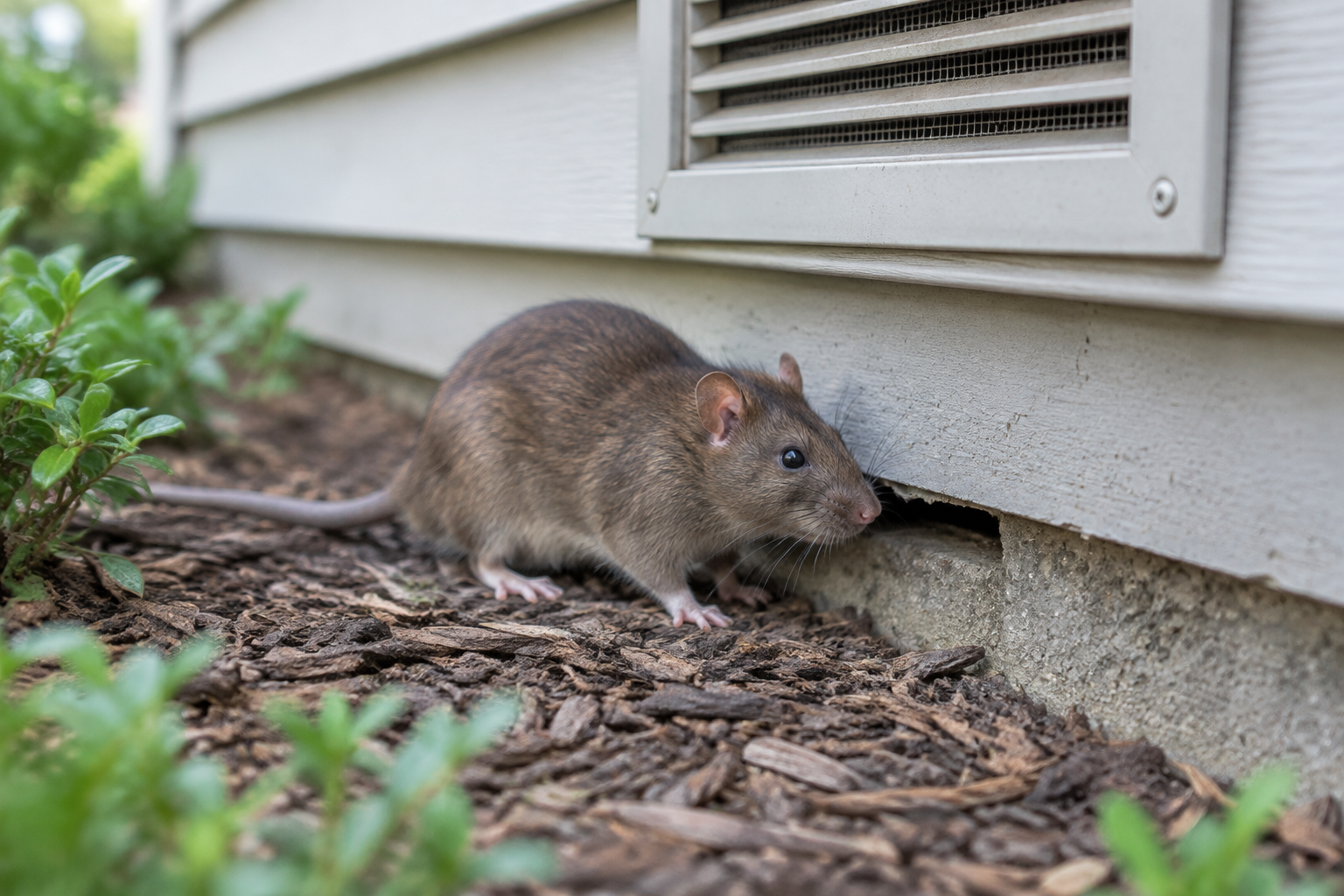
If you suspect rats in walls or an attic, first record where and when you hear activity. Then inspect only the rooms and exterior areas you can reach safely. Don’t enter an unsafe attic, climb onto the roof, open a wall, or disturb droppings to investigate.
Quick answer: Noise alone cannot confirm rats. Look for several matching clues, including fresh droppings, gnaw marks, disturbed food, travel smudges, nesting material, and an accessible entry gap.
Start by mapping the sound
Write down the time, duration, and type of sound each time it happens. Note the nearest room, wall, ceiling edge, vent, or utility fixture.
Scratching, running, squeaking, and gnawing after dark are consistent with rats, but they aren’t proof. Wall and ceiling cavities can carry sound far from its source. What seems to be directly overhead may originate along another wall or near the roofline.
Timing provides a clue, not an identification:
- Mostly nighttime activity: Rats, mice, bats, and flying squirrels are possible.
- Mostly daytime attic activity: A gray squirrel or bird may be more plausible.
- Gnawing or movement near food: Rodents become more likely, especially with damaged packages or droppings.
- Fluttering near a vent or chimney: Birds or bats remain possibilities.
Recordings can help document the pattern, but sound alone usually cannot distinguish these animals.
Check accessible rooms beside the noise
Inspect the rooms bordering the suspected wall or ceiling instead of opening the structure. Use a flashlight and avoid reaching blindly behind appliances or into holes.
Look along:
- Floor and wall edges
- Cabinet bases and the space beneath sinks
- Closets and pantry corners
- Openings around pipes, cables, and vents
- Areas behind accessible appliances
- Garage, basement, and utility-room edges
- Stored food, pet food, and animal feed
Evidence supporting rodent activity includes gnawed packaging, fresh tooth marks, dark travel smudges, shredded paper or fabric, and disturbed stored goods. Droppings near walls or utility openings also matter, but their appearance alone does not prove the animal is a rat.
Photograph signs before cleaning or moving anything. Pictures help you compare activity over time and show a pest professional where evidence appeared.
Inspect outside from ground level
Walk around the building in daylight while staying on stable ground. Note possible openings near the part of the home where activity is heard.
Check visible foundations, door bottoms, garage doors, vents, screens, eaves, soffits, and places where pipes or cables enter. Also look for damaged materials, gaps near utility lines, or branches touching the roof.
Don’t climb a ladder or attempt roofline repairs as part of this inspection. Above-ground rat entry routes can be extensive, and loose soffits or damaged vents may require qualified repair.
Avoid sealing a suspected active opening immediately. If an animal is already inside, poorly timed exclusion can leave it trapped in a wall or force it into another part of the building. Removal, monitoring, and sealing may need to be coordinated.
Treat droppings and nesting material cautiously
Do not sweep or vacuum suspected rodent droppings, urine, or nesting material. Dry cleaning can put contaminated particles into the air.
Keep children and pets away from the area. For a small amount in an accessible location, follow current public-health guidance: wear rubber or plastic gloves, wet the material with an appropriate disinfectant used according to its label, and wipe it up rather than brushing it dry.
Stop and seek professional help if contamination is widespread, accumulated, mixed into insulation, or located in ducts or other places you cannot clean safely. A strong odor can indicate urine, contamination, or a dead animal, but it does not identify the species.
Reduce food and water while you monitor
Remove easy food sources now, even before identification is complete. Store pantry goods, animal feed, and pet food in sturdy containers with tight lids. Clean spills, secure garbage, and put pet bowls away overnight.
Repair accessible plumbing leaks and reduce boxes or clutter beside walls. These steps make the area less attractive and help new droppings, gnawing, or disturbed materials stand out.
Don’t place loose poison in walls, ceilings, ducts, or attics. Rodenticides can harm people, pets, and wildlife, and an animal may die somewhere inaccessible. Any pesticide must be labeled for the pest and location and used according to its complete current label.
When professional inspection is the safer choice
Arrange qualified help when confirming or reaching the activity would require attic entry, a ladder, roof access, wall opening, or work near utilities. Professional inspection is also appropriate when:
- Sounds or evidence remain confined to walls, ceilings, ducts, or roofline areas
- Droppings or nesting material are extensive
- Fresh signs appear in several rooms
- Activity continues despite reasonable accessible control
- Bats, squirrels, birds, or other wildlife remain plausible
- A persistent odor or insects emerge from a wall cavity
- The property has attached or multiple housing units
- Household health concerns make contamination or pesticide exposure riskier
Treat suspected chewed wiring, sparking, or gas-line damage as a utility hazard rather than a routine pest problem. Leave the area and contact the appropriate emergency or utility service when there is an active electrical or gas danger.
Keep a short evidence record
Continue the sound log and add dated photographs of accessible signs. Note whether food damage, droppings, or noises continue after sanitation changes.
If you rent, send the documentation to your landlord or property manager and request an inspection. Whether you own or rent, the next safe step is the same: use visible evidence to guide identification, and don’t enter or dismantle the structure simply to find the animal.