
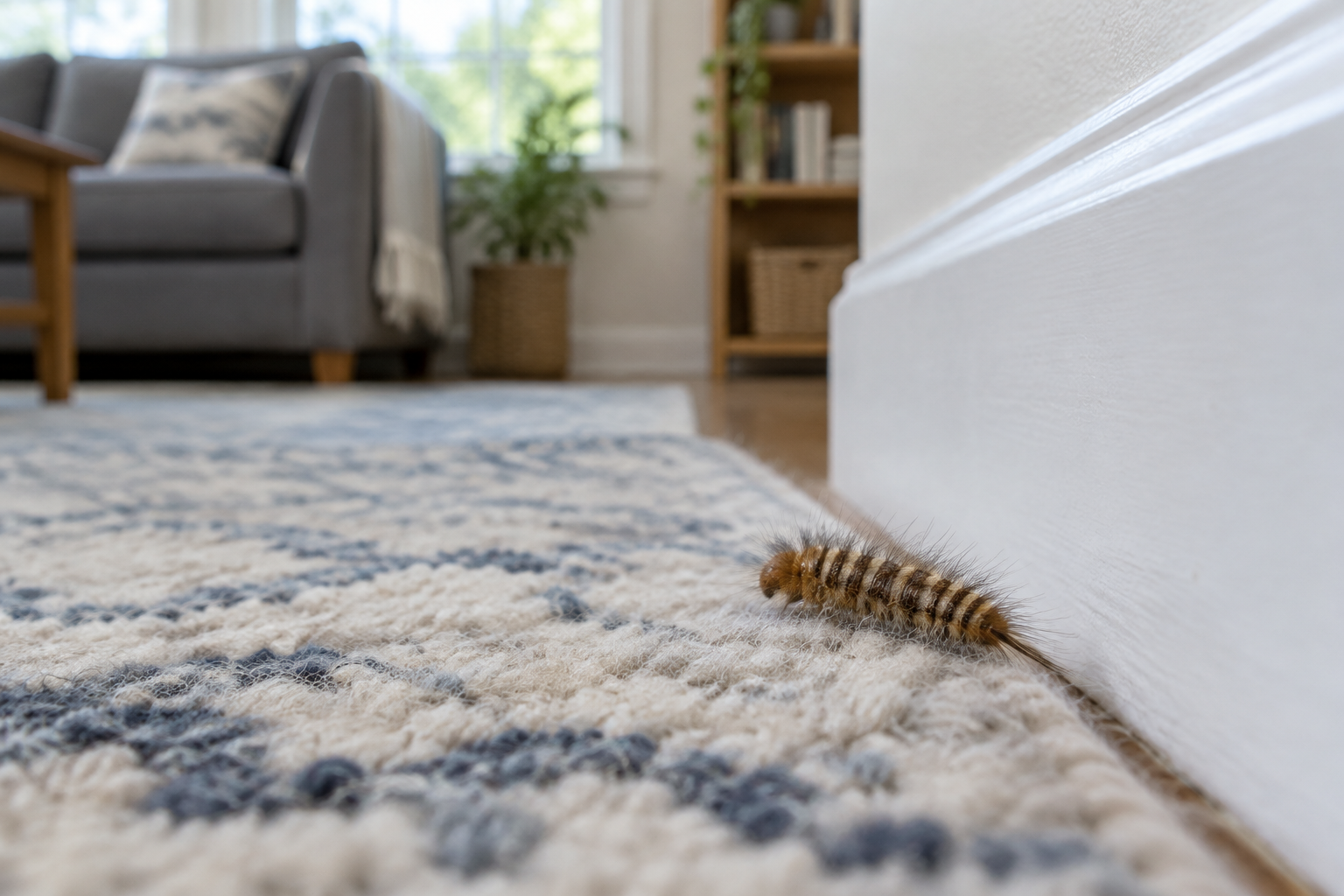
Finding carpet beetles in your house does not always mean they are breeding indoors. Adults near a window may have flown inside, but hairy larvae or shed skins near textiles require a closer inspection. Save a specimen or clear photo before cleaning, especially if you aren’t sure which insect you found.
Quick answer: Carpet beetle larvae cause material damage, while adults usually feed outdoors. Focus on locating the larval food source, cleaning affected items and nearby debris, and checking for continued activity rather than spraying visible adults.
Signs of an indoor carpet beetle source
The strongest evidence is a concentration of larvae or shed skins beside something they can eat. An isolated adult on a windowsill is much weaker evidence.
Look for these distinctions:
- Adults: Tiny, oval or rounded beetles that may look black, brown, or mottled. They fly, feed on pollen, and often collect near lighted windows.
- Larvae: Brownish, elongated or tapered insects covered with visible hairs or bristles. Some have longer hair tufts at the rear.
- Shed skins: Empty, dry skins that retain the hairy, larva-like shape. Several skins in one area can help narrow down the source.
- Material damage: Irregular holes or worn patches may occur in susceptible items, but holes alone do not confirm carpet beetles.
Clothes moth larvae can cause similar textile damage. Carpet beetle larvae leave bristly skins but not the silk webbing typically associated with clothes moth larvae.
Carpet beetle larvae primarily eat materials containing animal products. These include wool, fur, feathers, silk, leather, animal hair, natural-bristle goods, and some natural stuffing. They may also live on lint, dead insects, dry animal products, and, depending on the species, certain stored foods or seeds.
Where to inspect for carpet beetles in the house
Start where you found the greatest number of larvae or skins. Larvae can wander, so expand outward if the immediate area contains no suitable food.
Check these locations first:
- Stored wool clothing, blankets, felt, fur, feathers, and silk
- Carpet and rug edges, especially beneath furniture
- Closets, floor cracks, baseboard gaps, and accessible vents
- Upholstery seams, folds, and natural stuffing
- Pet bedding, accumulated pet hair, and dry pet food
- Windowsills and spider webs containing dead insects
- Natural-bristle brushes, leather goods, and feather-filled items
- Pantry products if larvae or beetles occur near stored food
A synthetic-looking rug or garment is not automatically protected. It may contain a wool blend, feathers, animal hair, food residue, or another material larvae can use.
Possible sources also include bird or insect nests attached to the building, dead animals in hidden spaces, or debris inside ducts and wall spaces. Don’t open walls, enter unsafe attics, disturb active nests, or climb to inspect high areas.
Clean the source and affected area
Once you identify an accessible source, use this sequence:
- Contain movable items. Place an affected textile or stored object in a bag before carrying it through the home. This limits the spread of larvae and debris.
- Decide what to keep. Discard badly damaged, low-value items in a sealed bag. Clean salvageable textiles according to their care instructions, such as by laundering or professional dry cleaning.
- Vacuum in detail. Remove larvae, shed skins, hair, lint, dead insects, crumbs, and other debris. Concentrate on carpet edges, beneath furniture, closet corners, upholstery folds, and cracks near the source.
- Dispose of vacuum contents promptly. Empty the canister outdoors into a sealed waste bag or discard the vacuum bag. Don’t leave collected insects and debris inside the machine.
- Protect cleaned belongings. Inspect items before returning them, then store susceptible materials in tightly sealed containers.
Repair damaged screens and practical gaps around doors or vents to reduce new arrivals. Inspect cut flowers before bringing them inside because adult beetles can arrive on them.
Valuable rugs, antiques, taxidermy, instruments, and delicate or feather-filled objects need specialized care. Consult an appropriate cleaner, conservator, item specialist, or pest professional rather than attempting improvised heat, freezing, or pesticide treatments.
Monitor before assuming the problem is gone
Recheck the cleaned source area and nearby dark edges for fresh larvae or skins. New larval evidence means a food source remains, even if the original item is gone.
Plain sticky traps near windows can document adult activity, but traps do not eliminate an indoor source. Pheromone traps are species-specific, so a lure may be unhelpful unless the beetle has been properly identified.
Avoid foggers, routine whole-room spraying, homemade mixtures, and pesticides applied to clothing or bedding. Source removal and cleaning are often enough. If pesticide use appears necessary, choose only a product legally permitted for carpet beetles and the intended indoor location, then follow its complete current label.
When to get professional help
Arrange identification or professional inspection when larvae keep appearing after a careful cleanout, evidence occurs in several rooms, or you cannot distinguish carpet beetles from clothes moths or stored-food pests.
Help is also appropriate when the suspected source is inside a wall, duct, chimney, inaccessible attic, animal nest, or furniture stuffing. A professional can investigate those areas without requiring you to disturb wildlife, open the structure, or treat an uncertain source.
A rash or itch cannot identify carpet beetles. Larval hairs may irritate some people, but persistent or severe symptoms, eye involvement, or breathing problems need qualified medical advice.
After cleaning, schedule a recheck of the source area and nearby storage spaces. If you find new larvae or concentrated shed skins, preserve a specimen and arrange a more detailed identification.