
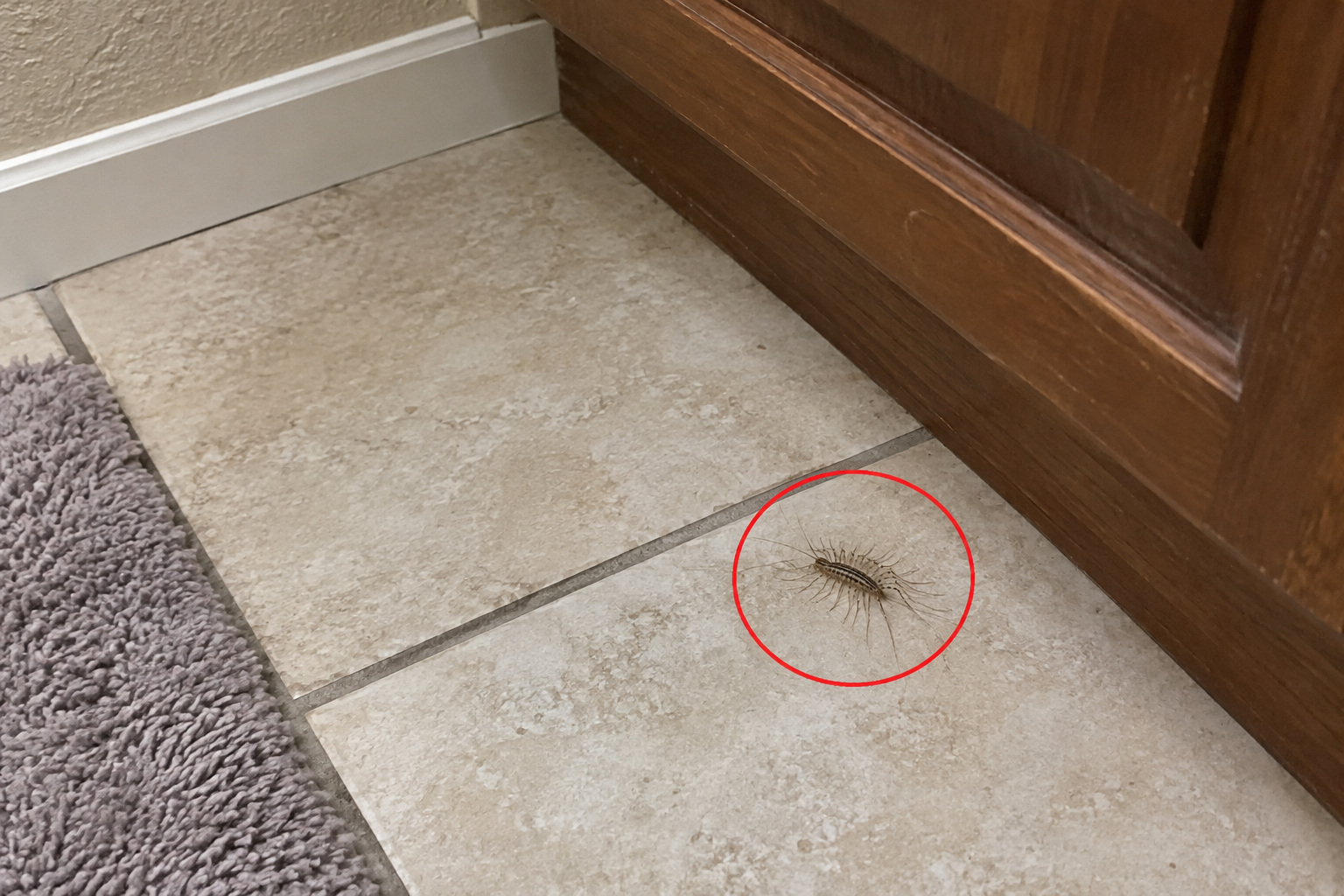
A house centipede in the bathroom usually means the room offers moisture, hiding places, or small insects to hunt. Remove the centipede with a container or vacuum, then check for leaks and pest activity. One sighting alone does not prove that centipedes are breeding inside your home.
Quick answer: Inspect under the sink, around the toilet, beside the tub, and where pipes enter walls. Look for damp materials, condensation, gaps, and small insects that could provide food.
Make sure it is a house centipede
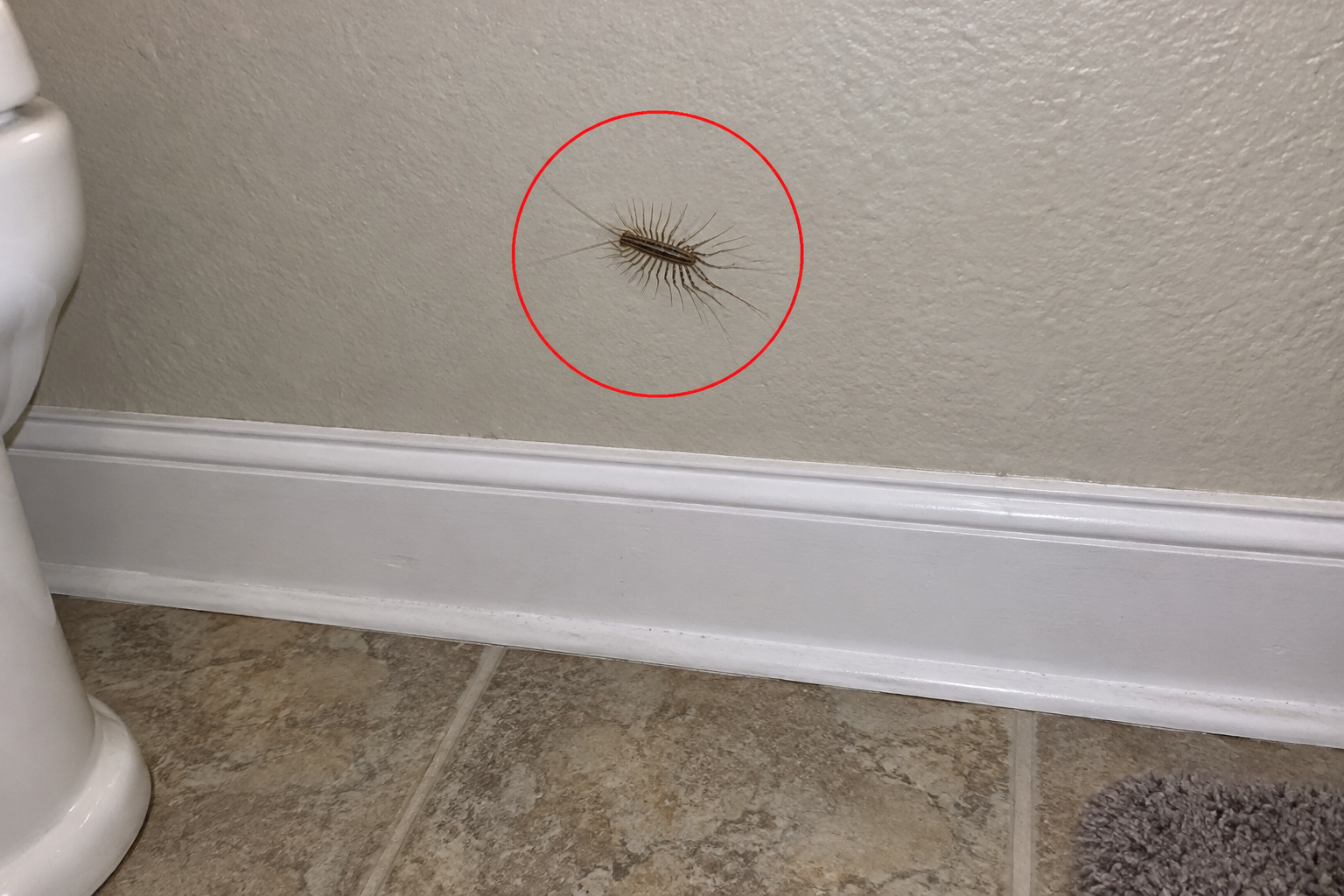
House centipedes look alarming because they move quickly and have many long legs. Adults have 15 pairs of legs, although younger ones have fewer. Their flattened bodies are usually yellowish gray or tan, with darker lengthwise stripes and very long antennae.
Millipedes are a common source of confusion. The practical differences include:
- House centipedes have one pair of legs per body segment, long widely spaced legs, and fast movement.
- Millipedes have short legs, rounded bodies, and slower movement. Many curl into a coil when disturbed.
- Silverfish have six legs and three tail-like filaments, not the many long legs seen on a centipede.
If you can do so safely, take a clear photograph before removing it. A photo can help with identification if sightings continue.
Why house centipedes appear in bathrooms
Bathrooms provide water and shelter even when they look clean. House centipedes lose moisture easily, so they favor humid rooms, damp voids, basements, and other protected areas.
They also hunt small household pests. Their prey can include silverfish, cockroach nymphs, flies, moths, spiders, and other arthropods. A centipede sighting therefore may indicate prey nearby, but it does not identify which pest is present.
House centipedes found near sinks or tubs are often assumed to have climbed from the drain. They may fall into a smooth-sided fixture and become trapped, while the actual route is a nearby wall gap or pipe opening. A dry or damaged drain trap can provide a route for pests in some situations, but the fixture itself is not proof that the centipede came through the plumbing.
What to check in the bathroom
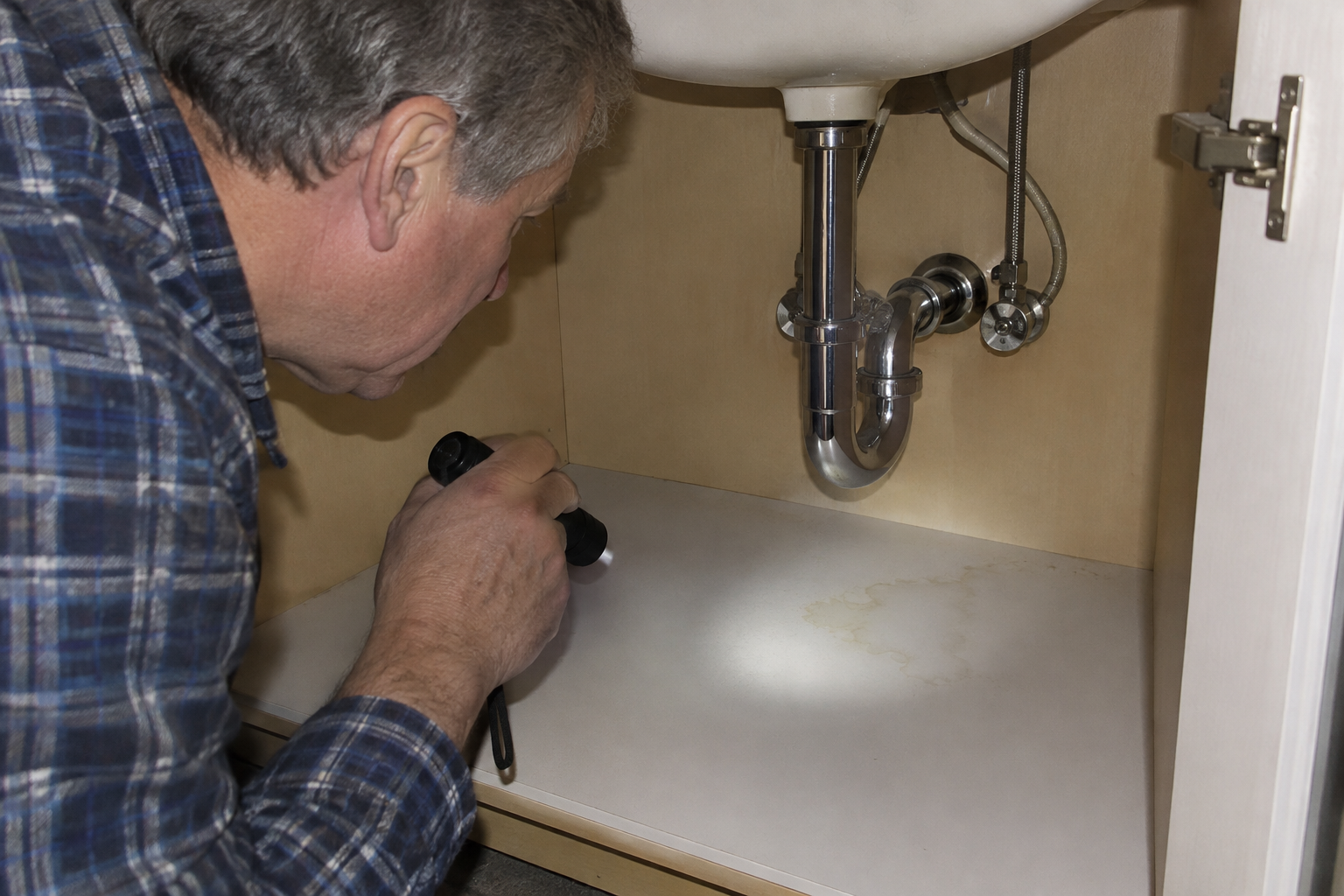
Start with moisture because it is both an attractant and a possible building-maintenance problem. Use a flashlight and inspect these areas:
- Under the sink, especially around supply lines and the drainpipe
- Around the toilet base and water-supply connection
- Along tub and shower edges, including damaged caulk
- Behind accessible storage, bath mats, and laundry baskets
- Near the exhaust fan and areas that remain wet after showers
- Around floor drains, pipe openings, baseboards, and wall cracks
- Near windows with condensation or damaged screens
Look for water stains, softened cabinet material, damp drywall, peeling paint, mildew, or a recurring musty odor. Don’t open walls or disturb electrical fixtures. A concealed or persistent leak should be evaluated by the landlord or an appropriate repair professional.
Next, look for possible prey. Silverfish shed skins and damage starchy paper materials. Cockroaches may leave shed skins, egg cases, or dark spotting in protected cracks. Small flies may gather around drains with organic buildup. None of these signs confirms a pest by itself, but repeated evidence deserves closer inspection.
What to do after one sighting
Remove the centipede rather than spraying the whole bathroom. You can trap it under a container and slide stiff paper underneath, or use a vacuum and empty it promptly according to the vacuum manufacturer’s directions. Avoid picking it up with bare hands. House centipedes rarely bite people, but they can defend themselves if trapped against skin.
Dry the room after bathing, run a working exhaust fan, and repair dripping fixtures. If humidity remains high, improving ventilation or using a properly sized dehumidifier may make the area less suitable.
Seal accessible gaps around pipes, baseboards, cabinets, and window frames once you have addressed any moisture problem. Use a material appropriate for the surface and avoid sealing over active leaks, required ventilation, or service access.
Monitor before choosing a treatment
Record where and when each centipede appears. Occasional individuals may wander indoors, while repeated sightings in the same area suggest a nearby route or favorable hiding place.
Sticky monitoring traps can help reveal activity along walls or beneath cabinets. Place them only where children and pets cannot reach them, and follow the product directions. Check them regularly so you can identify what else is being caught.
Broad indoor pesticide spraying is usually not the best first response. It may miss the moisture, entry gap, or prey population supporting the sightings. If you use any pesticide, choose one whose current label lists both the pest and the indoor location, and follow the entire label.
When repeated sightings need professional help
Consider a licensed pest professional when centipedes appear frequently, show up in several rooms, or continue after moisture and entry problems are corrected. Professional inspection is also useful when you find evidence of cockroaches or another pest that needs its own targeted control plan.
Contact a landlord or repair professional when the bathroom has a persistent leak, damaged wall material, unreliable ventilation, or plumbing openings you cannot safely access. Document the dates, locations, photographs, moisture signs, and monitoring results. That record helps separate an occasional visitor from an ongoing condition and gives the next person a clearer place to start.