
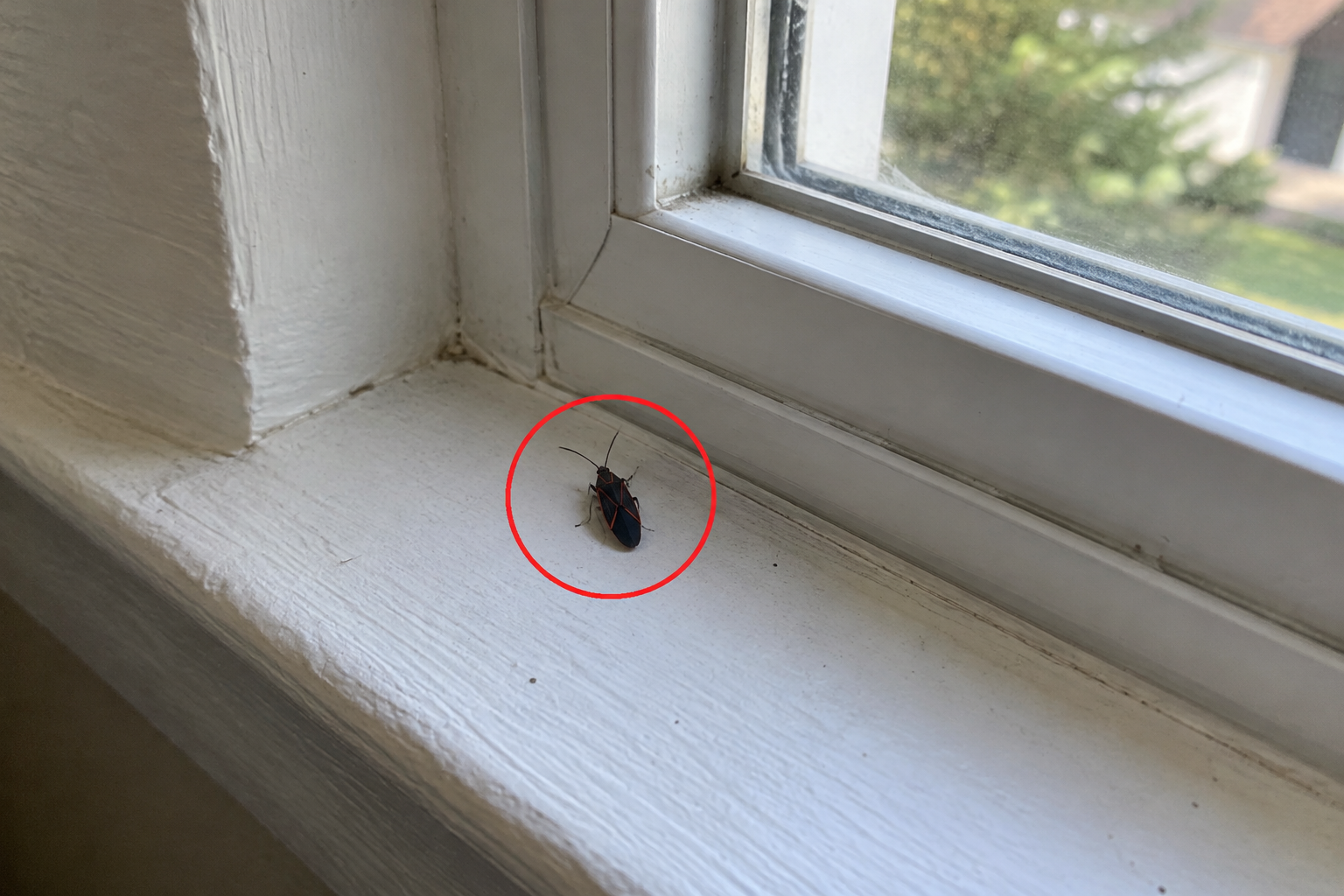
Boxelder bugs in the house are usually seasonal invaders, not insects breeding in your rooms. Vacuum visible bugs instead of crushing them, then focus on sealing exterior gaps before the next fall migration. Avoid routine indoor pesticide spraying, especially when you haven’t confirmed the insect.
Quick answer: Vacuum boxelder bugs, dispose of the collected insects promptly, and repair the cracks or damaged screens they used to enter. Exclusion is more effective than repeatedly treating bugs after they appear indoors.
Confirm That They Are Boxelder Bugs
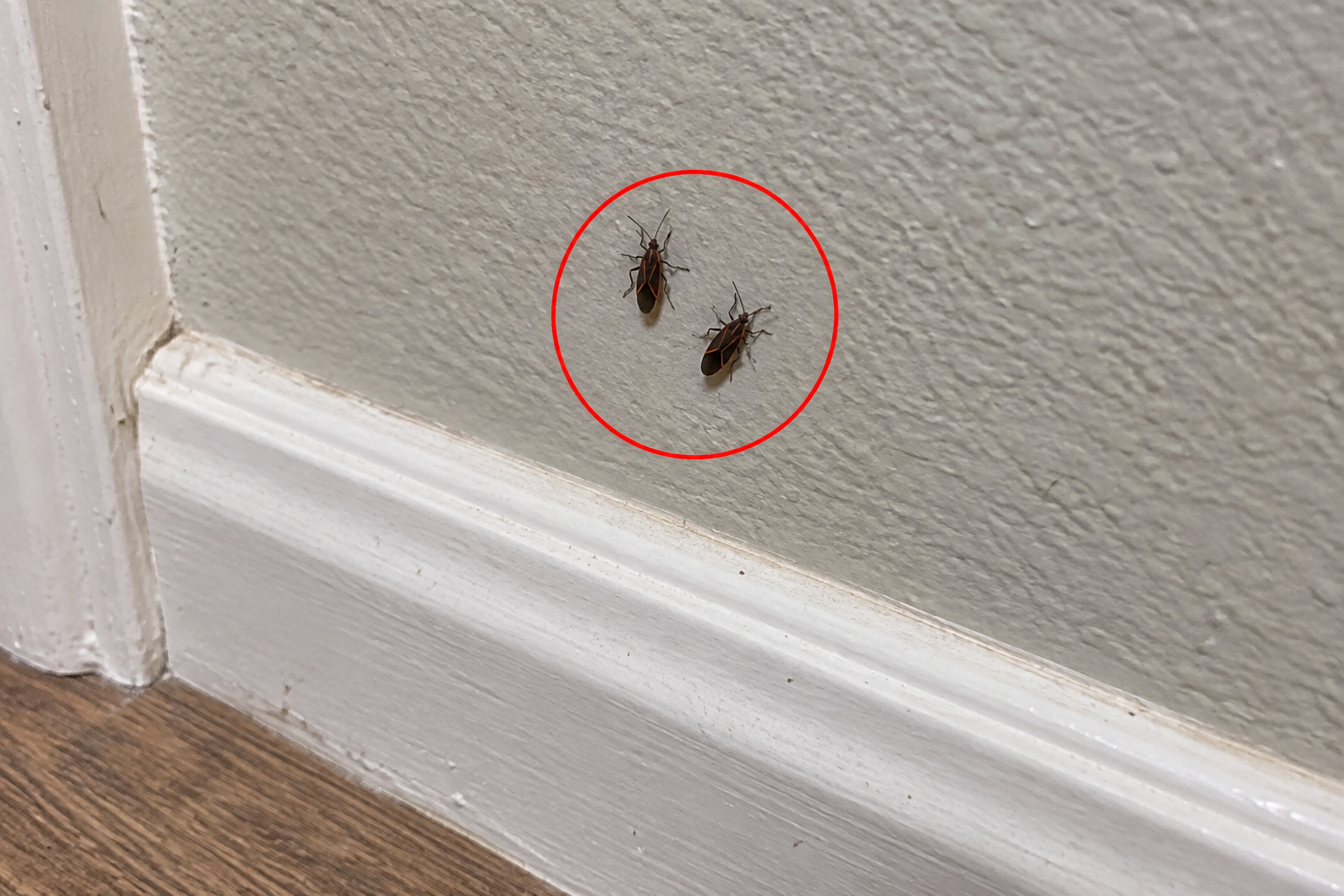
Adult boxelder bugs are about half an inch long, with elongated black bodies and thin red or orange markings. Their folded wings create reddish lines along the back. Younger bugs, called nymphs, are smaller and often mostly bright red.
You may see them clustered on warm, sunny exterior walls before they enter a building. Indoors, they often appear near windows, doors, light fixtures, baseboards, or warm upper rooms.
A few comparisons can help:
- Boxelder bugs: Narrow, elongated bodies with red or orange lines.
- Brown marmorated stink bugs: Wider, shield-shaped, mottled brown bodies.
- Lady beetles: Rounded, dome-shaped bodies that may be orange, red, or yellow.
Identification matters because prevention and pesticide labels vary by species. If the insect doesn’t match these features, save a specimen or clear photo for a local extension office or pest professional.
Remove Boxelder Bugs Without Crushing Them
Use a vacuum to collect bugs from walls, window frames, and floors. A hose attachment lets you reach them while reducing the chance of smearing them against paint, fabric, or curtains.
Dispose of the contents soon afterward:
- Remove a disposable vacuum bag, seal it in another bag, and place it in the trash.
- Empty a bagless canister outdoors into a sealable bag.
- Clean the vacuum components according to the manufacturer’s directions.
Don’t crush or sweep the insects aggressively. Boxelder bugs can release an unpleasant odor, and their body fluids may stain light-colored surfaces.
For individual bugs, capture them in a container and release or discard them outside. Wipe any marks with the gentlest cleaner suitable for the affected material, testing an inconspicuous spot first.
Why They Keep Appearing Indoors
Boxelder bugs commonly enter buildings in late summer or fall while looking for protected places to spend the winter. They can hide behind siding, around windows, in attics, and inside wall spaces.
Warm indoor temperatures or winter sunlight may activate hidden bugs. They then move toward windows and other bright areas. This can make them seem like a new infestation even though they entered months earlier.
They generally do not establish a reproducing population inside a home. Removing visible insects addresses the immediate nuisance, but sealing entry points is what reduces future numbers.
Seal the Routes Boxelder Bugs Use
Inspect the exterior before the next seasonal movement, ideally while the weather is suitable for repairs. Concentrate on the sunny sides of the building and areas where you have seen clusters.
Check these common entry points:
- Gaps around window and door frames
- Torn window, door, attic, or foundation-vent screens
- Worn door sweeps and weatherstripping
- Openings where pipes, wires, or cables enter walls
- Cracks where siding meets trim, masonry, or the foundation
- Gaps around soffits, fascia boards, and roof edges
Seal small cracks with a material appropriate for the surface and outdoor conditions. Replace damaged screens and loose weatherstripping rather than relying on temporary patches. Use fitted covers on vents without blocking necessary airflow.
Avoid working from an unsafe ladder or sealing building openings that provide required ventilation. A contractor can handle high, extensive, or structurally complicated repairs.
Address Outdoor Gathering Areas
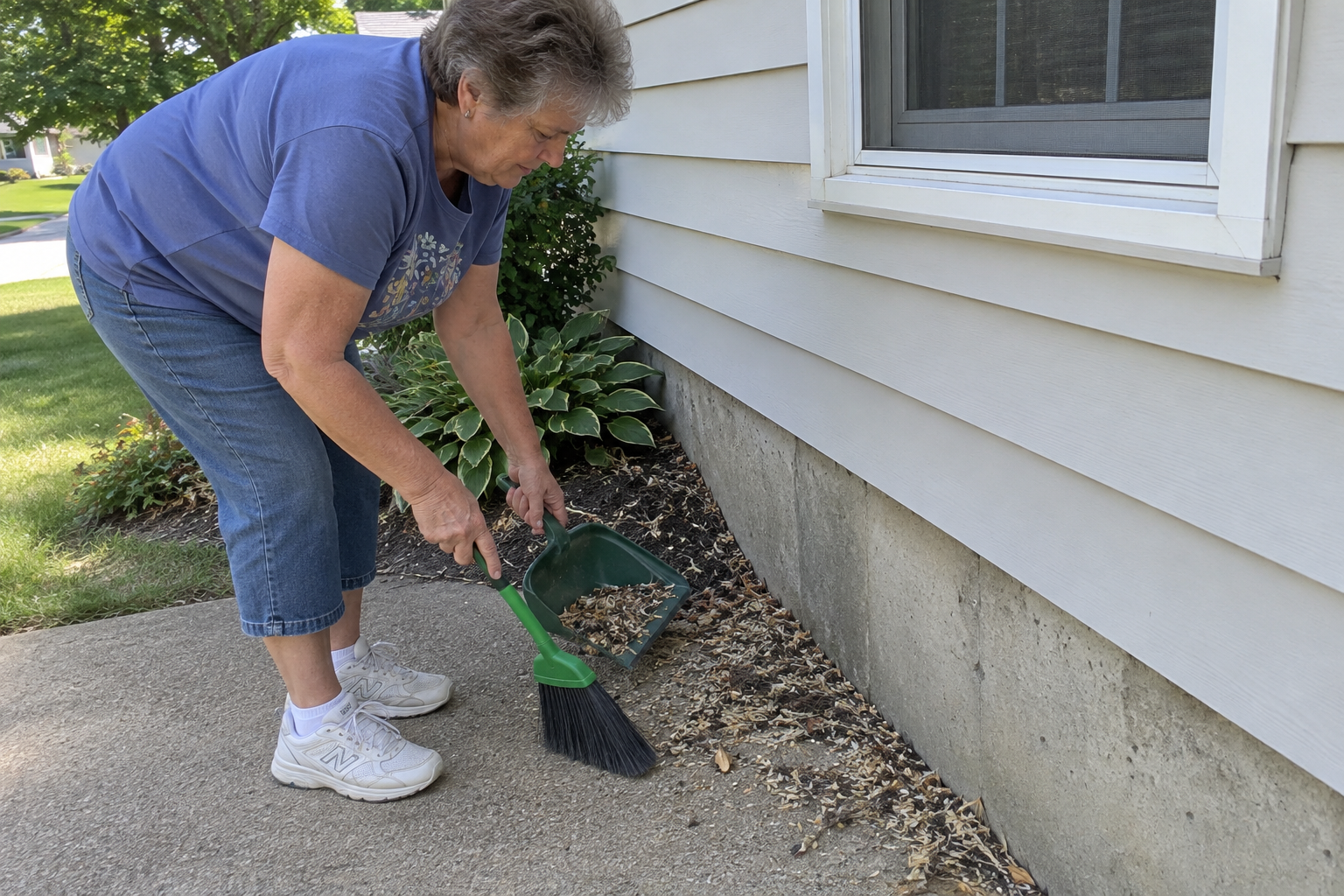
Boxelder bugs feed outdoors on certain trees, particularly female boxelder trees that produce seeds. They may also use some maples and other nearby plants. A host tree can help explain their presence, but removing a healthy tree is rarely a practical first response.
Instead, clear accumulated seeds and plant debris near the foundation when routine yard care allows. Repairing the building envelope usually provides more direct control than changing the landscape.
Watch exterior walls during warm days in late summer and early fall. New clusters can reveal which side of the house and which openings deserve attention before insects move inside.
Be Cautious With Pesticides
Indoor insecticide applications usually don’t correct the entry problem, and products may not reach bugs hidden in wall spaces. Broad spraying can also create unnecessary exposure around people, pets, food, and indoor surfaces.
If you consider a pesticide, first confirm the pest. Use only a product whose current label lists both boxelder bugs and the intended application location. Follow the complete label, including placement, ventilation, cleanup, and re-entry instructions.
Never apply an outdoor product indoors or spray into electrical fixtures and unknown wall spaces. Homemade pesticide mixtures are also a poor substitute for exclusion and label-directed treatment.
When Professional Help Is Reasonable
Consider a licensed pest professional when large numbers return despite repairs, insects are entering from inaccessible upper areas, or you cannot confidently identify them. Professional help may also be useful when exterior treatment is being considered and safe, legal placement is unclear.
Ask the professional to identify likely entry routes and explain how exclusion fits into the plan. Treatment alone may provide only temporary relief if cracks, screens, and door gaps remain open.
After removal, monitor the same windows and sunny rooms for several weeks. Record where bugs reappear, then match those indoor locations to possible exterior gaps. That simple map will make the next round of sealing more targeted and effective.