
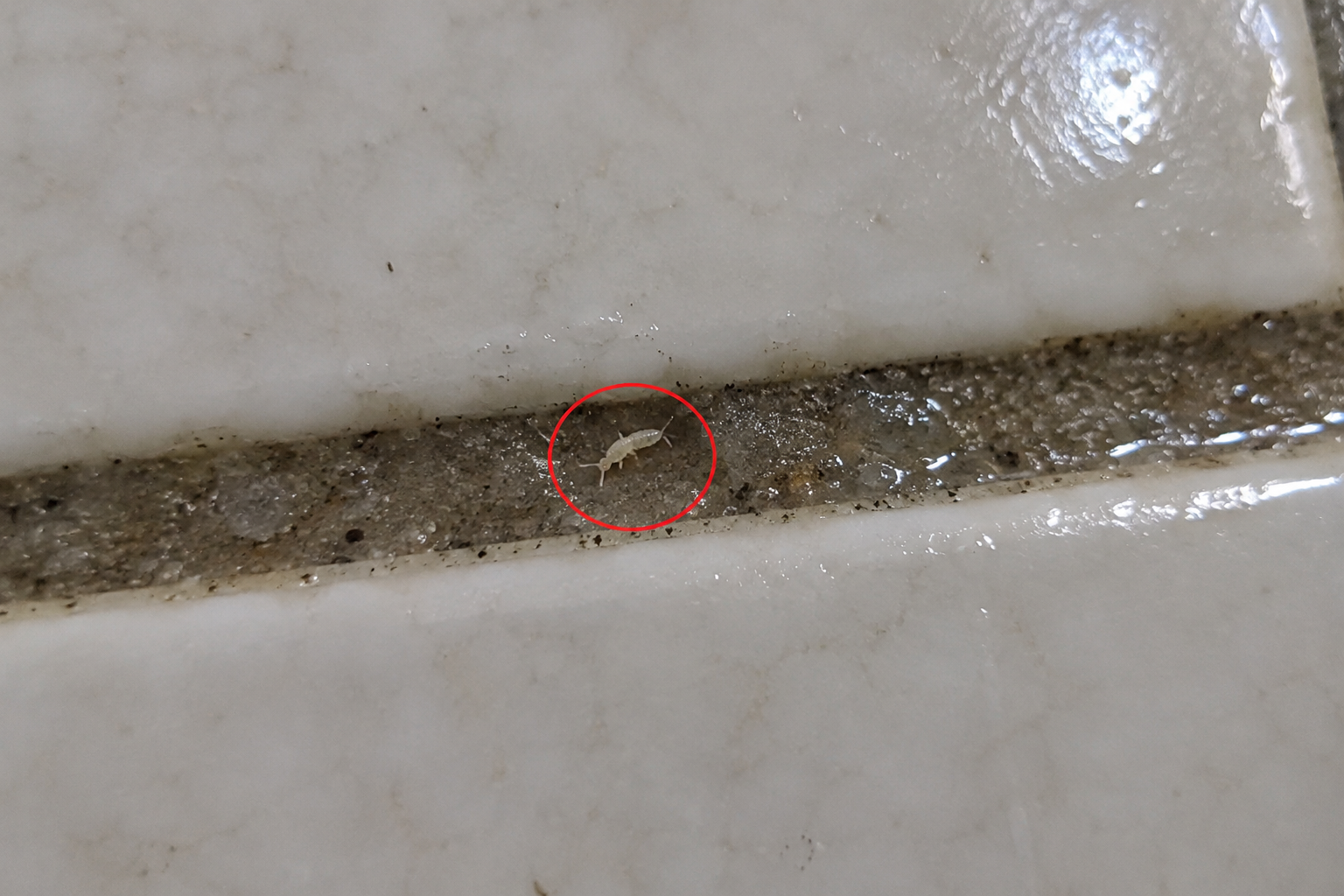
Springtails in the bathroom usually point to persistent moisture, not poor housekeeping. Vacuum or wipe up the insects, then check for leaks, condensation, and damp gaps rather than spraying the room. Although springtails are generally harmless, confirm what you’re seeing before choosing any treatment.
Quick answer: Dry the bathroom, repair leaks, improve ventilation, and clean damp organic buildup. Springtails usually disappear after their moisture source is corrected, although large or recurring numbers can indicate a hidden plumbing or building problem.
How to Identify Springtails in the Bathroom
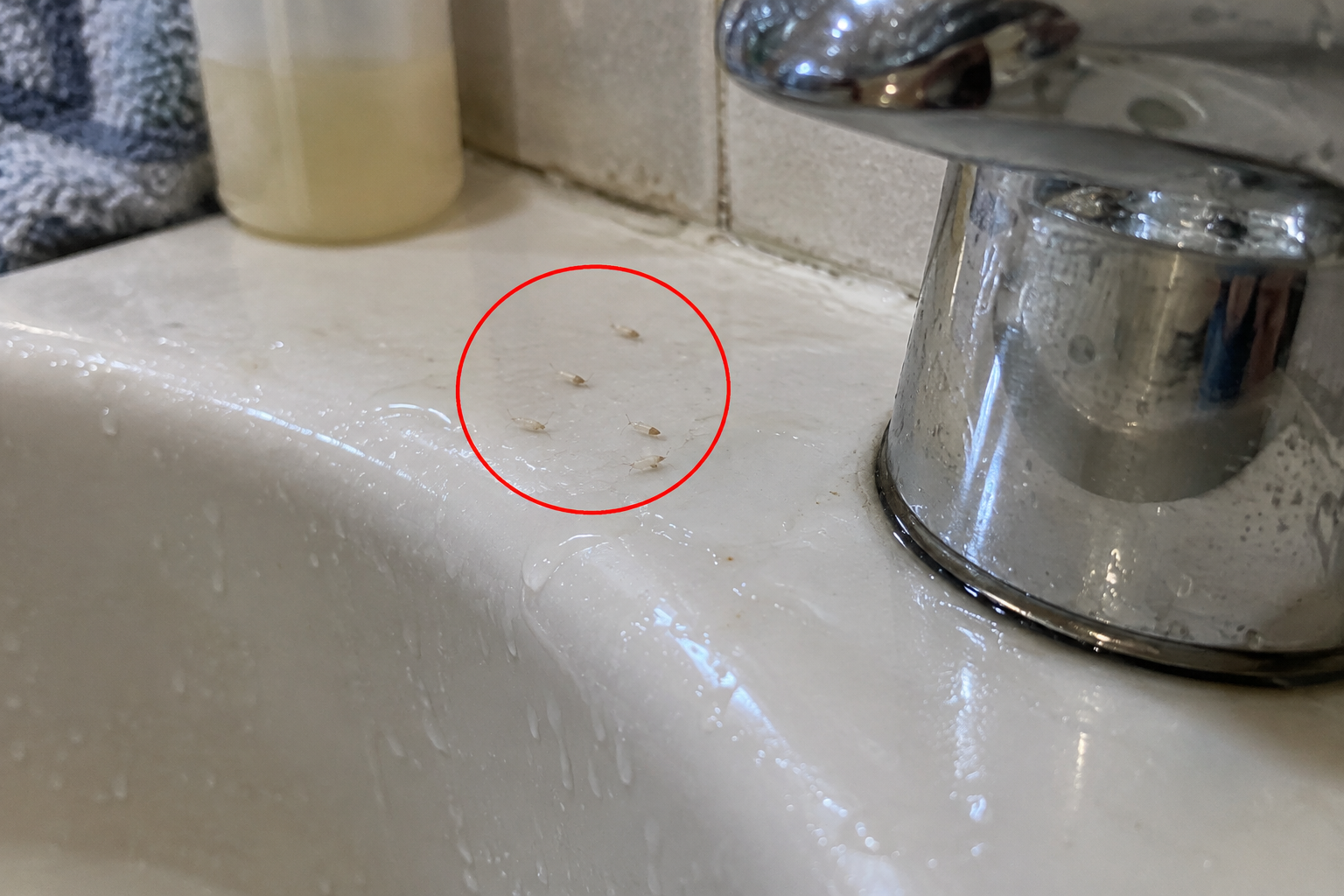
Springtails are tiny, wingless creatures that often gather around tubs, sinks, windows, floor edges, or other damp areas. Most are about 1/16 inch long, though their color can range from white or gray to brown or nearly black.
Their most useful identifying feature is how they move. Many springtails jump when disturbed by releasing a forked structure under the abdomen called a furcula. They may look like moving specks until you touch the surface near them.
Use these differences to avoid confusing them with other bathroom pests:
- Springtails: Tiny, often appear in groups, and may jump suddenly.
- Fleas: Also jump, but have a flattened body and are commonly associated with animals or resting areas. A jumping insect alone does not confirm fleas.
- Drain flies: Fuzzy, moth-like flies with visible wings that often rest near drains.
- Booklice: Very small, pale insects that favor humid areas but crawl rather than jump.
A clear close-up photo or a specimen collected on transparent tape can help with identification. Don’t identify an insect from skin irritation or a reported bite alone.
Why Springtails Appear in Bathrooms
Springtails need moisture to survive. They feed mainly on fungi, algae, bacteria, and decaying organic material, so a humid bathroom can provide both water and food.
Common sources include:
- A leaking sink, toilet, tub, or shower connection
- Condensation on pipes, windows, walls, or the toilet tank
- Wet grout, deteriorated caulk, or gaps around plumbing
- Damp bathmats, towels, cabinets, or stored items
- Organic buildup around drains and fixture edges
- Overwatered houseplants kept in or near the bathroom
- Moisture beneath flooring or inside a wall
Seeing springtails beside a drain doesn’t prove they live inside the drain. They may be feeding on damp buildup nearby or entering through a gap where a pipe passes through the floor or wall.
Outdoor populations can also move inside. Damp mulch, leaf litter, clogged gutters, poor drainage, or saturated soil near the foundation may support large numbers.
What to Do Now
Remove the visible springtails with a vacuum, damp cloth, or disposable paper towel. Empty the vacuum afterward so moisture and debris don’t remain inside it.
Next, dry the room thoroughly. Run the exhaust fan during bathing and afterward, if the fan vents outside and works properly. Wipe standing water from tub edges, counters, windowsills, and floors. Hang towels and bathmats where they can dry fully.
Then inspect for the underlying moisture source:
- Look under the sink and around supply lines for drips or staining.
- Check the toilet base and tank for moisture that returns after wiping.
- Examine caulk, grout, and wall edges for persistent dampness.
- Check cabinets and flooring for swelling, softness, discoloration, or musty odors.
- Move houseplants temporarily and let the potting mix dry as appropriate for the plant.
- Inspect the exterior wall nearby for wet mulch, drainage problems, or gaps.
Clean ordinary surface buildup with a household cleaner suitable for that surface. Never mix cleaning products. If a drain needs cleaning, follow the fixture manufacturer’s instructions and avoid pouring pesticide into it unless the complete current product label specifically allows that use.
Why Spraying Usually Doesn’t Solve It
Indoor sprays may kill exposed springtails without correcting the damp place supporting them. More can appear if moisture, fungal growth, or an entry route remains.
Avoid fogging the bathroom or applying pesticide broadly along floors and fixtures. Bathrooms include drains, water sources, toothbrushes, towels, cosmetics, and surfaces people touch frequently. If pesticide use becomes necessary, use only a product labeled for springtails and the exact indoor location, and follow the entire current label.
Sealing gaps can help after the area is dry. Replace failed caulk where appropriate and seal openings around pipes or baseboards that provide entry. Don’t seal over active leaks, wet building materials, or damage that still needs inspection.
Monitor for One to Two Weeks
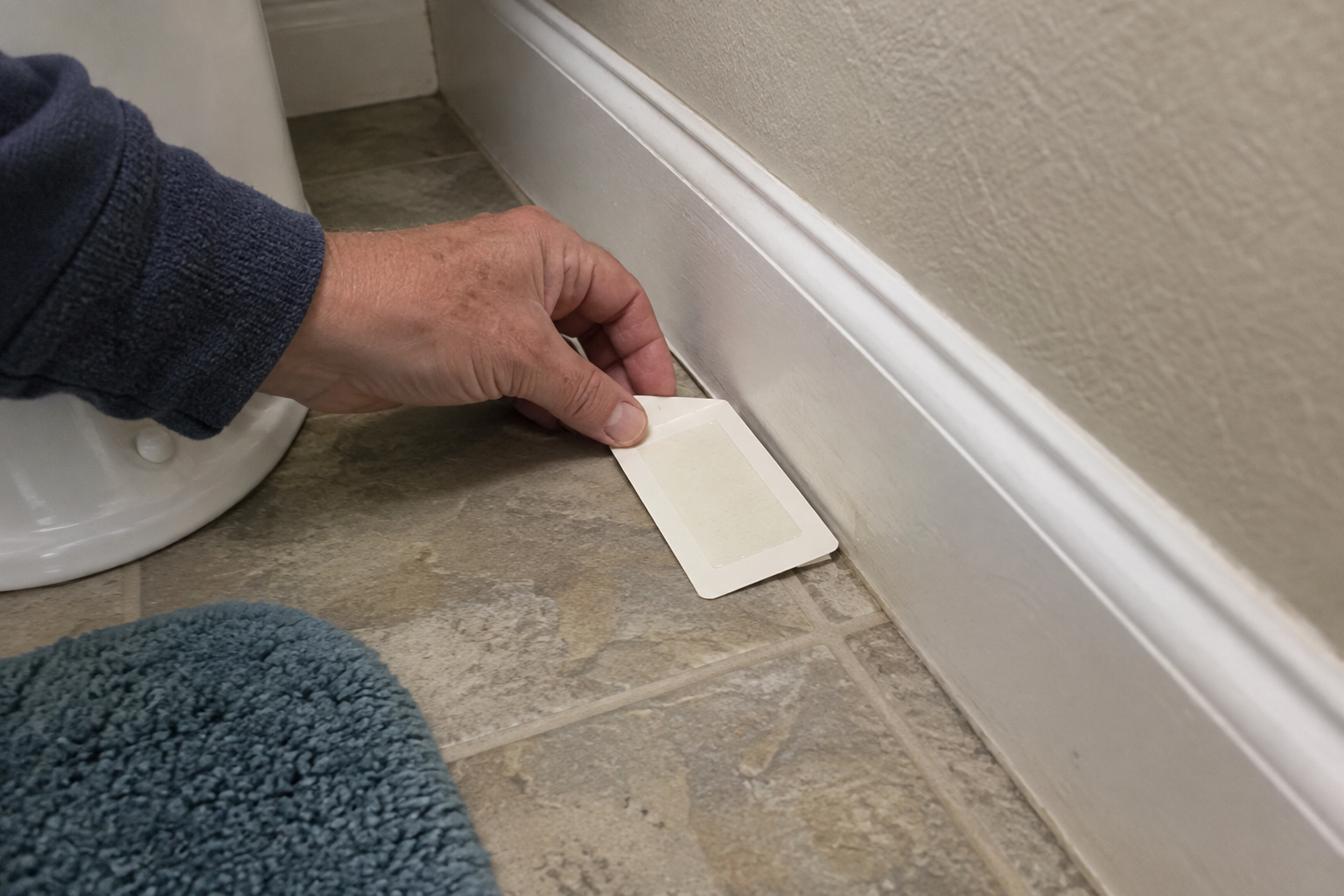
Place small sticky monitors near likely activity areas, but keep them away from children and pets. Record where springtails appear and whether numbers decline as the room dries.
Recurring activity in one location can narrow the search. Springtails concentrated beneath a sink suggest a different moisture source than insects appearing along an exterior wall or beside a houseplant.
When to Get More Help
Contact a plumber, landlord, or building professional if you find an active leak, soft flooring, swollen trim, persistent staining, or moisture inside a wall. Renters should document the insects and visible moisture, then report building-related problems through the appropriate maintenance process.
Consider a licensed pest professional when identification remains uncertain, large numbers continue after moisture correction, or the source is somewhere you cannot safely reach. An inspection should focus on identifying the insect and locating moisture, not merely treating the visible bathroom surfaces.
For now, remove the insects, dry the room, and check the nearest plumbing and damp materials. A steady drop in springtail numbers is the clearest sign that you found and corrected the source.