

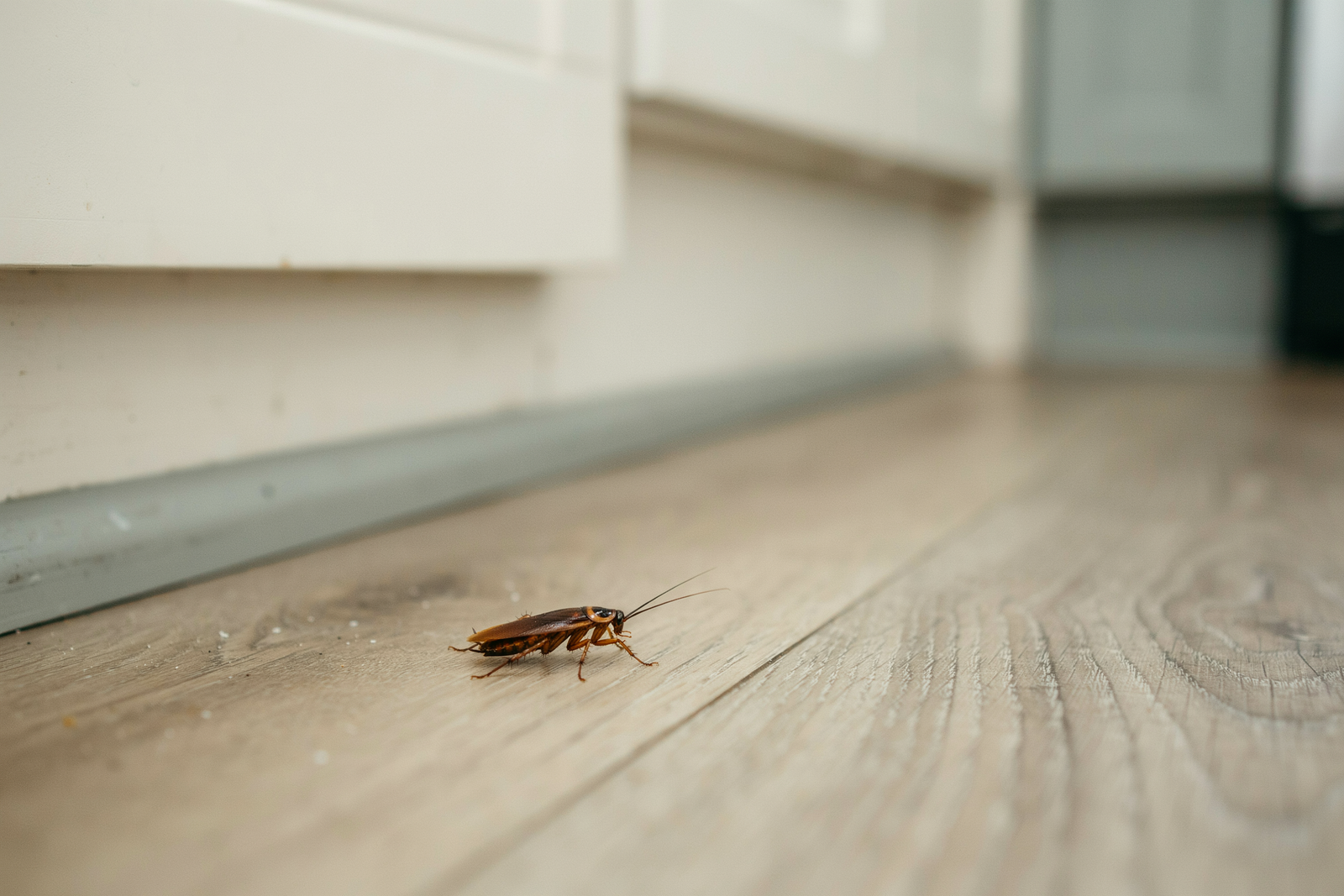
The most reliable way to get rid of roaches is to combine food and moisture control with monitoring and targeted treatment. Start by inspecting kitchens and bathrooms, cleaning up accessible insects and food debris, and placing sticky monitors. If you use pesticide, choose one labeled for cockroaches and the exact indoor location, then follow the complete label.
Quick answer: Remove food and water, vacuum accessible roaches and egg cases, seal hiding places, and use labeled bait near confirmed activity. Avoid foggers and routine room-wide spraying. Keep monitoring so you know whether the population is actually shrinking.
Confirm where the roaches are active
Finding one cockroach does not reveal the size or source of the problem. Check at night or early in the morning, when many household cockroaches are active.
Use a flashlight to inspect:
- Under sinks and around plumbing
- Behind or beside refrigerators and stoves
- Inside cabinet corners and along wall edges
- Near trash, recycling, and stored pet food
- Around warm appliances and utility areas
- Inside cardboard storage and clutter near walls
Look for live insects, shed skins, egg cases, and small dark spotting. These signs can support an identification, but one dropping or stain is not enough to confirm cockroaches.
If possible, capture a specimen in a sealed container or take a clear photograph. Species matters because some roaches breed indoors, while others may enter from drains, utility spaces, or outdoors.
Common household possibilities include:
- German cockroaches: Small, light brown roaches with two dark stripes behind the head. They commonly gather near food, warmth, and moisture.
- American cockroaches: Much larger, reddish-brown insects often associated with basements, utility areas, sewers, and other warm, damp places.
- Oriental cockroaches: Dark, broad roaches commonly found in cool, damp areas.
- Brown-banded cockroaches: Small roaches that may occupy drier, higher locations, including cabinets and furniture.
A local extension office or licensed pest professional can help when the identification is uncertain.
Remove food, water, and easy shelter
Cleaning alone may not eliminate an established infestation, but it makes every other control method work better. Roaches can survive on crumbs, grease films, spills, pet food, and residue hidden under appliances.
Begin with the areas where you found activity:
- Store food in tightly closed containers.
- Clean crumbs and grease from counters, cabinet edges, and floors.
- Wash dishes and empty standing water before bed.
- Keep trash covered and remove it regularly.
- Store pet food securely and pick up unfinished portions.
- Repair dripping faucets and dry wet sink or cabinet areas.
- Reduce cardboard, paper bags, and clutter near walls.
Vacuum accessible roaches, shed skins, and egg cases rather than crushing or sweeping them around. Follow the vacuum manufacturer’s instructions, seal the collected material, and move it to an outdoor trash container. Wipe the area afterward with ordinary household cleaner suitable for the surface.
Cockroach debris can aggravate allergies and asthma. Avoid stirring up heavy accumulations, especially if someone in the household has asthma or another breathing condition.
Use sticky monitors to find hidden activity
Sticky traps are monitoring tools, not usually a complete treatment. Place unbaited or cockroach-labeled monitors against walls near suspected travel routes, following the package directions. Keep them away from children and pets.
Write the date and location on each monitor. Check them regularly and compare catches by room. This shows where treatment should be concentrated and whether activity is falling.
A single monitor with several roaches can be more useful than several monitors placed randomly. It points you toward a nearby food source, water source, hiding place, or entry route.
Seal gaps after you locate the activity
Cockroaches hide in narrow cracks and may travel between rooms or attached homes through openings around pipes and cabinets. Seal accessible gaps with a material suitable for that surface.
Focus on:
- Gaps where pipes enter walls
- Openings behind sinks and cabinets
- Cracks along baseboards
- Loose trim and cabinet joints
- Gaps around doors leading outside or into shared corridors
- Damaged screens and door sweeps
Do not seal insects inside an appliance or electrical fixture, and do not open or dismantle equipment unless the manufacturer says it is safe. Some repairs require a maintenance worker or qualified tradesperson.
In apartments and other attached housing, report recurring activity promptly to the landlord or property manager. Roaches may move through shared walls and utility routes, so treating one unit without inspecting nearby areas may not solve the source.
How to get rid of roaches with targeted bait
Cockroach bait is often more useful than spraying every visible insect. Baits are designed to be eaten, so placement near active hiding and travel areas matters.
Choose an EPA-registered product labeled for the confirmed pest and the indoor area where you plan to use it. Bait stations can limit access to the bait, while gel products may be labeled for placement in specific cracks and crevices. Neither format is appropriate everywhere.
Follow these boundaries:
- Read and follow the complete current label.
- Use only the amount and placement method the label directs.
- Keep bait away from food-contact surfaces.
- Place it where children and pets cannot reach it.
- Do not apply gel to hot, wet, frequently washed, or exposed surfaces unless the label permits that use.
- Do not spray insecticide on or near bait unless both labels explicitly allow it.
- Never combine products or transfer pesticide into an unmarked container.
Bait does not necessarily produce an immediate stop in sightings. Continue sanitation and monitoring, and maintain or replace the bait only as its label directs. If captures remain steady or rise, reconsider the species, placement, food competition, and extent of the infestation.
What usually does not solve the problem
Foggers and bug bombs are poor tools for cockroaches. The pesticide may not reach the narrow spaces where roaches hide, and foggers can expose people and pets or create fire and explosion hazards when misused.
Spraying every baseboard is not a complete plan. A contact spray may kill a visible insect without controlling roaches or egg cases hidden nearby. Broad pesticide use can also increase indoor exposure and interfere with bait placement.
Homemade pesticide mixtures are not a safer shortcut. Do not mix household chemicals, pesticides, or unregistered remedies. Product labels control where and how registered pesticides may be used.
Ultrasonic devices and a few scented household products should not replace inspection, food and moisture control, monitoring, and a proven targeted treatment.
Know when professional help is the safer step
Consider a licensed pest professional if you see roaches during the day, find many young roaches or egg cases, or detect activity across several rooms. These signs can indicate a larger indoor breeding population.
Professional help also makes sense when:
- Monitors do not show a clear decline after consistent control efforts
- Roaches appear to be inside walls, appliances, or other places you cannot reach
- The infestation extends across attached units
- Identification remains uncertain
- Contamination is too extensive to clean without disturbing large amounts of debris
- Asthma, pregnancy, young children, or other household concerns make pesticide exposure especially important to minimize
Ask how the pest will be identified, what nonchemical corrections are needed, which areas will be treated, and how results will be monitored. Request the product label and written instructions for preparation, ventilation, re-entry, cleaning, and follow-up.
For now, place dated monitors in the kitchen and bathroom, remove overnight food and water, and inspect the areas with the highest catches. That evidence will tell you where targeted action is needed next.
