

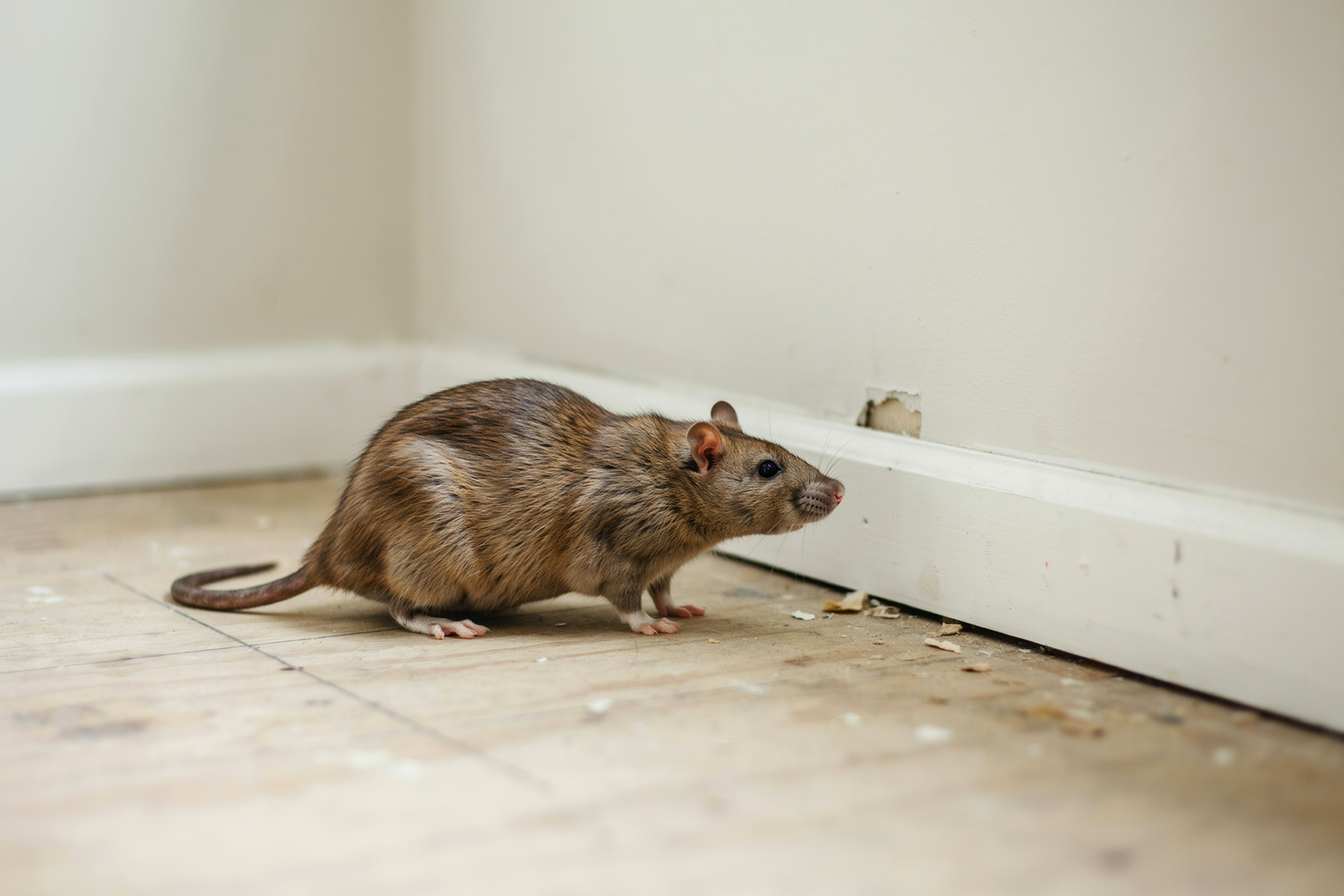
To get rid of rats in the house, remove accessible food and water, place rat-sized snap traps along active travel routes, and close entry points with durable materials. Don’t sweep or vacuum dry droppings, and keep traps and rodent bait away from children and pets.
Quick answer: Start with evidence, sanitation, and several well-placed snap traps. Clean contamination using wet disinfection methods, inspect for gaps as small as a quarter, and monitor until there are no fresh signs. Bring in a licensed professional for heavy contamination, inaccessible activity, or continued signs despite careful trapping and exclusion.
What to do first
Keep people and pets away from rooms with fresh droppings, nesting material, or a trapped rodent. Put exposed food into sturdy containers, clean up spills, and remove pet food after feeding.
Next, inspect rather than immediately spraying or scattering bait. Look along walls, behind appliances, beneath sinks, in basements, and near stored food. Rats usually travel beside walls or objects instead of crossing open rooms.
If you rent, report the evidence to your landlord or property manager promptly. Rats in apartments and attached homes may move through shared walls, utility routes, drains, or neighboring units, so one-unit treatment may not solve the source.
Make sure the signs fit rats
Seeing the animal provides stronger evidence than finding one dropping. Signs that can support a rat identification include:
- Repeated sightings of a large, long-tailed rodent
- Fresh gnawing on food packages, wood, plastic, or wiring
- Droppings noticeably larger than typical mouse droppings
- Greasy rub marks along frequently used walls or beams
- Tracks, burrows, shredded nesting material, or nighttime movement sounds
Droppings alone cannot confirm the species or whether the activity is current. Rat droppings also vary with age and diet. If identification is uncertain, a pest professional can inspect the evidence before controls are placed.
Damaged wiring, strong odors from places you cannot reach, or movement in ceilings may indicate a larger or inaccessible problem. Avoid opening walls or entering unsafe crawl spaces to investigate.
Remove the food, water, and shelter rats use
Sanitation rarely removes an established rat problem by itself, but it makes trapping more effective and reduces future activity.
Store grains, snacks, birdseed, and pet food in tightly closed, durable containers. Empty indoor trash regularly and use cans with secure lids. Clean beneath stoves, refrigerators, and cabinets where crumbs and grease collect.
Fix dripping pipes and eliminate standing water when you can do so safely. Don’t leave pet bowls or food out overnight in an active area. Reduce cardboard, paper piles, and crowded storage near walls so you can inspect and place traps properly.
Outside, keep trash secured and pick up fallen fruit or spilled birdseed. Trim dense vegetation touching the building and move clutter away from the foundation. Outdoor changes matter because indoor rats often depend on nearby food and cover.
How to get rid of rats in the house with traps
Traditional rat-sized snap traps are usually the most practical DIY control. They let you confirm a catch and remove the carcass instead of risking a rat dying inside a wall.
Use multiple traps where you have found fresh evidence. Place them on stable surfaces beside walls, with the trigger end facing the wall. Useful locations may include behind appliances, inside undisturbed cabinets, or beside known travel routes.
Rats often avoid unfamiliar objects. If traps are repeatedly ignored, place baited traps without setting them for a short period. Once rats have fed from them, set the traps according to the manufacturer’s directions.
Keep every trap where children and pets cannot touch it. A protective trap enclosure may be necessary, but it must be designed for the trap and used as directed. Check traps at least daily and follow local waste rules for carcass disposal.
Continue monitoring after a catch. A week without captures or fresh evidence is more useful than a single quiet night. If bait disappears without triggering traps, reconsider trap size, stability, placement, and whether mice rather than rats are present.
Avoid glue traps and live-catch traps. Frightened rodents may urinate, and releasing a live rat creates handling and disease risks without correcting the entry point.
Seal the routes rats are using
Rats can squeeze through an opening about the width of a quarter. Inspect the foundation, doors, vents, roof edges, crawl-space openings, and places where pipes or cables enter the building.
Pay particular attention to:
- Gaps under exterior doors or damaged garage-door seals
- Openings around plumbing, utility lines, and vents
- Broken foundation vents or screens
- Holes where different building materials meet
- Drain or sewer defects that require a plumber
Use durable, chew-resistant repairs suited to the building material. Metal mesh, metal flashing, mortar, or another solid repair may be appropriate. Soft foam, plastic screen, or caulk alone may not withstand gnawing.
Don’t casually seal a clearly active opening if doing so could trap rats inside a wall, attic, or occupied room. Combine exclusion with an active trapping plan. Complicated roof, sewer, crawl-space, or shared-building routes are better handled by the appropriate building specialist or pest professional.
Clean droppings without stirring up dust
Do not sweep or vacuum dry rat urine, droppings, or nesting material. That can send contaminated particles into the air.
For a small, ordinary cleanup:
- Keep others away and ventilate the space for about 30 minutes before cleaning. Leave the area while it airs out.
- Put on rubber or plastic gloves.
- Wet droppings and urine thoroughly with an EPA-registered disinfectant used exactly as its label directs.
- Allow the required wet contact time, then wipe up the material with paper towels.
- Disinfect the surrounding hard surface, bag the waste, and place it in a covered trash container.
- Wash your gloved hands before removing the gloves, then wash bare hands with soap and water.
Do not mix disinfectants or add extra product. Food-preparation surfaces may have separate rinse instructions on the label.
Heavy contamination requires different protection and cleanup methods. Contact a qualified professional if droppings cover large areas, contaminated material is inside ventilation equipment, or cleanup would disturb insulation or extensive nesting. Seek medical guidance for concerning symptoms after rodent exposure rather than trying to diagnose the cause yourself.
Be cautious with rat poison
Rodenticide bait can poison children, pets, and wildlife. It may also leave a dead rat in an inaccessible place. For these reasons, indoor trapping is often the better homeowner starting point.
If rodenticide becomes necessary, use only a product labeled for rats and the exact indoor location. Follow the complete current label, including bait-station, placement, inspection, storage, and disposal directions. Never scatter loose bait, transfer it into another container, or place it where a child, pet, or non-target animal can reach it.
Call Poison Control or emergency services immediately if a person may have swallowed or contacted a pesticide in a harmful way. Contact a veterinarian promptly for suspected pet exposure.
When professional help is the safer step
Arrange a licensed inspection when rats continue appearing after careful sanitation, trapping, exclusion, and monitoring. Professional help is also appropriate when:
- Rats are active in several rooms or building units
- Nests or activity are inside walls, ducts, ceilings, or unsafe crawl spaces
- Contamination is extensive
- Electrical wiring or structural materials are damaged
- Sewer or major building defects may be involved
- You cannot protect children, pets, or vulnerable adults from control devices
- The species or source remains uncertain
Until the inspection, keep food secured, maintain protected traps if they can be used safely, and note where fresh signs appear. That record helps identify travel routes and shows whether the problem is shrinking or moving.
