

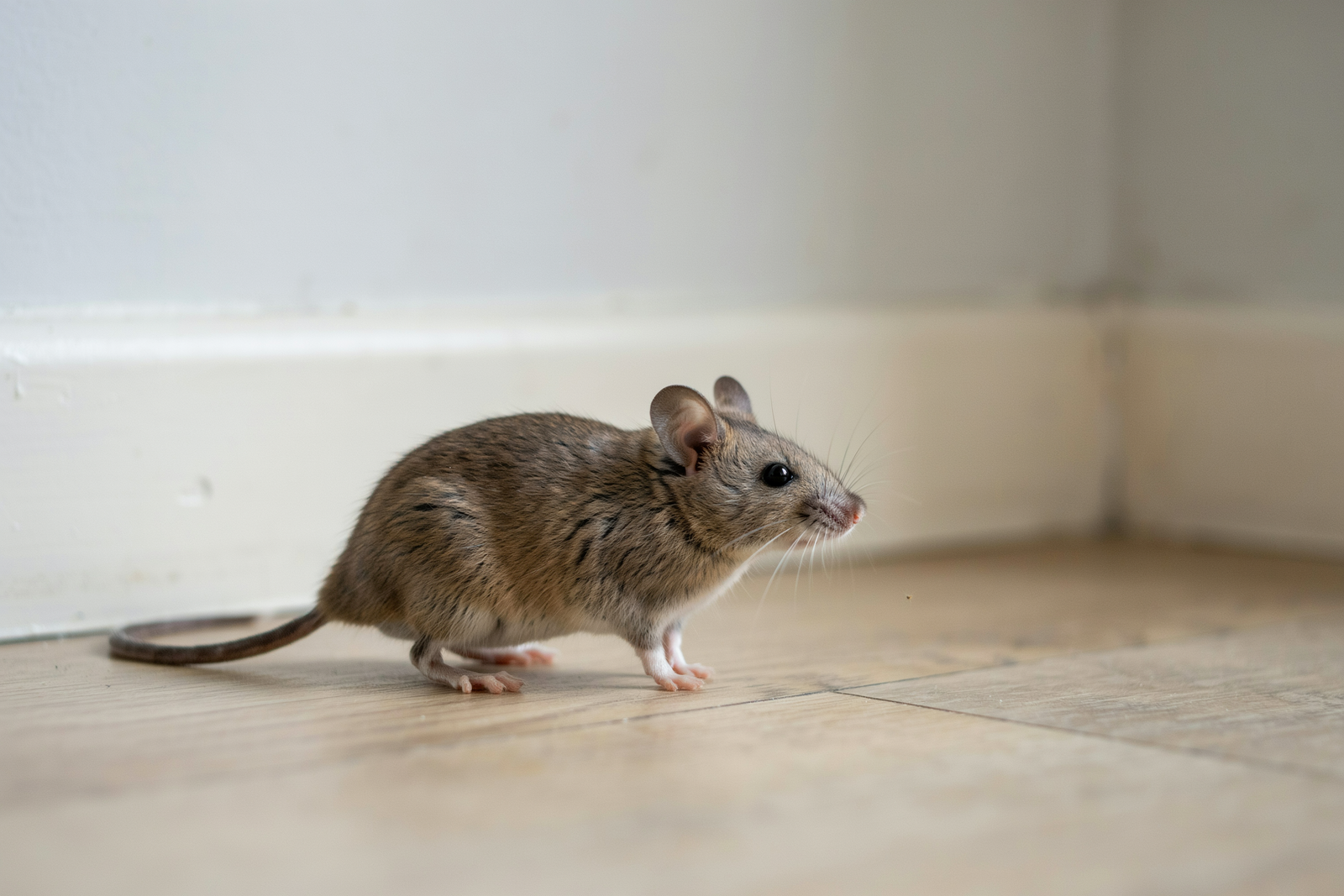
The most reliable way to get rid of mice is to combine trapping with food control and entry-point sealing. Start by placing snap traps where you see activity, secure accessible food, and inspect for openings. Avoid sweeping or vacuuming droppings because that can send contaminated dust into the air.
Quick answer: Use several mouse snap traps along walls, remove food and water sources, seal gaps about 1/4 inch or larger, and check for fresh signs each day. Keep traps and any rodent-control products away from children and pets.
First, confirm where mice are active
Seeing one mouse is useful evidence, but noises or droppings alone do not confirm the species. Rats, insects, and other household problems can leave confusing signs.
Look for several clues together:
- Small droppings in drawers, cabinets, or along walls
- Gnaw marks on food packages, wood, or plastic
- Shredded paper, fabric, or insulation used as nesting material
- Tracks in dusty areas
- Scratching sounds near walls or ceilings, especially at night
- Food packages with small holes
Focus your inspection behind the stove and refrigerator, under sinks, inside lower cabinets, and near stored food. Also check garages, basements, utility rooms, attics, and the places where pipes or wires enter walls.
Mouse droppings are generally much smaller than rat droppings, but size alone isn't a reliable identification method. If you find large droppings, major gnawing damage, or burrows around the building, you may be dealing with rats and need a different trapping setup.
How to get rid of mice step by step
1. Remove easy food and water
Mice need very little food, so small improvements throughout the home matter more than one major cleaning session.
Move cereal, flour, grains, snacks, and pet food into sturdy containers with tight lids. Clean crumbs and grease from counters, floors, and the spaces beside appliances. Take household garbage out regularly and use a bin with a secure lid.
Don't leave pet food or water out overnight when practical. Repair dripping pipes and remove standing water, especially under sinks and in basements.
Cardboard boxes and crowded storage give mice protected nesting areas. Reduce clutter near walls and move stored items onto shelving where you can inspect underneath them.
2. Set multiple snap traps
Traditional snap traps provide a targeted way to remove mice without leaving poisoned rodents inside walls. Use traps made for mice, not larger rat traps.
Place traps along walls where you found signs. Set each trap so the baited end is next to the wall, forming a “T” with the wall. Mice tend to travel along edges rather than cross open rooms.
Use several traps in active areas rather than relying on one. A small amount of bait is enough. Too much can let a mouse feed without triggering the trap.
Keep every trap out of reach of children and pets. Where that isn't possible, place it inside a protective trap station designed for that purpose and follow its instructions. Never place an exposed trap where a child or animal can touch it.
Check traps daily. Wear gloves when handling a trapped rodent, and follow the safe cleanup steps below. Continue trapping until you have gone at least one week without captures or fresh signs.
Glue traps and live-catch traps are generally poor choices. A trapped mouse can remain alive and release urine, while relocated mice may return or fail to survive. Local rules may also affect whether and where a live rodent can be released.
3. Find and seal entry points
Adult mice can fit through openings about 1/4 inch wide. Inspect both the interior and exterior of the home, concentrating on ground-level gaps and utility lines.
Common entry points include:
- Gaps under exterior doors or garage doors
- Openings around pipes, cables, and vents
- Cracks where the foundation meets siding
- Damaged screens
- Gaps behind cabinets and appliances
- Openings along rooflines in homes with attic activity
Small holes can be packed with a durable metal material and sealed around the edges. Larger openings may require metal mesh, sheet metal, cement, or a building repair suited to that surface. Expanding foam alone is easy for rodents to gnaw.
Do not block working vents, drainage openings, or appliance exhausts. Ask an appropriate repair professional to address openings near electrical equipment, gas lines, roofs, or other unsafe areas.
Continue trapping indoors after exclusion work. A mouse already inside may otherwise remain trapped in the building.
Clean mouse droppings safely
Rodent urine, droppings, and nesting material can carry germs. Do not sweep, brush, or vacuum dry contamination.
Before cleaning, open doors and windows and leave the area for about 30 minutes when ventilation can be provided safely. Keep other people and pets away.
Put on rubber or plastic gloves. Thoroughly wet droppings and urine with a household disinfectant labeled for the surface, following its contact-time directions. Wipe up the material with paper towels, then disinfect the surrounding hard surface.
Place waste, nesting material, and dead rodents in a sealed bag. Put that bag inside a second sealed bag and dispose of it according to local requirements. Wash your gloved hands before removing the gloves, then wash your bare hands with soap and water.
Soft or porous belongings may need different cleaning methods. Follow current public-health guidance for contaminated carpets, upholstery, clothing, insulation, or stored materials.
Do not handle a heavily contaminated room as an ordinary housekeeping job. Extensive droppings, widespread nesting, strong odors, or contaminated ventilation spaces call for professional assessment and specialized precautions.
Be cautious with mouse poison
Rodent bait can harm children, pets, and wildlife. It can also leave a dead mouse in a wall or another place you cannot reach.
If you consider a rodenticide, use only a product labeled for house mice and the exact indoor or outdoor location involved. Follow the complete current label, including station requirements, placement, storage, cleanup, and disposal. Never place loose bait where children, pets, or wildlife could reach it.
Do not combine products, move bait out of its supplied station, or use homemade poison. If bait seems necessary because trapping and exclusion have failed, a licensed pest professional can evaluate safer placement and check for hidden access points.
If someone may have swallowed or been exposed to rodenticide, contact Poison Control or local emergency services immediately. Keep the product container or label available for responders.
Monitor for new activity
Inspect traps and previous activity areas every day at first. Fresh droppings, disturbed food, new gnawing, or another capture means mice are still present or an entry point remains open.
Once activity stops, keep food stored securely and check repaired gaps periodically. Door seals, screens, and utility openings can deteriorate over time.
When to call a professional
Professional help is the safer next step when:
- Trapping continues for more than a week without reducing fresh signs
- Mice are active in several rooms or apartments
- You cannot reach the suspected nesting area
- Droppings or nesting material are widespread
- Activity involves ventilation systems, wiring, or structural voids
- You cannot place traps away from children or pets
- You suspect rats rather than mice
- Odor suggests a dead rodent in an inaccessible space
In a rental or multi-unit building, report the problem to the property manager promptly. Mice may travel through shared walls, pipe openings, and utility spaces, so lasting control can require coordinated inspection and repairs beyond one unit.
