

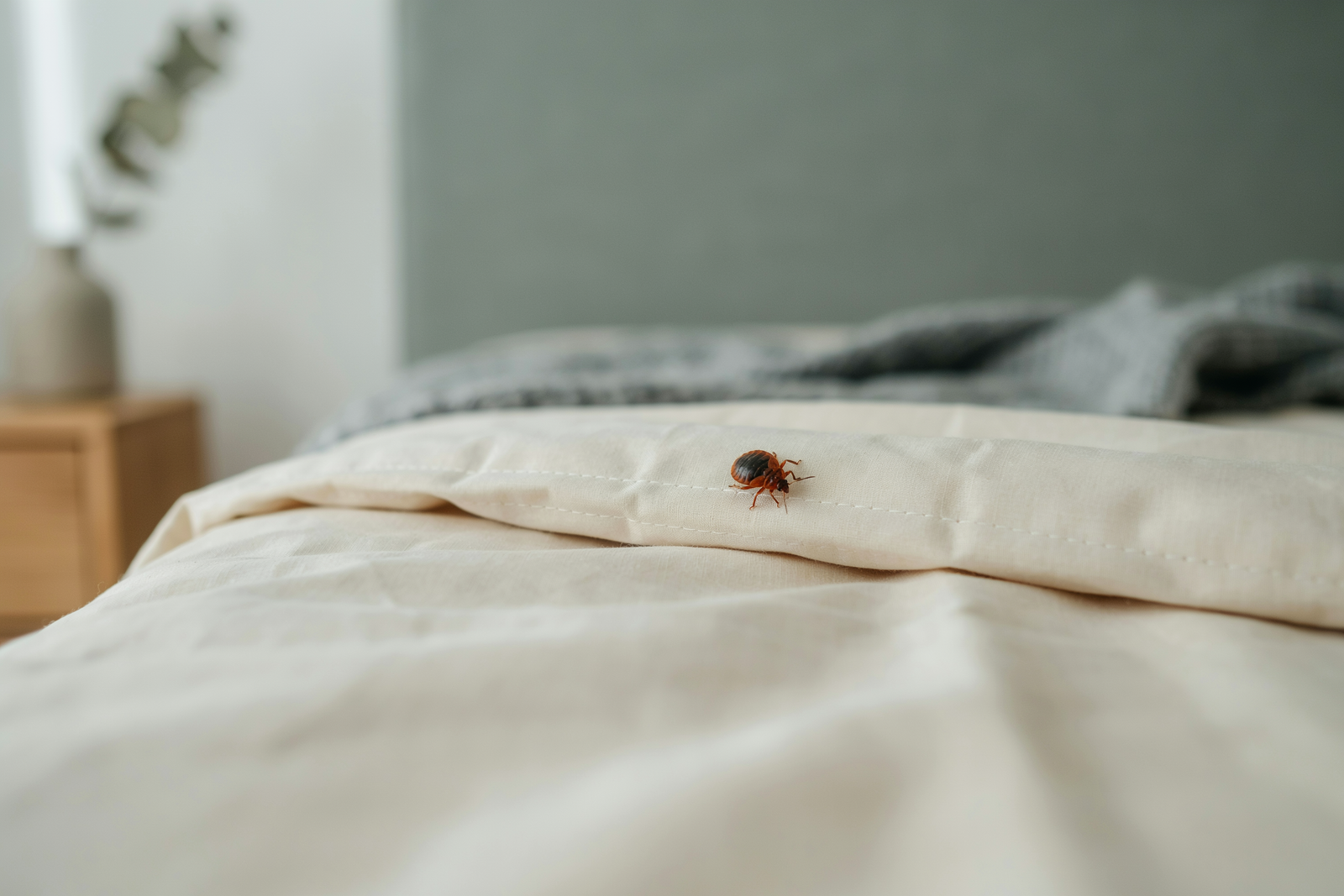
The most reliable signs of bed bugs are physical evidence near places where people sleep, not bites alone. Start by inspecting mattress seams, the bed frame, and nearby furniture with a flashlight. Avoid spraying until you have identified the pest, since skin marks and stains can have several causes.
Quick answer: Look for live bugs, pale eggs or eggshells, shed skins, dark spotting, and rusty stains around the bed. Finding an actual insect and having it identified provides stronger evidence than bites alone.
What do bed bugs look like?
Adult bed bugs are flat, oval, wingless insects about the size of an apple seed. Unfed adults are brown, while recently fed bugs can look reddish and more elongated.
Young bed bugs, called nymphs, are smaller and lighter in color. Their tiny size and habit of hiding in narrow cracks can make them difficult to find.
9 signs of bed bugs to check
1. A live bed bug
Finding a live insect is the clearest clue, but look-alike insects can cause confusion. Bat bugs, young cockroaches, carpet beetles, and other small household insects may be mistaken for bed bugs.
Capture the insect without crushing it. Seal it in a clear container or plastic bag so a qualified pest professional or local extension office can identify it.
2. Dark spots on fabric or furniture
Bed bug fecal spots often appear as tiny dark brown or black marks. You may find them along mattress seams, on box springs, around screw holes, or near cracks in the headboard.
These marks can resemble ink dots and may bleed slightly into fabric. A dark spot by itself is not proof, so look nearby for insects, eggs, or shed skins.
3. Rusty or reddish stains on bedding
Small reddish or rusty marks can appear when a recently fed bed bug is crushed. Check sheets, pillowcases, and mattress covers, especially near seams and folds.
Many things can stain bedding. Treat these marks as a reason to inspect more closely, not as a diagnosis.
4. Tiny eggs or empty eggshells
Bed bug eggs are pearly white, roughly pinhead-sized, and difficult to see without strong light. They may be attached in protected cracks or fabric seams.
Empty eggshells can remain after young bugs hatch. Their small size makes professional confirmation useful if you aren’t sure what you found.
5. Pale shed skins
Young bed bugs shed their outer covering as they grow. These cast skins look like pale, hollow versions of the insect and may collect where bugs hide.
Search mattress piping, joints in the bed frame, behind the headboard, and along the edges of nearby furniture.
6. Bed bugs in mattress seams and frame joints
Bed bugs usually stay close to a host when an infestation begins. Concentrated evidence around mattress seams, box-spring edges, bed-frame joints, or the headboard increases suspicion.
As their numbers grow, they may spread into nightstands, upholstered furniture, baseboard gaps, curtain folds, or cracks around wall fixtures. Don’t take electrical covers apart unless you can do so safely and lawfully.
7. Evidence in luggage or recently moved furniture
Bed bugs travel by hiding in belongings rather than flying or jumping. Inspect luggage seams, bags, and secondhand bedroom furniture if suspicious evidence appeared after travel or a recent move.
Keep suspect items contained while you inspect. Don’t carry uncovered furniture or bedding through shared hallways, since that can spread insects to other rooms or homes.
8. Repeated skin marks after sleeping
Bed bugs can leave itchy marks, but skin reactions vary widely. Some people develop marks days later, while others show little or no visible reaction.
A healthcare professional cannot confirm the insect from a skin mark alone. Seek medical care if you have a severe reaction, breathing trouble, signs of infection, or other concerning symptoms.
9. A sweet or musty odor in a larger infestation
A noticeable sweet or musty smell is sometimes associated with a substantial bed bug infestation. Odor is subjective, however, and homes can smell musty for many unrelated reasons.
Don’t rely on smell as an early detection method. Visible specimens and multiple matching signs provide much stronger evidence.
How to inspect your bed safely
Use a bright flashlight and a thin, rigid card to examine narrow seams. Keep a clear container or sealable bag nearby for any specimen you find.
Check these areas in order:
- Remove bedding slowly and examine seams, folds, and labels.
- Inspect mattress piping, tufts, handles, and both sides of the mattress.
- Check the box spring, especially fabric edges and corner guards.
- Examine joints, cracks, screw holes, and slats in the bed frame.
- Look behind the headboard and under nearby furniture.
- Inspect upholstered chair seams and baseboard edges near the bed.
Avoid moving belongings into another bedroom or sleeping elsewhere. Bed bugs may follow people to a new sleeping area, making control more difficult.
What not to do after finding suspicious evidence
Don’t use outdoor pesticides indoors, apply a product to a mattress unless its label specifically permits that use, or increase the stated amount. Never use rubbing alcohol, gasoline, open flames, space heaters, or improvised heating equipment to treat bed bugs.
Foggers are not a simple solution and can create exposure or fire risks when misused. They may also fail to reach the cracks where bed bugs hide.
If you use any pesticide, choose one labeled for bed bugs and for the exact indoor location involved. Follow the complete current label, including placement, preparation, ventilation, and re-entry directions. Consider children, pets, pregnancy, asthma, and nearby food areas before treatment.
When professional help is the better next step
Contact a licensed pest professional if you confirm bed bugs, find evidence in several rooms, live in a multi-unit building, or cannot inspect and treat all hiding places. Bed bug control often requires several coordinated methods and follow-up inspections.
Renters should report suspected bed bugs promptly through the process required by their lease and local rules. In attached housing, management may need to inspect neighboring units because treating one room alone may not address the full problem.
If the evidence remains uncertain, preserve a specimen and request identification before treating. Correct identification is the next sensible step because it prevents unnecessary pesticide use and determines whether bed bug control is actually needed.
