

Mouse droppings are usually small, dark pellets about 1/8 to 1/4 inch long. They often resemble grains of rice with one or both ends pointed. Don’t sweep or vacuum suspected rodent waste because that can send contaminated dust into the air. Appearance is helpful, but droppings alone cannot confirm the animal with certainty.
Quick answer: Mouse droppings are typically dark brown or black, narrow, and rod-shaped. Look for several pellets along walls, inside cabinets, or behind appliances. Treat unknown droppings cautiously and check for other signs before choosing a control method.
What Do Mouse Droppings Look Like?
Typical house mouse droppings have these features:
- Size: Roughly 1/8 to 1/4 inch long
- Shape: Slender and pellet-like, often with pointed ends
- Color: Usually dark brown or black, becoming duller with age
- Location: Scattered or clustered near food, nesting material, or travel routes
- Quantity: Often numerous because mice leave droppings as they move and feed
Fresh mouse poop may look dark and slightly shiny. Older pellets often become dry, hard, and faded. Humidity, dust, cleaning products, and the surface underneath can change their appearance, so color and texture aren’t reliable ways to determine exactly when a mouse was present.
Don’t crush or handle a pellet to test its age. A careful visual inspection is enough.
Mouse Droppings Versus Similar Signs
Size, shape, location, and nearby evidence are more useful together than any single feature.
- Rat droppings: Generally larger and thicker than mouse droppings. Depending on the rat species, the ends may be blunt or pointed.
- Cockroach droppings: Small cockroach waste can look like pepper, coffee grounds, or dark smears. Larger cockroaches may leave short, ridged cylinders.
- Bat droppings: Bat waste can resemble mouse pellets but commonly collects below a roost. It may crumble into visible insect fragments. Don’t handle suspected bat waste or disturb a roost.
- Lizard droppings: Often have a dark section with a noticeable white or cream-colored tip.
If the material is unusually large, appears beneath an attic roost, or doesn’t match other mouse evidence, pause before setting traps. Identification affects both cleanup and control.
Where to Inspect for More Evidence
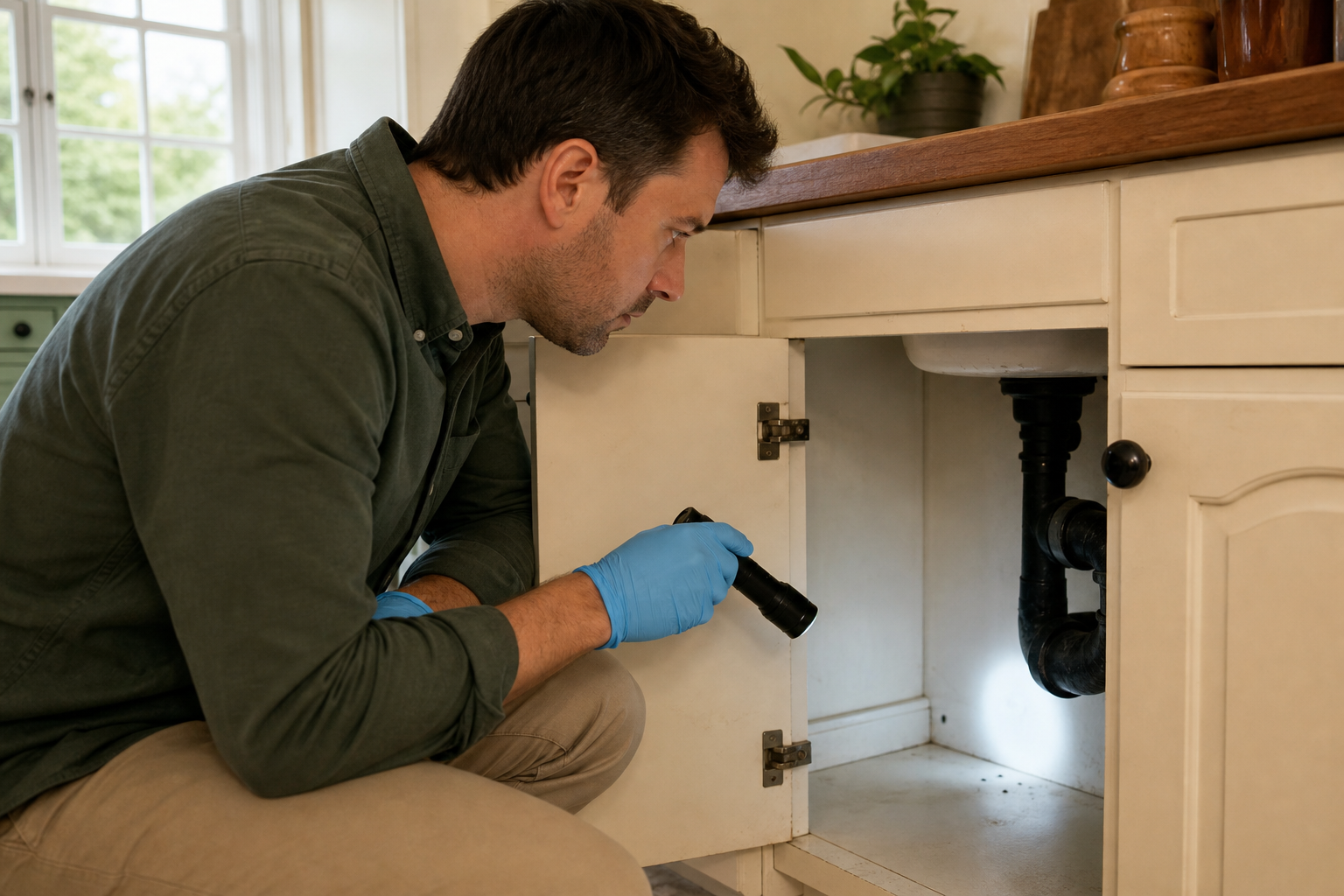
Use a flashlight to check quiet edges and protected spaces. Avoid reaching into areas you cannot see.
Common inspection points include:
- Inside lower kitchen cabinets and drawers
- Under sinks and around pipe openings
- Behind refrigerators, stoves, and stored boxes
- Along pantry walls and shelving edges
- In garages, basements, attics, and utility rooms
- Near pet food, birdseed, or poorly sealed dry goods
Look for supporting signs such as gnawed packaging, shredded paper or insulation, small tracks, rub marks along walls, or scratching sounds. A combination of signs makes a mouse problem more likely, but it still may not reveal how many mice are present.
How to Clean Up Mouse Droppings Safely
Before cleaning, address any active rodents with traps or professional help. Public-health guidance recommends waiting until trapping has stopped rodent activity before cleaning contaminated areas.
For a small amount of droppings on a hard surface:
- Ventilate the space. Open exterior doors and windows for about 30 minutes, if practical. Leave the area while it airs out.
- Put on disposable rubber, plastic, or vinyl gloves.
- Saturate the droppings. Use an appropriate household disinfectant and follow its complete label, including the required wet contact time.
- Wipe up the material. Use paper towels rather than a broom or vacuum.
- Discard the waste. Place used towels and waste in a covered trash container.
- Disinfect the surrounding surface.
- Clean your gloves before removing them, then wash your hands thoroughly.
Don’t dry sweep, brush, or vacuum untreated droppings, urine, or nesting material. Those actions can release contaminated particles into the air.
Porous belongings, ventilation systems, and heavily contaminated insulation require different handling. A small surface cleanup method may not be appropriate for them.
What to Do After Cleanup
Place traditional snap traps where you found signs, provided they can be kept away from children and pets. Position each trap against a wall with the trigger end facing the wall. Check traps regularly and continue monitoring after catches stop.
Remove food and shelter at the same time:
- Store grains, snacks, and pet food in sturdy containers with tight lids.
- Clean crumbs and spills, including under appliances.
- Take out household trash regularly.
- Reduce cardboard and loose nesting material in quiet storage areas.
- Repair gaps around doors, vents, pipes, and utility lines.
Mice can enter through openings about 1/4 inch wide. Small gaps may be closed with durable, gnaw-resistant materials suitable for that part of the building. Avoid sealing a suspected entry point until you are also trapping indoors, since a mouse could remain inside.
When Professional Help Is the Safer Choice
Contact a licensed pest professional when droppings keep reappearing, traps don’t stop the activity, or nesting areas are inside walls or other places you cannot reach.
Professional cleanup is also the safer route for heavy contamination, widespread nesting material, contaminated heating or cooling systems, or waste in occupied areas with significant health concerns. Suspected bat activity should be evaluated without touching the animal or droppings.
For a manageable problem, begin by documenting where you found the pellets, cleaning them without creating dust, and monitoring those same locations. New droppings after cleanup are a clearer sign that rodent activity is continuing.
