

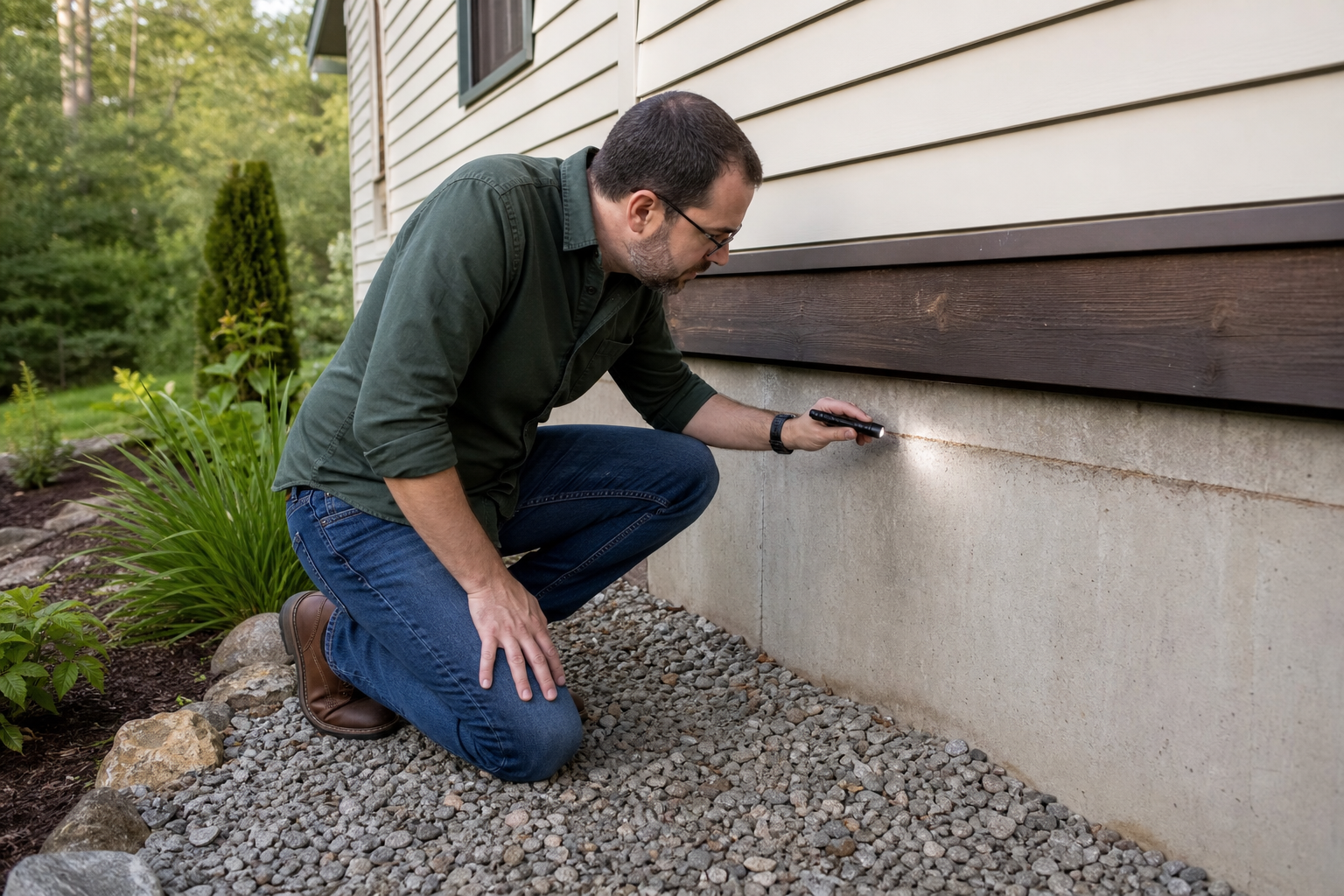
Wondering how to get rid of termites with DIY methods? Start by documenting the evidence, reducing moisture, and avoiding anything that could scatter or hide the activity. Prevention is often suitable for homeowners, but eliminating an established termite colony usually requires a licensed professional.
Quick answer: You can fix leaks, reduce soil-to-wood contact, remove wood debris, and monitor suspicious areas yourself. Call a termite professional when you find indoor swarmers, mud tubes, damaged structural wood, or recurring activity. Spraying the insects you can see does not eliminate a hidden colony.
First, make sure the signs fit termites
Termites spend much of their time inside wood, soil, or hidden shelter tubes. A single damaged board or pile of insect wings is useful evidence, but it does not prove the species or show how extensive the problem is.
Look for these common signs:
- Mud tubes: Subterranean termites build narrow, earth-colored tubes across foundations, walls, piers, or other surfaces.
- Swarmers indoors: Winged reproductive termites may emerge near windows, doors, lights, or baseboards.
- Discarded wings: Swarmers shed their wings after landing. A cluster of similar wings deserves investigation.
- Damaged wood: Affected wood may sound hollow or contain hidden channels, but moisture damage and other insects can look similar.
- Dry pellets: Small, hard pellets can be associated with drywood termites, although debris alone is not a certain identification.
Flying ants are often mistaken for termite swarmers. Termites generally have straight antennae, a broad waist, and two pairs of similar-length wings. Winged ants usually have bent antennae, a narrow waist, and larger front wings. Use several features rather than relying on one.
If possible, save a few insects or wings in a sealed container. Take clear photos and record where and when you found them. Don’t tear open walls or aggressively probe structural wood to confirm your guess.
What to do when you find possible termites
Take a careful look around the immediate area without making destructive openings.
Check accessible locations such as:
- The visible foundation and sill area
- Crawlspace entrances, without entering an unsafe space
- Garage walls and slab edges
- Porch supports and deck connections
- Areas around plumbing leaks
- Window and door frames near swarmers
- Places where wood touches soil
A mud tube can remain after activity has stopped, so its presence does not reveal whether a colony is active today. Photograph it before cleaning or altering the area. A professional may use its location to guide the inspection.
Vacuuming indoor swarmers is reasonable after you collect a sample. It removes the insects in the room, but it is not termite control. Swarmers are a warning that a colony may be in or near the building.
Termites DIY: How to get rid of the conditions they use
The most useful DIY work removes moisture and easy access to wood. These steps can reduce risk and support professional treatment, but they cannot be counted on to eliminate an established colony.
Correct moisture problems
Repair plumbing, roof, air-conditioning, or exterior leaks you can reach safely. Keep gutters clear and direct roof runoff away from the foundation where practical.
Improve ventilation in damp areas if the building design allows it. Persistent crawlspace moisture, drainage failures, or hidden leaks may require a qualified building or moisture specialist.
Reduce wood-to-soil contact
Termites can enter wood directly from the soil when siding, framing, steps, posts, or stored lumber touch the ground. Remove loose wood scraps, cardboard, buried boards, and dead stumps near the structure when you can do so without disturbing structural supports.
Store firewood off the soil and away from the building. Do not cut, lift, or alter a structural post, beam, stair, or deck connection without appropriate construction guidance.
Keep the foundation visible
Dense plants, stored materials, and deep mulch can hide tubes and damp areas. Create enough visibility to inspect the foundation, while avoiding damage to landscaping, drainage systems, or utility lines.
Seal ordinary exterior gaps as part of home maintenance, but do not treat caulk as termite control. Termites may use concealed cracks that are too small or inaccessible for a homeowner to find.
Monitor instead of guessing
Recheck photographed areas for new tubes, wings, or damage. Record dates and locations so you can tell whether evidence is appearing in multiple parts of the home.
Monitoring is especially important after moisture repairs. It does not replace an inspection when there are credible termite signs.
Why most DIY termite treatments fall short
A termite colony may extend through soil or occupy concealed parts of a building. Killing exposed workers or swarmers does not reach the rest of the colony.
Professional subterranean termite treatments may involve precisely placed soil treatments, bait systems, or both. Correct installation depends on the species, foundation type, utility locations, drainage, wells, and other site conditions. Drilling slabs or applying pesticide around a foundation can create exposure, contamination, and building-damage risks when done incorrectly.
Drywood termites may require targeted treatment or whole-structure treatment, depending on how widely they are distributed. Fumigation and structural heat treatment are not DIY tasks.
Some consumer products are labeled for termites, but a labeled spot treatment should not be assumed to protect the whole building. If you use any pesticide:
- Confirm that the product is labeled for the identified termite and exact location.
- Read and follow the complete current label.
- Keep children and pets away as directed.
- Do not combine products or increase the amount.
- Do not inject products into walls, drill slabs, or treat soil unless the label allows that work and you are legally permitted and equipped to perform it.
In the United States, the pesticide label is a legal set of use directions, and some termite work may also be restricted by state or local rules.
Avoid homemade mixtures involving bleach, fuel, vinegar, essential oils, or household cleaners. They are not reliable whole-colony treatments, and applying them in soil, walls, or occupied spaces can create additional hazards.
When to call a termite professional
Arrange a professional termite inspection when you find:
- Swarmers emerging indoors
- Mud tubes on the foundation or inside the building
- Repeated wings or swarmers after cleanup
- Suspected damage in framing, flooring, joists, posts, or other structural wood
- Signs in several rooms or on multiple sides of the building
- Activity under a slab or in walls, roofs, or unsafe crawlspaces
- Evidence you cannot confidently distinguish from ants, beetles, or moisture damage
A licensed termite professional should identify the likely termite type, explain where evidence was found, and describe whether the proposed treatment is localized or intended to protect the whole structure. Ask how results will be monitored and what follow-up is included.
Pest professionals assess and treat termite activity, but they may not be qualified to judge whether damaged wood remains structurally sound. If beams, joists, posts, stairs, floors, or other supports appear weakened, consult a qualified structural or building professional before making repairs. Replacing damaged wood alone does not eliminate termites.
If you rent, document the evidence and notify the property owner or manager promptly. Avoid making structural changes or applying pesticides without authorization.
The best next step is to photograph the evidence, correct any obvious leak, and schedule an inspection if the signs point to termites. That preserves useful clues while reducing the conditions that can help them persist.
