

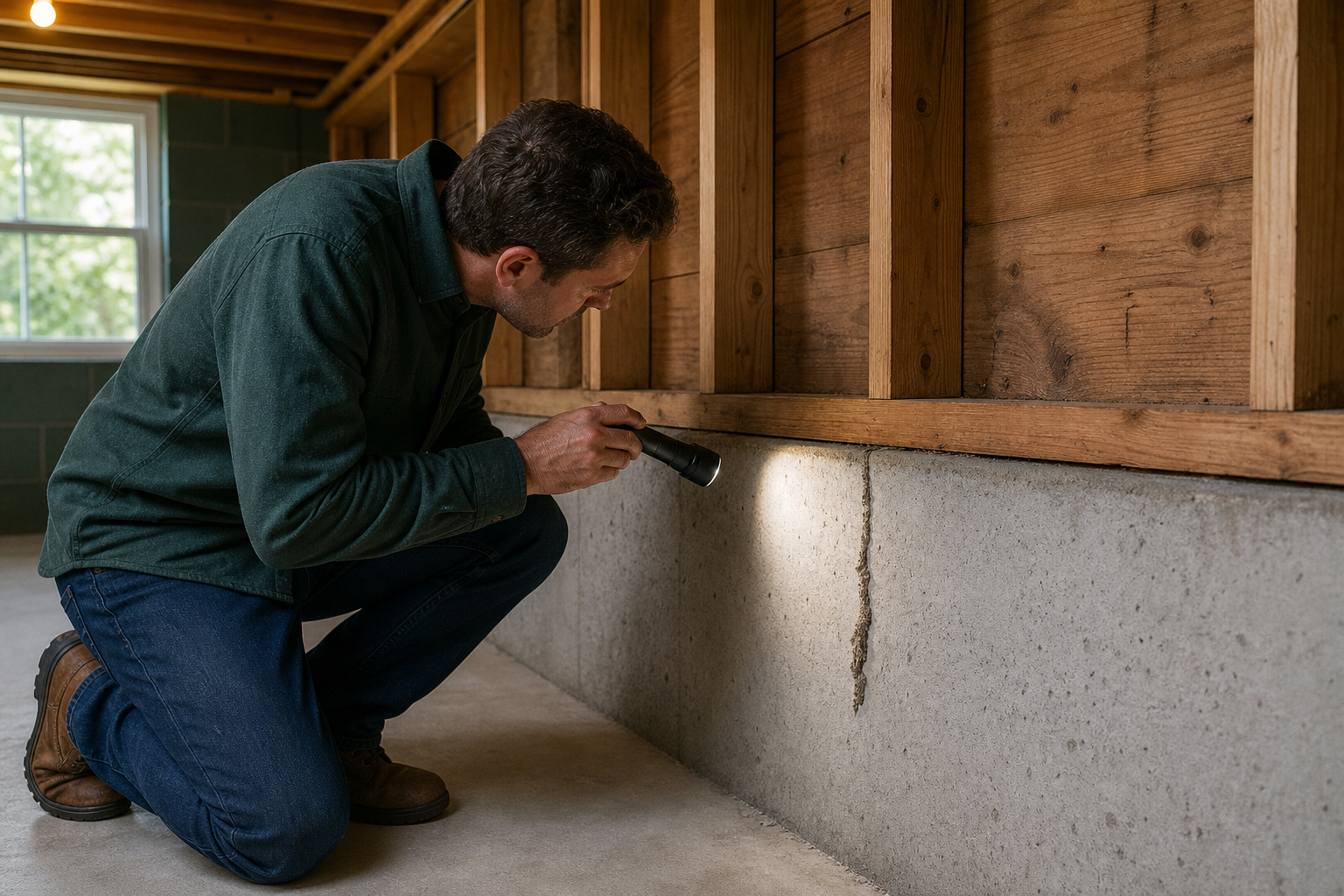
Termite damage often stays hidden inside wood, so the first clue may be a mud tube, discarded wings, or a surface that looks blistered. Photograph what you find, avoid disturbing it, and arrange a professional inspection if several signs appear. Surface damage alone cannot confirm termites or show whether the structure is safe.
Quick answer: Possible termite damage includes hollow or weakened wood, galleries that follow the wood grain, mud tubes, small piles of dry pellets, and doors or floors that have changed shape. Check near the foundation, crawl space, plumbing, exterior wood, and other damp or soil-adjacent areas.
What termite damage looks like
Termites eat the cellulose in wood and other plant-based materials. They can remove the softer interior while leaving a thin outer surface intact. This makes serious damage difficult to see without opening the material.
Common warning signs include:
- Wood that sounds hollow: Tapping may reveal a hollow sound, but this is only a clue. Rot and other damage can produce a similar result.
- Thin or easily broken surfaces: Painted wood, trim, or flooring may look normal until slight pressure exposes channels underneath.
- Internal galleries: Subterranean termites usually make irregular tunnels that tend to follow the wood grain. Soil or mud may be present inside.
- Blistered or rippled wood: Flooring, trim, and painted surfaces can swell, buckle, or look water-damaged.
- Sagging or misshapen materials: Floors, doors, window frames, and baseboards may shift after extensive damage. Moisture and normal building movement can cause these changes too.
- Small pellet piles: Drywood termites may push hard, dry waste pellets from tiny openings in infested wood. The pellets can resemble coarse sand or sawdust.
Don’t force a screwdriver into important framing or remove wall coverings to investigate. A visual check is reasonable, but destructive inspection can increase repair costs or affect weakened material.
Signs that may appear near the damaged wood
Termites also leave evidence outside their feeding galleries. These clues can help a professional identify the termite type and locate activity.
Mud tubes
Subterranean termites build narrow tubes from soil and saliva. Look for pencil-width or wider lines running across foundation walls, piers, support posts, pipes, or other hard surfaces.
An intact tube may indicate current travel, while an old tube may remain after activity stops. Breaking tubes does not eliminate a colony and can remove useful inspection evidence.
Swarmers and discarded wings
Winged reproductive termites, called swarmers, may appear near windows, doors, lights, or foundation areas. After a short flight, they shed their wings. Small piles of similarly sized wings can therefore be an important clue.
Termite swarmers generally have a broad waist, straight-looking antennae, and two pairs of wings that are roughly equal in length. Winged ants usually have a narrow waist, bent antennae, and front wings longer than the rear pair. Save a specimen or clear photograph when possible rather than relying on one feature.
Pellets and exit holes
Drywood termite pellets are firm, consistently shaped particles with ridged sides. They may collect below a tiny opening in furniture, trim, framing, or attic wood.
Ordinary sawdust is not proof of termites. Carpenter ants, wood-boring beetles, repairs, and normal debris can create similar-looking piles.
Where to check for termite damage
Start at the lowest level and inspect with a flashlight. Stay in areas you can enter safely, and don’t crawl beneath unstable structures or enter cramped spaces you aren’t equipped to access.
Focus on these locations:
- Foundation walls, expansion joints, piers, and support posts
- Sill plates and other wood resting near the foundation
- Crawl-space framing, especially near damp soil or plumbing
- Basement walls, beams, stairs, and stored wood
- Areas around leaking pipes, drains, water heaters, and utility entrances
- Door and window frames with swelling, staining, or soft wood
- Deck posts, porch supports, steps, fences, and attached landscaping timbers
- Wood siding, trim, or lattice close to soil
- Firewood, lumber, cardboard, or stumps near the building
- Attic framing in regions where drywood termites occur
Pay special attention to wood that directly touches soil. Also check places where poor drainage, roof leaks, plumbing leaks, or condensation keep materials damp. Moisture does not prove termite activity, but it can make some areas more favorable and can hide other wood damage.
Termite damage or wood rot?
Termite damage and fungal decay can occur in the same location, but they are different problems.
- Termite-damaged wood may contain hollow channels, layered galleries, soil, pellets, or insects.
- Rotten wood often feels soft, crumbly, stringy, or block-like and is usually linked to ongoing moisture.
- Carpenter ant galleries are commonly smoother and cleaner than termite galleries. Coarse wood shavings or insect parts may appear nearby.
- Wood-boring beetles can leave round exit holes and powder-like material.
These comparisons narrow the possibilities but don’t confirm the cause. Identification may require insects, pellets, damaged wood, moisture readings, or access to concealed areas.
What to do after finding a suspicious sign
Document the location before cleaning or repairing it. Take wide photographs showing where the sign sits in the room, then take close views with a coin or ruler for scale. Save loose wings, pellets, or insects in a sealed container.
Next, correct obvious moisture problems that you can reach safely. Repair leaks, improve drainage, and move firewood or loose lumber away from the building. Avoid sealing over mud tubes or replacing damaged trim until it has been inspected.
Do not rely on household sprays, homemade mixtures, or surface applications. Termite colonies and feeding areas are often hidden, and treatment depends on the termite species, building design, and local conditions. If any pesticide is used, it must be labeled for the confirmed pest and location, and the complete current label must be followed.
When to call a termite or structural professional
Arrange an inspection when you find mud tubes, swarmers indoors, repeated pellet piles, damaged framing, or several signs in different locations. A licensed termite professional can identify the termite type, inspect concealed risk areas, and explain treatment and monitoring options.
Pest inspectors do not always determine whether damaged framing can still carry its intended load. If floors sag, supports appear weakened, wood crushes easily, or doors suddenly stop fitting, limit access to the area and consult a qualified building professional or structural engineer. The next sensible step is to preserve the evidence and have both the termite activity and any structural damage evaluated before repairs begin.
