

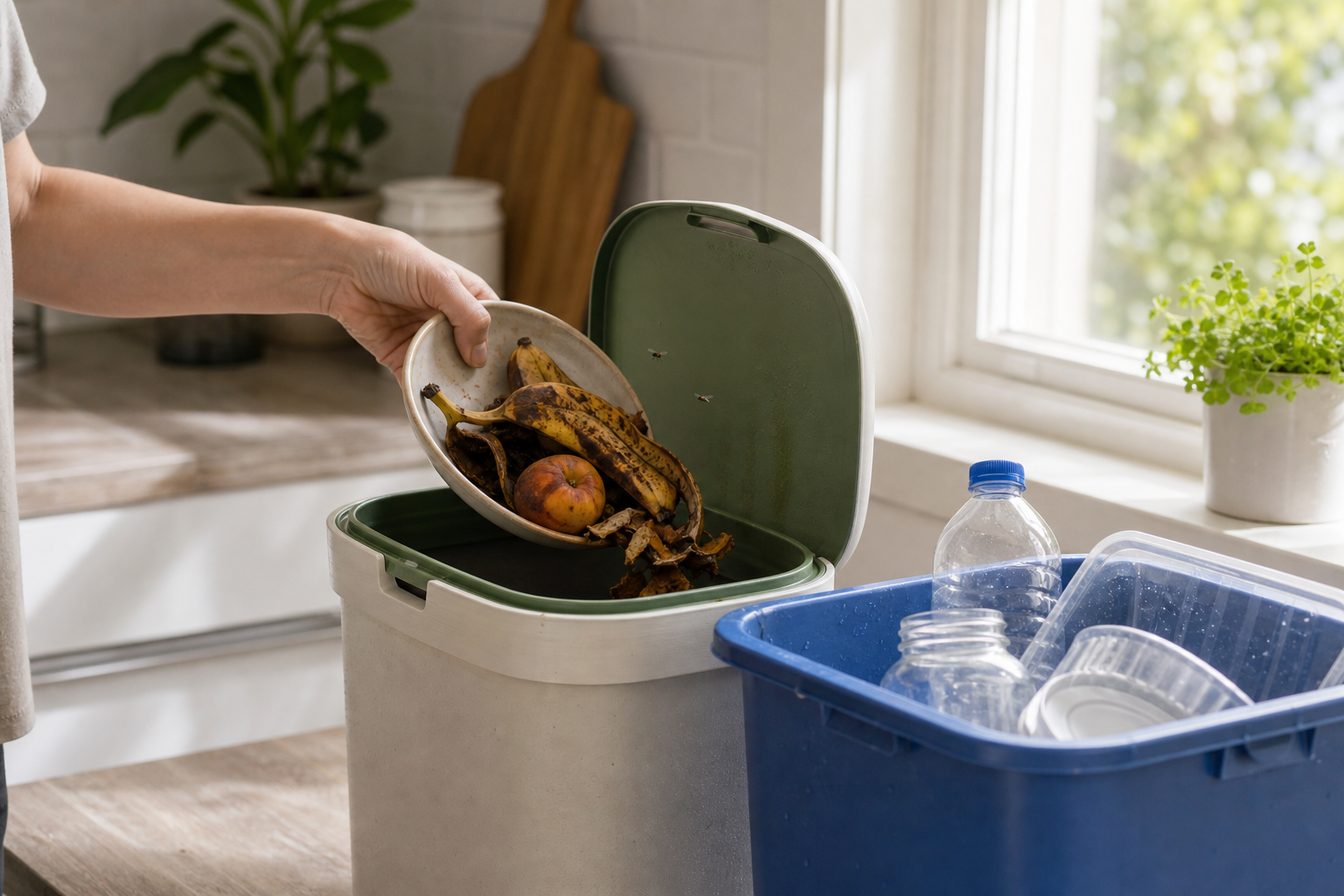
Fruit flies usually keep returning because something damp, fermenting, or food-coated remains nearby. Removing the adults helps briefly, but finding the source changes the pattern.
Check ripe produce, recycling, trash, compost, and damp food residue first. If activity continues after a careful reset, widen the search instead of adding more sprays or traps.
Start with food sources that are easy to miss
Fruit flies are often drawn to fruit that is very ripe, damaged, or beginning to ferment. A bowl on the counter is an obvious place to inspect, but it is rarely the only one.
Check produce stored out, opened sweet drinks, compost, sticky recycling, the bottom of the trash bin, and damp dishcloths or sponges. Move questionable produce out, rinse containers before recycling, and wash the area beneath bowls and small appliances. Emptying a bin without cleaning its rim or base can leave the same attraction in place.
Do not assume every tiny fly is a fruit fly
Small flies in a kitchen are not automatically fruit flies. Fruit flies often gather around produce, drinks, compost, and food waste. Fungus gnats are tied more closely to damp houseplant soil. Drain flies tend to rest near drains and look more moth-like.
The distinction matters because a fruit bowl is not the right source to address for a plant or drain problem. Notice where adults gather most often before choosing your next step.
Reset recycling, compost, and trash
These containers can keep a problem going even when the counter looks clean. Take them outside, rinse removable parts, and clean the underside of lids, seams, and handles. Let them dry before bringing them back in.
Keep food waste covered and take it out often while you are monitoring. Store ripe fruit in the refrigerator for a short period if that fits the food, especially while you are narrowing down the source.
Look for a hidden spill or forgotten food
If flies return after the obvious cleanup, inspect places outside your daily wipe-down. Pull out the toaster tray, look beneath a microwave or fruit bowl, and check behind small appliances. Look for leaking containers on pantry shelves and below the trash bin.
Also inspect produce in cabinets, a garage entry, or utility area. One forgotten potato, onion, or bag of fruit can keep adults appearing in a kitchen that otherwise seems spotless.
Use a trap only as a monitoring tool
A trap may show that adult flies are still active, but it does not prove the source is gone. Treat it as a way to monitor progress after cleaning, not as the whole plan.
If it catches fewer flies over several days, source work is likely helping. If it continues to catch many flies, revisit compost, recycling, produce, and nearby drains. Avoid mixing household chemicals or applying insecticide in food areas unless a product is specifically labeled for the confirmed pest and location.
When to look beyond the kitchen
Repeated activity near one drain, persistent odor, slow drainage, or moisture where it should not be can point to a drain or plumbing issue. A pest professional or plumber can help when the source is inaccessible or you suspect a leak.
For most kitchens, the next action is simpler: clean likely sources, keep them dry and covered, then watch where remaining adults gather. That location tells you where to inspect next.
Keep the reset easy to repeat
Choose one small routine for the week after cleanup. For example, check the fruit bowl before bed, rinse sweet containers before recycling, and empty compost before it sits overnight. A routine that fits your kitchen is more useful than a dramatic one-time cleaning day.
If several people use the kitchen, make the likely sources obvious. Put a washable compost container where food prep happens and keep a small bin liner nearby for spoiled produce. The goal is not perfection. It is making the food and moisture sources less likely to build up unnoticed.
