

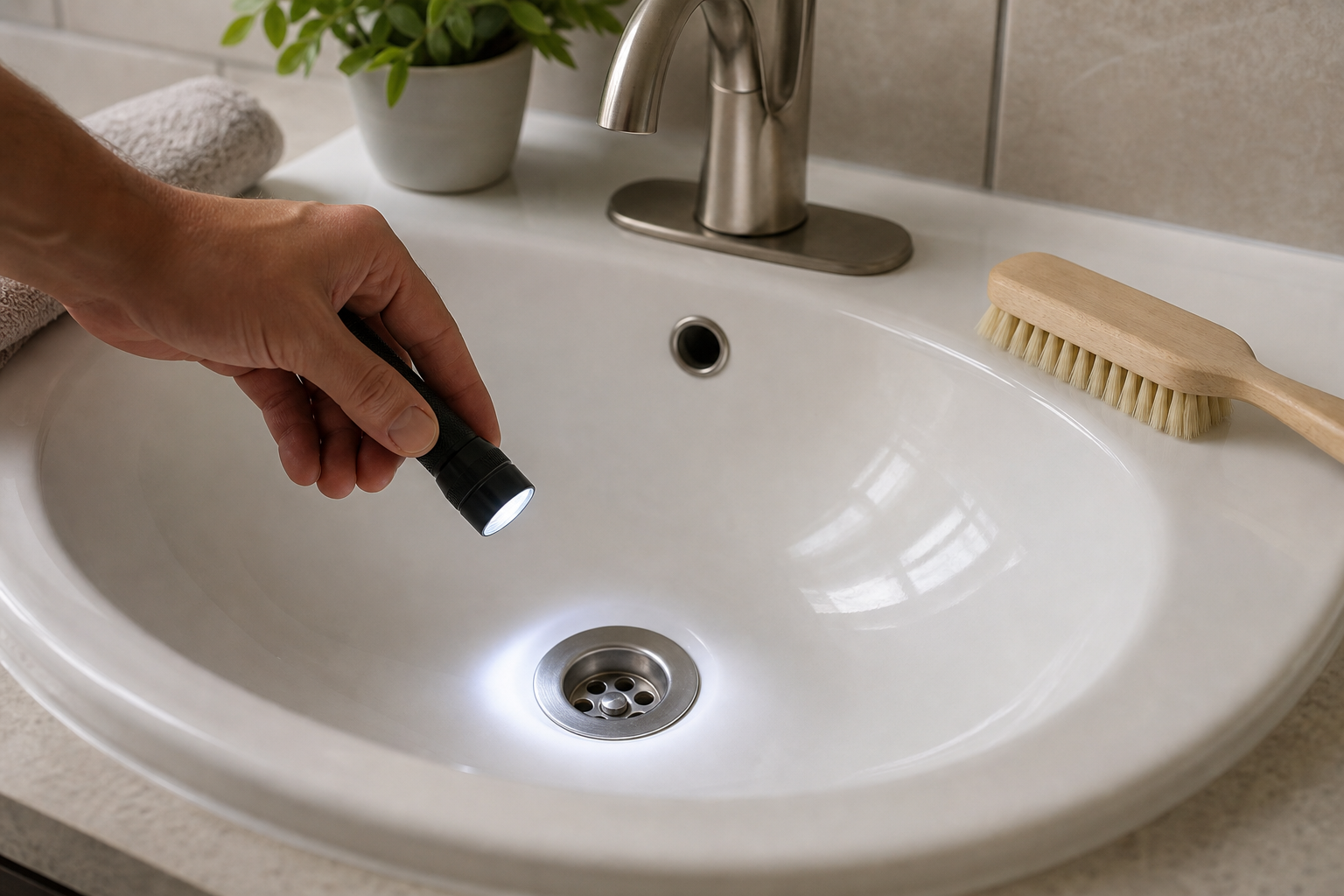
Drain flies are usually a sign that tiny flies are breeding in damp organic material near a drain or another consistently wet place. The useful first move is checking the exact area where they rest and cleaning accessible buildup that supports them.
Focus on the drain and nearby moisture first. If flies persist despite cleaning, or you notice sewer odor, leaks, or slow drainage, treat it as a plumbing question as well as a pest question.
Make sure the location fits drain flies
Drain flies, also called moth flies, are small and hairy-looking with wings that can appear roof-shaped at rest. They are often seen in bathrooms, kitchens, laundry rooms, and other places with drains. Their location is the practical clue.
Notice whether they gather around a sink, shower, floor drain, or seldom-used fixture. Small flies hovering around houseplant soil may be fungus gnats. Flies around produce or recycling may be fruit flies. A correct source check saves you from repeatedly treating the wrong area.
Inspect the whole drain area
Look at the drain cover, the inside edge you can safely reach, the sink overflow opening, and any visible residue around the fixture. Hair, soap film, and organic material can collect in places that do not look dirty from above.
Also check under the sink for a slow leak, notice whether a shower or sink drains slowly, and pay attention to a musty or sewer-like smell. Do not dismantle plumbing you are not comfortable handling or reach into an inaccessible line.
Clean accessible buildup physically
The goal is to remove material from drain surfaces, not simply to pour a product into the opening. Use a brush sized for the accessible part of the drain, follow fixture care guidance, and clean the cover and overflow area when relevant.
After brushing, rinse and keep the surrounding surface dry. Repeat the inspection over the next several days. A one-time chemical pour may not remove residue stuck to drain surfaces, and mixing cleaners can be dangerous. Never combine cleaning products.
Check drains that are not used often
A guest-bathroom sink, floor drain, or shower that is rarely used deserves a look. Stagnant water and debris can create a different moisture problem than a drain used every day. If you are unsure how to maintain a floor drain or fixture, use property-manager, plumber, or local guidance rather than improvising.
Fixing a drip, improving ventilation, hanging damp towels to dry, and clearing ordinary hair or soap buildup can make the area less attractive over time. Avoid foggers or broad sprays as a substitute for source removal.
Know when a plumber is the right next step
Call for plumbing help when recurring flies come with sewage smell, visible leak, persistent slow drain, water damage, or concern about a broken sewer line. A professional can inspect places you cannot see without damaging a fixture or exposing yourself to waste.
If there are no plumbing warning signs, monitor after physical cleaning. Fewer adults near the drain is useful feedback. Continued activity means the source may be another drain or an inaccessible wet area.
Keep a simple record if the problem repeats
If you are trying to work out which fixture matters, note where you see adults and when. A short note such as "three flies near the guest shower after it sat unused" is more useful than guessing later. It can also help a plumber or property manager understand whether the issue is isolated to one drain.
Do not seal a drain or cover a fixture in a way that prevents normal use. Monitoring should help you identify the source without creating a water or ventilation problem.
