

The most effective way to get rid of flies is to find and remove what is feeding or breeding them. Put away exposed food, empty and clean trash containers, and capture the adults you can see. Before using an insecticide, check whether the flies are coming from produce, drains, garbage, an animal carcass, or outdoors.
Quick answer: Remove spoiled food and other breeding material, clean the affected area, repair screens, and use a swatter, vacuum, or suitable trap for remaining adults. A sudden or continuing fly problem may point to a hidden source that needs further inspection.
First, identify the likely source
Different flies require different responses. You don't need to identify the exact species, but size, appearance, and location can narrow the search.
- House flies: Medium-sized gray flies often found around windows, food, garbage, and doors. Check trash cans, pet waste, and doors or screens that are frequently open.
- Fruit flies: Tiny tan or brown flies hovering around ripe produce, recycling, beverage residue, or kitchen waste. Look for a forgotten onion, leaking container, or residue beneath an appliance.
- Drain flies: Small, fuzzy, moth-like flies resting near sinks, showers, or floor drains. They can develop in the moist organic film coating a drain or other plumbing area.
- Blow flies: Larger flies that may look metallic blue, green, or black. A sudden indoor appearance can indicate garbage, animal waste, or a dead animal in a wall, chimney, attic, or crawl space.
- Cluster flies: Sluggish flies that collect near sunny windows, especially during cooler months. They usually entered the building to shelter rather than breeding in household food or drains.
Finding one fly doesn't necessarily mean it developed indoors. Repeated sightings in the same room are more useful because they can lead you toward the source.
How to get rid of flies step by step
1. Remove food and breeding material
Start where fly activity is highest. Check countertops, pantry shelves, trash and recycling bins, produce bowls, mop buckets, pet feeding areas, and spaces under appliances.
Discard spoiled produce and rinse residue from recyclable containers. Store ripe fruit in the refrigerator temporarily, keep food covered, and empty indoor trash regularly. Clean the inside and underside of bins if liquid has collected there.
Pick up pet waste promptly. If flies gather around litter, cages, or animal bedding, clean those areas using the normal care instructions for the animal and materials involved.
2. Inspect and clean problem drains
If small flies stay close to a sink or shower, check whether a drain is involved. Place a clear sticky monitoring card near the drain, or loosely cover part of the opening overnight with clear tape without completely blocking airflow. Finding flies there supports the drain as a possible source, but it does not rule out leaks or nearby wet debris.
Use a stiff drain brush to scrub reachable organic buildup from the drain walls and removable parts. Cleaning the film is more important than simply pouring liquid down the opening. Do not combine bleach, drain opener, ammonia, or other cleaners because dangerous fumes and reactions can result.
Persistent drain flies may indicate a leaking pipe, damaged drain, or sewage problem. Those conditions require plumbing or building maintenance rather than repeated surface cleaning.
3. Remove the adult flies
Use a fly swatter or vacuum for individual flies. Empty the vacuum afterward so captured insects do not escape.
Sticky fly traps can help monitor and reduce adults when placed according to their directions. Keep them away from children, pets, food preparation surfaces, and places where people could contact them. Indoor light traps may supplement other measures, but they will not eliminate a breeding source.
A small vinegar-based trap can catch some fruit flies, but it should be treated as a monitoring tool. The problem will continue if fermenting food or residue remains nearby.
4. Block outdoor entry points
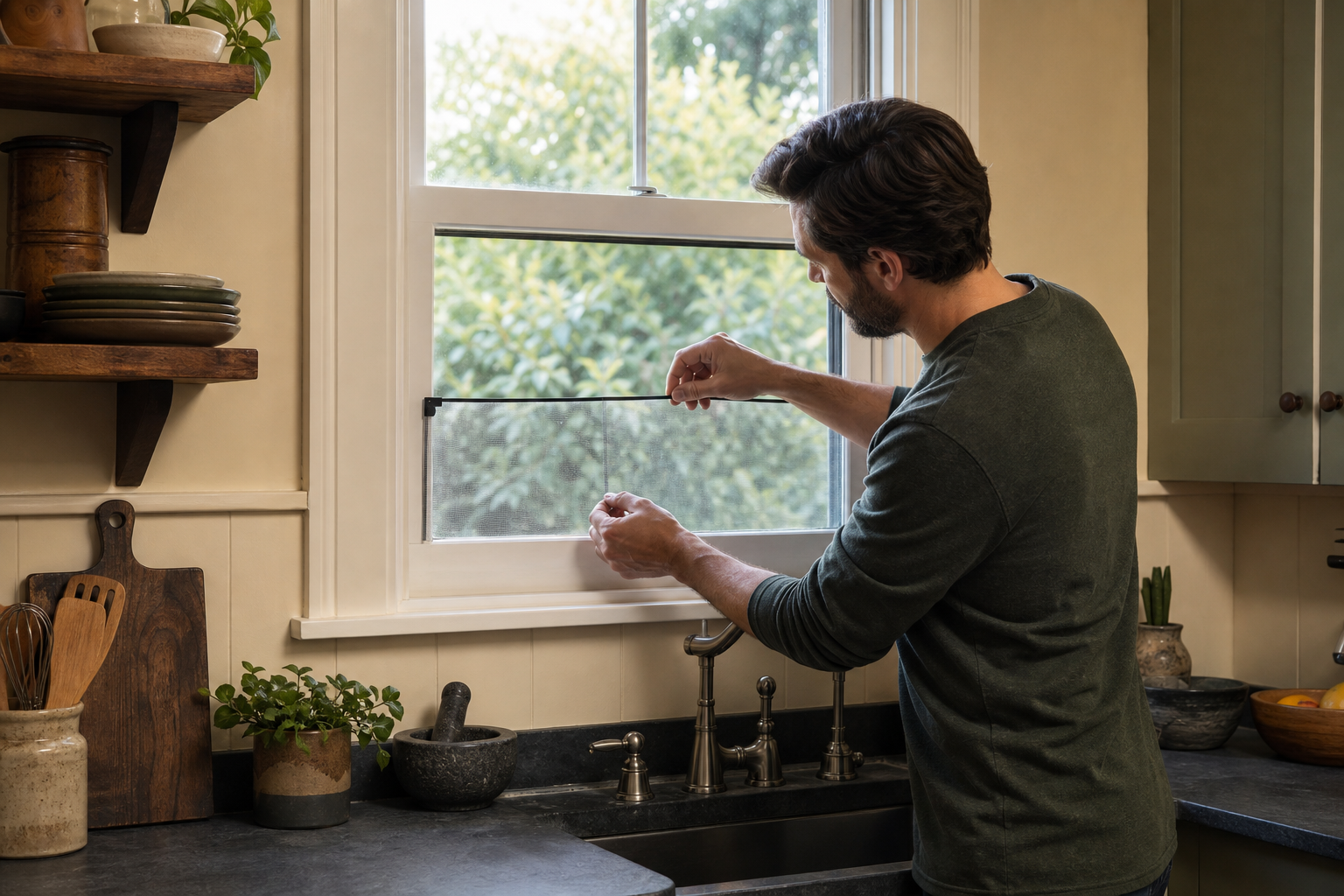
Repair torn window and door screens, close gaps around window air conditioners, and add weather stripping where exterior doors do not seal. Check vents and other openings for missing or damaged screening.
Avoid leaving doors open unnecessarily. Outdoor trash cans should have fitted lids and sit away from frequently used entrances when the property layout allows.
Should you spray for indoor flies?
Routine room spraying is rarely the best first response. It may kill exposed adults without correcting the source, and residues can create unnecessary concerns around food, children, pets, pregnancy, asthma, or aquariums.
If you choose a pesticide, use only a product whose current label lists the fly and the specific indoor location. Follow the complete label for placement, preparation, ventilation, re-entry, storage, and disposal. Never apply an outdoor or agricultural product inside, increase the amount, mix products, or spray food and food-contact surfaces.
Total-release foggers are not a substitute for source removal. They can expose people and pets to pesticide, leave residues, and create fire or explosion hazards when used incorrectly.
Monitor for another week
After cleaning, note where and when new flies appear. Falling numbers suggest that you removed the source. Continued activity near one drain, wall, ceiling fixture, or window provides a clue that something remains hidden.
In an apartment or shared building, report recurring flies associated with common trash areas, plumbing, wall gaps, or neighboring units to the property manager. Control may require coordinated repairs beyond your living space.
When to bring in professional help
Contact a licensed pest professional when large numbers continue despite sanitation and exclusion, the species remains uncertain, or the suspected breeding site cannot be reached safely. A plumber or building specialist may be more appropriate for broken drains, sewage odors, or persistent moisture.
Professional help is also sensible when blow flies suggest a carcass inside a wall or other confined area. Avoid opening walls, climbing into unsafe spaces, or handling significant animal remains without appropriate guidance.
Your next step is simple: watch where the flies gather, inspect that area for food, moisture, waste, or an entry gap, and remove the source before considering a pesticide.
