

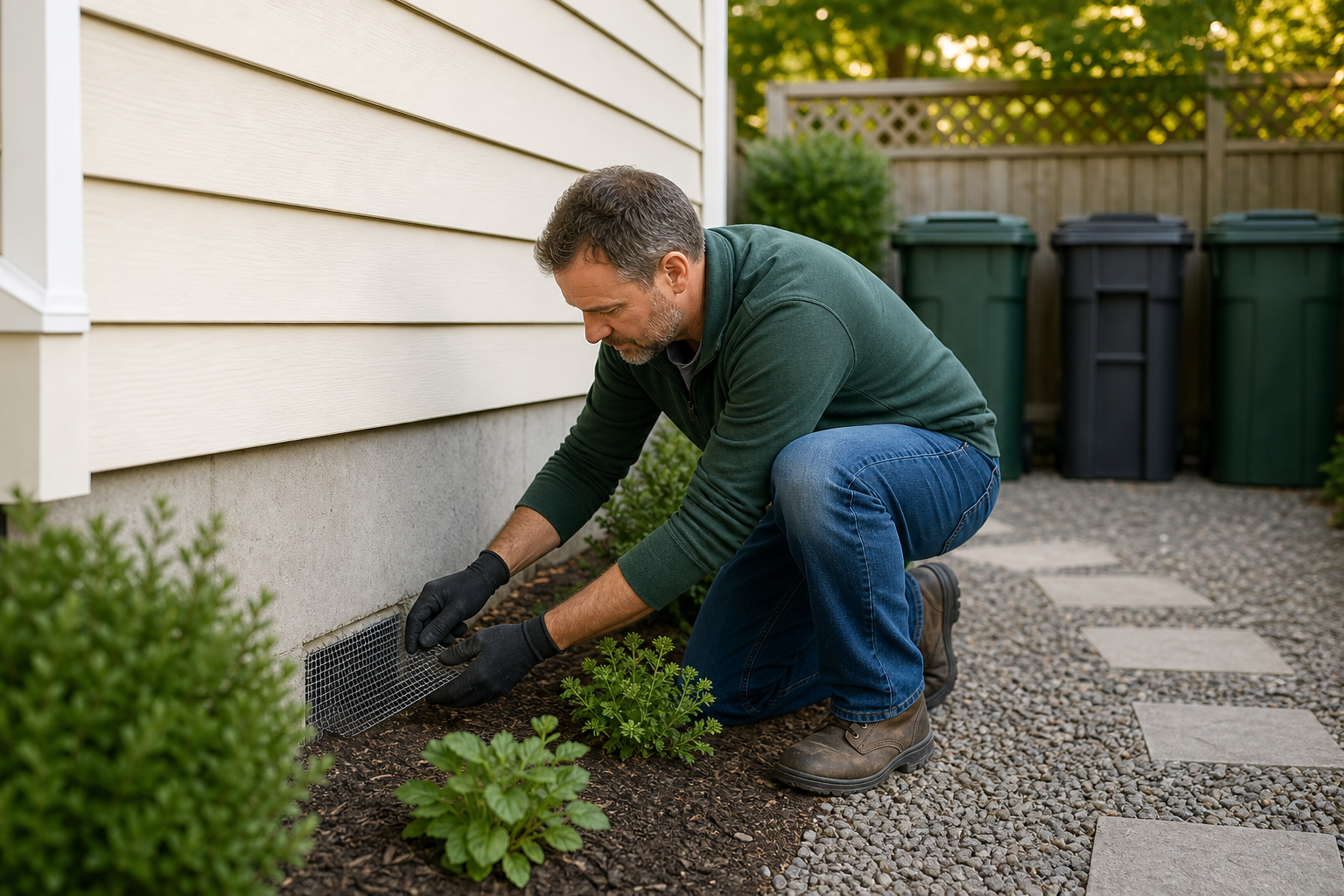
The best way to get rid of rats outside without drawing activity toward your house is to protect the building first, then remove food, water, and shelter across the yard. If control is needed, target the places rats already travel. Don’t place food-based lures beside the foundation simply because that location is convenient.
Quick answer: Seal exterior entry points, secure every outdoor food source, clear hiding places, and monitor existing rat routes. Use enclosed traps only where children, pets, and wildlife cannot reach them. Avoid loose poison and homemade repellents.
Start by protecting the house
Inspect the exterior before making major changes elsewhere in the yard. Rats displaced from a food source may explore nearby structures, so your home should not offer an easy alternative.
Check these common entry points:
- Gaps under garage and exterior doors
- Damaged crawl-space or foundation vents
- Openings around pipes, cables, and air-conditioning lines
- Broken screens and loose siding
- Roof edges, attic vents, and overhanging branches
- Foundation gaps roughly 1/2 inch or wider
Close openings with durable, gnaw-resistant materials suited to the surface, such as metal mesh, sheet metal, mortar, or properly installed door sweeps. Expanding foam by itself is usually not a lasting rodent barrier.
If you already hear scratching indoors or find fresh indoor droppings, don’t seal every possible exit blindly. You could trap an animal inside a wall or occupied room. Address the indoor activity and exclusion together, or ask a licensed professional to determine where the rats are traveling.
Remove what is feeding the rats
Rats remain where they can repeatedly find calories. Removing one food source while leaving several others rarely solves the problem.
Work through the whole property instead of moving food from one area to another:
- Store garbage in intact containers with tight lids.
- Clean spilled material from beneath trash and recycling bins.
- Feed pets indoors and bring bowls inside after use.
- Store birdseed, grass seed, and animal feed in sturdy sealed containers.
- Pick up fallen fruit, nuts, and vegetables.
- Clean grease and food debris from outdoor cooking areas.
- Use a managed compost system rather than an open food pile.
- Repair dripping outdoor faucets and empty unnecessary standing water.
Pause bird feeding while rat activity is present if seed is falling to the ground. Moving a feeder nearer the house does not protect it. It can concentrate rodent activity beside the building.
Reduce shelter without pushing rats toward the foundation
Dense vegetation, stacked materials, and undisturbed clutter give rats protected routes and nesting sites. Thin ground-level growth, remove unused debris, and keep stored items raised and organized.
Move firewood and lumber away from exterior walls when practical. Trim branches that touch or overhang the roof, especially if you suspect roof rats. Keep the space beside the foundation visible enough to inspect.
Don’t start by destroying an occupied burrow if you haven’t secured the house and removed nearby food. Sudden disturbance can change where rats travel without reducing their number.
Find the routes rats already use
Before setting anything out, look for repeated signs rather than reacting to one dropping or noise. A single sign cannot confirm the species or size of the problem.
Useful outdoor clues include:
- Burrow openings near walls, sheds, vegetation, or stored materials
- Narrow paths through grass or along fences
- Dark rub marks on frequently used edges
- Gnawing on bins, wood, or plastic
- Repeated nighttime sightings in the same area
Rats often travel beside walls, fences, and dense cover instead of crossing open ground. A motion-activated camera can help identify active routes without placing food outside.
Use targeted traps carefully
Where outdoor trapping is legal and can be done without exposing people or animals, use rat-sized snap traps inside secure enclosures designed for that purpose. Place them on confirmed travel routes, not randomly around the yard and not automatically beside the house.
Rats can be cautious around new objects. Follow the trap manufacturer’s instructions, check traps frequently, and reposition them only when monitoring shows that activity has changed.
Never leave an exposed snap trap where a child, pet, bird, or other animal could reach it. If you cannot create a protected placement, outdoor DIY trapping is not the right option.
Repellent sounds, bright lights, peppermint mixtures, mothballs, and similar home remedies are not dependable ways to eliminate an established outdoor rat population. Mothballs are pesticides with specific labeled uses and should not be scattered around yards, burrows, or foundations.
Be cautious with rat poison
Rodenticides can harm children, pets, and wildlife through direct access or by poisoning animals that eat affected rodents. They can also leave dead rats in walls, crawl spaces, or other places you cannot reach.
Never scatter loose bait or place pesticide inside a burrow unless the complete current label specifically allows that use. If you consider a rodenticide, use only a registered product labeled for the confirmed pest and outdoor residential location. Follow every label direction, including placement, station, inspection, disposal, and access restrictions.
Local rules and available products differ. A licensed pest professional is the safer choice when bait would be near pets, wildlife habitat, food gardens, drains, or water.
Monitor before deciding the rats are gone
Check the property every few days at first. Look for fresh burrow disturbance, new gnawing, trap activity, or repeat camera sightings. Continue sanitation and exclusion after sightings stop because those steps prevent another group from replacing the first.
For droppings or dead rodents, wear disposable gloves and wet the material with an appropriate disinfectant according to its label. Allow the required contact time, then pick it up without sweeping, vacuuming, or using a leaf blower. Double-bag waste where local disposal rules allow, and wash your hands after removing the gloves.
Heavy contamination, strong odors from inaccessible areas, or numerous dead rodents calls for professional cleanup guidance.
When to call a professional
Get qualified help if rats are entering the home, appearing repeatedly during daylight, nesting in inaccessible spaces, or remaining active after you remove attractants and use well-placed traps. Professional help is also appropriate when safe trap placement is impossible or rodenticide risks cannot be controlled.
Begin today by inspecting the foundation and securing garbage, pet food, birdseed, and fallen produce. Once the house is protected, use monitoring to target the outdoor routes the rats already use rather than creating a new attraction near your walls.
