

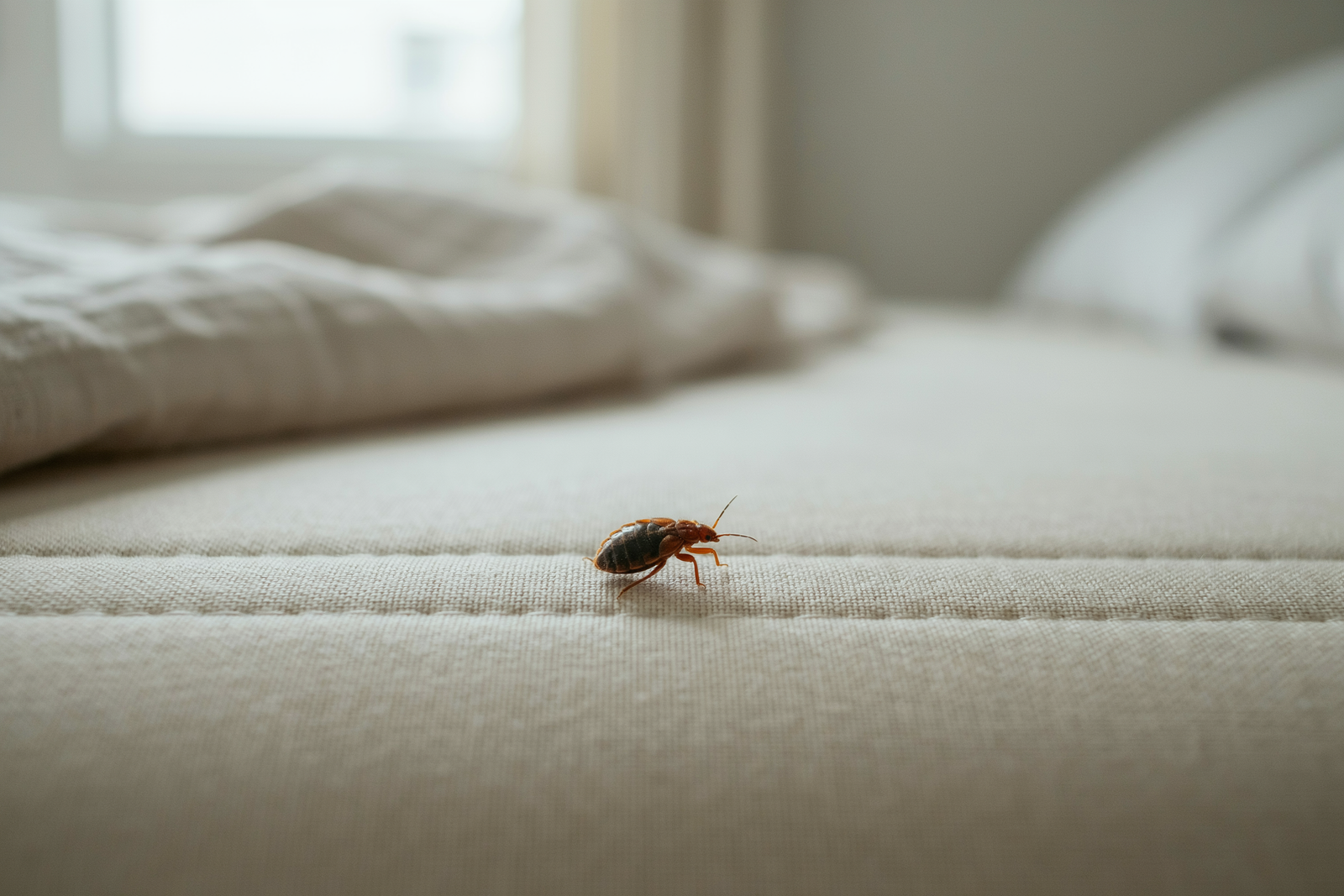
Bed bug bites may be itchy, red, and grouped together, but skin marks alone cannot confirm bed bugs. Check your sleeping area for insects, shed skins, eggs, dark spotting, and reddish stains before choosing a treatment.
Quick answer: Bed bug bites can appear in clusters or lines on exposed skin, but they vary widely and may resemble mosquito bites, flea bites, or irritated skin. Finding physical evidence around the bed is much more useful for identification.
What do bed bug bites look like?
A person’s reaction to bed bug bites can range from no visible mark to an itchy, raised welt. Possible features include:
- Small red or pink bumps
- Itching or irritation
- A darker spot near the center
- Several marks in a cluster, loose line, or irregular pattern
- Marks on the arms, hands, neck, face, shoulders, or legs
The pattern is not reliable enough to identify the cause. Bed bugs may feed more than once, and several bugs may feed in the same area. Many other insects and skin conditions can create similar marks.
Timing is also unreliable. Some people notice irritation quickly, while others develop marks days later. People sharing the same bed can react differently, and one person may have no visible reaction.
Bed bugs are not known to spread disease through their bites. Scratching, however, can damage the skin and contribute to a secondary infection.
Check for stronger signs around the bed
Inspect the places where a resting bed bug could fit into a narrow crack. Use a bright flashlight and a thin card to examine seams and joints without dismantling electrical fixtures or heavy furniture.
Focus on:
- Mattress seams, piping, labels, and tufts
- The underside and edges of the box spring
- Screw holes, joints, and cracks in the bed frame
- The front and back of the headboard
- Nightstand joints and drawer corners
- Upholstered furniture used for sleeping
- Baseboards and wall cracks close to the bed
- Luggage or bags recently placed near sleeping areas
Look for more than one type of evidence:
- Live bed bugs: Adults are flat, oval, reddish brown, and roughly the size of an apple seed. Younger bugs are smaller and paler.
- Dark spots: Bed bug waste may leave tiny dark marks that soak into fabric like ink.
- Reddish stains: Crushed bugs or recent feeding can leave small rusty stains on bedding.
- Shed skins: Growing bed bugs leave behind pale, empty skins.
- Eggs and eggshells: These are very small, whitish, and difficult to see without close inspection.
A single stain or speck still isn’t proof. If you find an insect, capture it without crushing it in a sealed container or clear zip-top bag. A clear photo and physical specimen can help a pest professional identify it.
What to do while you investigate
Avoid carrying loose bedding, clothing, or furniture into another room. Moving belongings can spread hidden bugs and make inspection harder.
Instead, take a few contained steps:
- Bag washable items in the affected room. Keep bags closed while transporting them to the laundry area.
- Use dryer heat where appropriate. A clothes dryer on high heat can kill bed bugs on items that tolerate it. Follow fabric and appliance instructions because washing alone may not be enough.
- Store cleaned items in fresh, sealed bags or containers. Keep them separate from unchecked belongings.
- Vacuum visible bugs and hiding areas carefully. Empty the vacuum into a sealed bag and place it in an outdoor trash container.
- Reduce clutter near the bed. Do not move that clutter elsewhere unless it has been inspected and contained.
- Monitor the bed. Bed bug interceptors placed under bed legs can help catch bugs moving between the bed and floor when installed and checked correctly.
Don’t discard a mattress or other furniture based only on unexplained bites. Items moved through a hallway or left outdoors may spread bugs to other homes.
Avoid treatments that can make matters worse
Do not use rubbing alcohol, gasoline, kerosene, open flames, space heaters, or improvised heat treatments. These methods create serious fire, burn, and exposure risks.
Total-release foggers, sometimes called bug bombs, do not reach many bed bug hiding places and should not be treated as a complete solution. Misuse can also cause fire, explosion, or pesticide exposure.
If you use a pesticide, choose only a product registered for bed bugs and labeled for the exact indoor location. Follow the complete current label, including placement, ventilation, re-entry, and storage directions. Never apply extra product or combine pesticides.
When to get medical or professional help
Seek urgent medical help for trouble breathing, swelling of the face or throat, faintness, or another severe allergic reaction. Contact a healthcare professional if the skin becomes increasingly painful, warm, swollen, or drains fluid, or if the reaction is severe or persistent.
Consider a licensed pest professional when you find confirmed bed bugs, signs appear in several rooms, you live in connected housing, or careful monitoring continues to find activity. Effective control often requires several methods and follow-up inspections rather than one spray.
If you rent, report the evidence promptly according to your lease and local housing rules. Keep photos, specimens, dates, and inspection notes so the next person assessing the problem has something more reliable than bite marks alone.
