

Learning how to get rid of bed bugs starts with confirming the pest and containing the affected area. Stop carrying loose bedding, clothing, or furniture into other rooms. Bed bugs rarely disappear after one spray or cleaning session, and improvised heat or unregistered pesticides can create serious hazards.
Quick answer: Effective bed bug control combines containment, dryer heat for suitable belongings, vacuuming, bed isolation, targeted treatment, and repeated monitoring. Professional help is often appropriate when several rooms or connected housing units may be involved.
First, confirm that you have bed bugs
Don’t rely on bites alone. Skin marks can come from mosquitoes, fleas, mites, allergic reactions, and many non-pest causes. People also react differently to bed bug bites, so the absence of marks doesn’t rule them out.
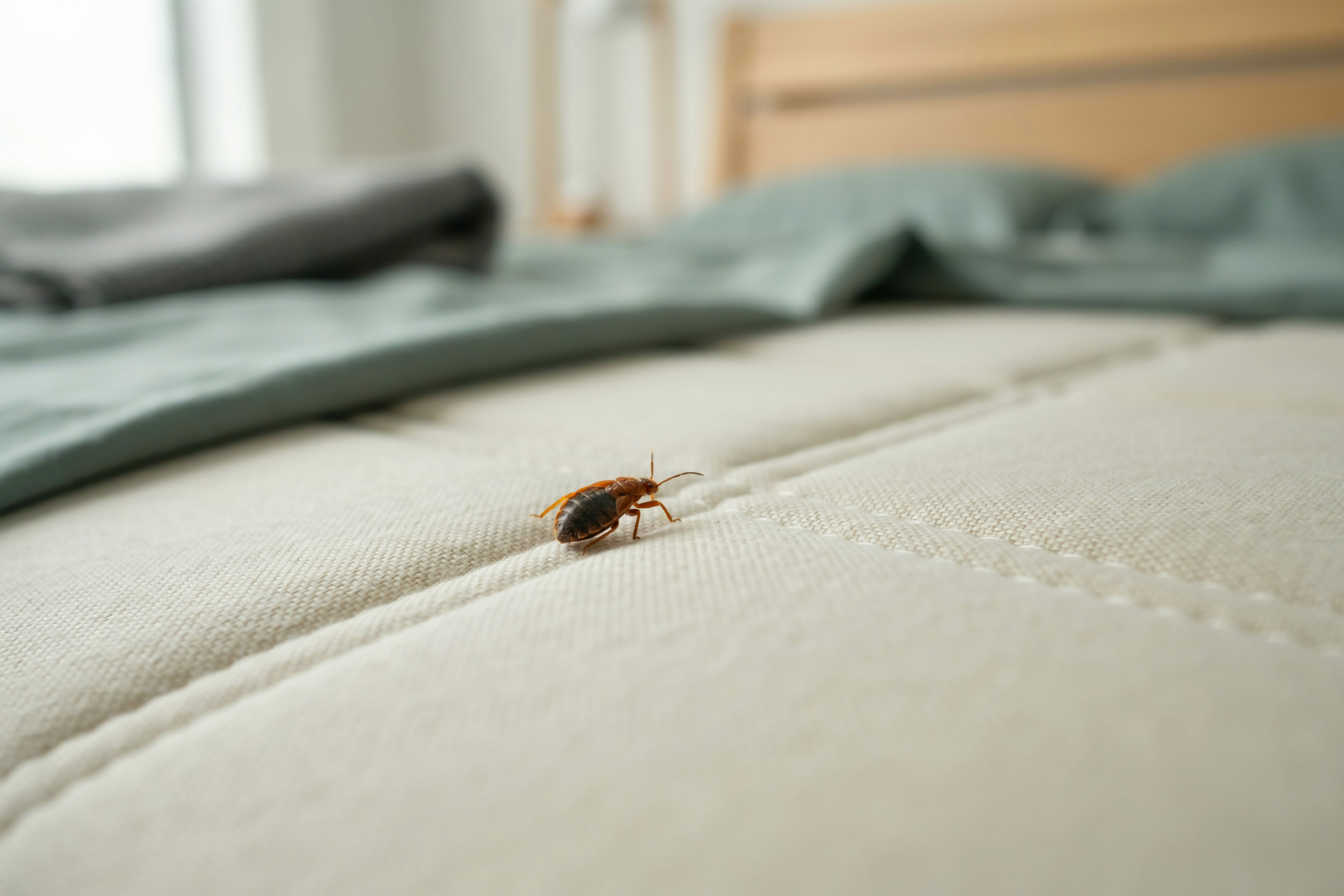
The strongest evidence is an adult or young bed bug collected near a sleeping area. Preserve a suspected insect in a sealed container or beneath clear tape for identification.
Adult bed bugs are small, flat, oval, wingless, and reddish brown. Younger bugs are smaller and usually paler, although appearance changes after feeding.
Use a flashlight to inspect:
- Mattress seams, piping, labels, and folds
- Box-spring edges and the underside
- Bed-frame joints, screw holes, and narrow cracks
- Behind and around the headboard
- Seams of nearby upholstered chairs and sofas
- Baseboard gaps and nearby furniture joints
Shed skins, eggs, and dark or rusty spotting can support an identification. However, stains and debris are not proof by themselves. If you can’t find or identify an insect, arrange a qualified inspection before applying pesticides.
Contain the affected area immediately
Keep belongings in the affected room until you can inspect or treat them. Carrying untreated items elsewhere can turn a limited problem into a multi-room infestation.
If you rent or live in a connected building, notify the landlord or property manager promptly. Bed bugs can move between units, and management may need to coordinate inspections. Notice, treatment, and payment requirements vary by location and building policy.
Avoid moving to another bedroom if you can safely continue using the isolated bed. Sleeping elsewhere may encourage bugs to spread toward the new sleeping location.
How to get rid of bed bugs step by step
1. Bag belongings before moving them
Place clothing, bedding, and other washable items into sealed bags before carrying them through the home. Keep untreated items separate from treated ones.
Reduce clutter gradually rather than sweeping everything into another room. Bag objects before handling them, then decide whether each item can be inspected, treated, stored, or discarded.
Don’t assume that sealing an item for a few days will kill every bed bug. Survival time varies with temperature, life stage, and other conditions.
2. Use dryer heat on suitable items
For dryer-safe bedding, clothing, and similar belongings, dry them on high heat for 30 minutes. Washing alone may not be enough, so the dryer step matters.
Carry infested laundry to the machine in sealed bags. After drying, transfer the items directly into clean, sealed bags or containers. Check care labels first because high heat can damage some materials.
Dryer treatment only addresses the items placed inside. It does not treat the bed frame, furniture, baseboards, or bugs hidden elsewhere in the room.
3. Vacuum visible bugs and hiding areas
Vacuum mattress seams, bed-frame joints, baseboards, floors near the bed, and upholstered furniture seams. Concentrate on visible insects and narrow places where they shelter.
Vacuuming reduces the number of bugs but rarely removes every insect or egg. Immediately seal the vacuum bag or canister debris and place it in an outdoor trash bin. Inspect reusable vacuum parts so insects don’t escape back into the home.
4. Encase and isolate the bed
Install sturdy, bed-bug-rated encasements on the mattress and box spring. These covers trap bugs already inside and remove many exterior hiding places. Check them regularly for holes and follow the manufacturer’s instructions for how long to leave them installed.
Place bed bug interceptors under every bed leg. Pull the bed away from the wall, remove stored items underneath, and keep sheets and blankets from touching the floor.
This setup creates a more isolated sleeping area and makes activity easier to detect. It is a monitoring and containment measure, not a complete treatment by itself.
5. Choose targeted treatment carefully
What kills bed bugs depends on where they are hiding. Dryer heat can kill bugs on suitable items, direct removal reduces their numbers, and correctly applied steam can be one targeted tool. Certain registered pesticides and professional treatment methods can also kill bed bugs.
None of these options is an instant cure for every infestation. Eggs or hidden insects may remain, and treatment often requires follow-up.
If you use a pesticide, first confirm that it has a current EPA registration number. The complete label must list bed bugs and the exact indoor surface or location you intend to treat. Follow every direction, restriction, preparation step, protective measure, re-entry statement, storage rule, and disposal instruction.
Pause and seek product-specific advice if children, pets, pregnancy, asthma, respiratory sensitivity, or an aquarium complicates pesticide use. Don’t apply a product if you cannot follow its label completely.
What not to do for bed bugs
Never attempt to heat an entire room with a thermostat, oven, fireplace, hair dryer, heat gun, space heater, propane heater, or other fuel-burning appliance. Improvised heat may not reach hidden bugs and can cause fires, burns, carbon monoxide exposure, or property damage.
Also avoid:
- Rubbing alcohol, gasoline, kerosene, bleach, or homemade mixtures
- Outdoor or agricultural pesticides used indoors
- Products that do not list bed bugs and the intended location
- Food-grade or pool-grade diatomaceous earth used as a pesticide substitute
- Total-release foggers or “bug bombs” as a bed bug solution
- Combining products or applying more than the label allows
Foggers may not reach the cracks where bed bugs hide. Misuse can also create exposure, fire, or explosion hazards.
Don’t automatically throw away the mattress or furniture. Disposal does not treat the rest of the room and can spread bugs during removal. If something must be discarded, contain it as local rules require and make it unusable so another person doesn’t take it.
When to call a bed bug professional
Professional help becomes the practical next step when the problem extends beyond an accessible, limited sleeping area. Arrange an inspection if:
- You cannot confidently identify the insect
- Live bugs or fresh signs appear in multiple rooms
- You live in an apartment, duplex, dormitory, or other connected building
- Bugs may be inside walls, built-in furniture, electronics, or extensive upholstery
- Clutter or physical limitations prevent safe preparation
- Careful DIY work has not stopped fresh activity
- Repeated pesticide applications have failed
- You are considering whole-room heat, fumigation, or another specialized treatment
Ask about bed bug experience, inspection scope, preparation requirements, monitoring, follow-up visits, and treatment of connected units. Check licensing through the appropriate state or local pesticide authority.
Breathing difficulty or another severe reaction requires urgent medical help, not pest-control advice. Contact the appropriate emergency or poison-control resource if pesticide exposure is suspected.
Monitor until the evidence stops
Reinspect the interceptors, encasements, bed joints, furniture seams, and former hiding places regularly. Record the date and location of live insects, shed skins, eggs, or fresh spotting. Dated records help separate current activity from old evidence.
One quiet night or one treatment does not prove that every bed bug is gone. Newly hatched bugs can appear after the first effort, and follow-up treatment may be necessary.
Start today by preserving any specimen, stopping movement between rooms, and bagging dryer-safe items. If several rooms or connected units may be affected, contact building management or a qualified bed bug professional before the infestation spreads further.
