

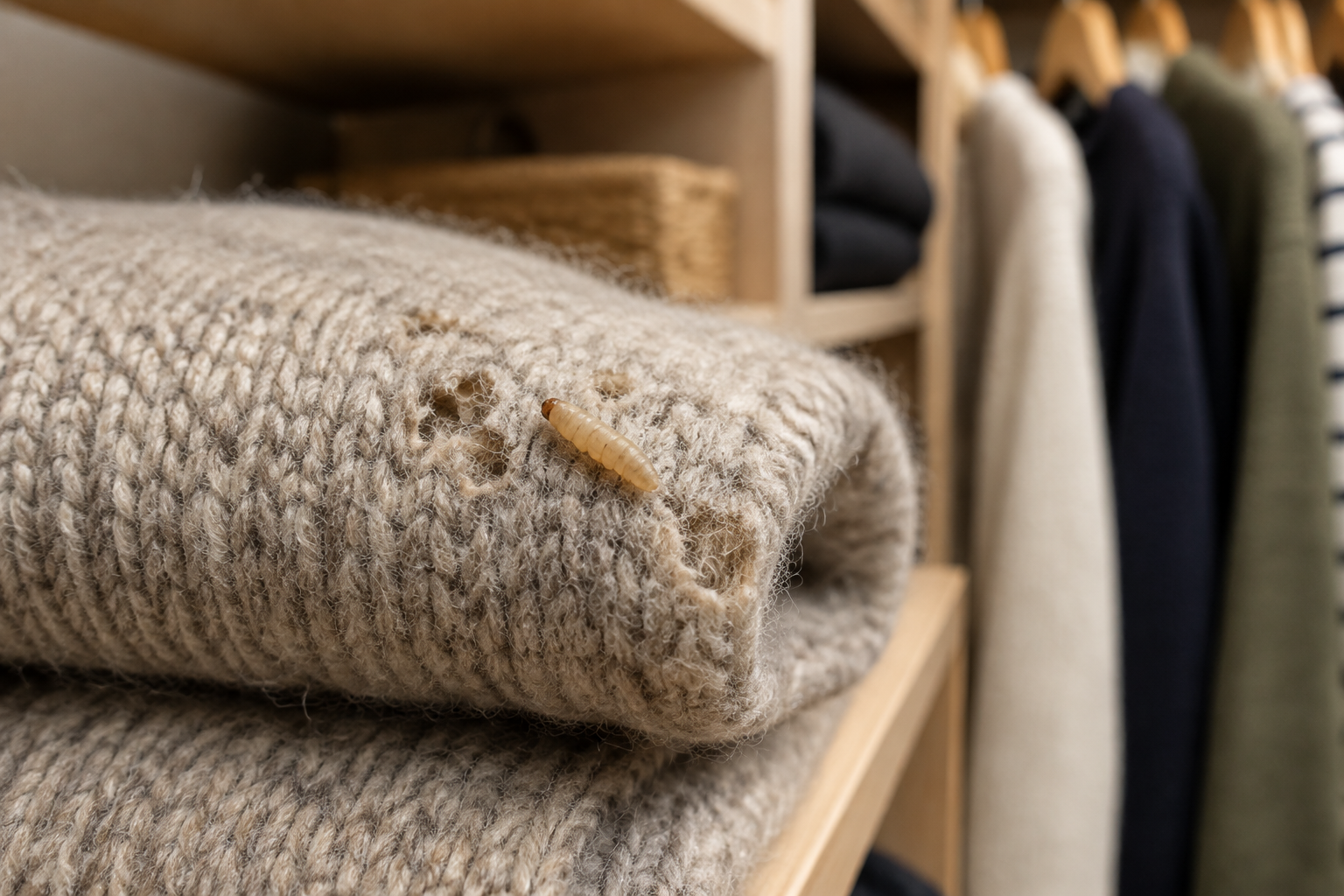
If you find possible clothes moths in a closet, focus on the stored material rather than the flying adults. Clothes moth larvae cause the damage, so isolate suspect textiles and inspect them before moving clothing elsewhere.
Quick answer: Empty the affected area, inspect animal-based fabrics, clean or isolate suspect items, vacuum the closet thoroughly, and return only clean materials. Then use a clothes-moth pheromone trap to monitor for continuing activity.
Confirm That Clothes Moths Fit the Evidence
A small moth near clothing isn’t enough to confirm clothes moths. An outdoor moth may have wandered inside, while pantry moth larvae can travel far from infested food before forming cocoons.
Look for several signs together:
- Small, narrow, buff or golden adult moths that avoid bright areas
- Cream-colored larvae with brown heads on or near fabric
- Silken tubes, mats, or webbing mixed with fibers and droppings
- Portable, cigar-shaped cases made from silk and fabric fibers
- Thinning, grazing, or holes in hidden parts of wool garments
- Damage to wool rugs, fur, feathers, felt, or natural-bristle items
Holes alone don’t identify the pest. Clothes moth larvae and carpet beetle larvae can damage many of the same materials.
These distinctions can narrow the possibilities:
- Clothes moth larvae may leave silk, webbing, feeding tubes, or fiber-covered cases.
- Carpet beetle larvae are hairy or bristly and often leave shed skins, but not clothes-moth webbing.
- Pantry moths usually have two-toned wings, with pale inner sections and reddish-copper outer sections. Their source is generally dry food, pet food, birdseed, nuts, grain, or spices.
If the evidence conflicts, save a clear specimen for identification by a local extension office or qualified pest professional.
Where to Inspect for Clothes Moths in a Closet
Empty the closet so you can examine every susceptible item. Don’t assume the garment nearest an adult moth is the source, because adults may move away from the material where they developed.
Start with wool, fur, feathers, felt, animal hair, wool blends, stored yarn, and natural-bristle brushes. Clothes moth larvae may also feed where lint, pet hair, perspiration, body oils, or food residue has accumulated.
Check concealed and undisturbed areas carefully:
- Beneath collars and inside cuffs, pockets, folds, and seams
- Between stacked blankets or folded sweaters
- Inside boxes and along shelf joints
- Under furniture and around baseboards
- Along carpet and wool-rug edges
- On both sides of rugs, especially beneath furniture
- Around vents or heaters where lint and hair collect
- In feather-filled items, fur trim, upholstery, and stored costumes
Isolate suspect items in sealed bags or containers while you finish inspecting. This helps prevent larvae from moving into clean textiles.
Clean the Textiles and the Empty Closet
Follow each item’s care label. Launder or dry-clean affected clothing and blankets using a method appropriate for that material.
Take valuable, antique, delicate, fur, oversized, or structurally complex items to an appropriate textile cleaner, conservator, or pest professional. Improvised oven heating, freezing schedules, fumigation, or chemical treatment can damage textiles and may not reach insects throughout a thick item.
Once the closet is empty, vacuum shelf joints, cracks, baseboards, floor edges, carpet edges, nearby furniture, and lint deposits. Pay particular attention to quiet spaces beneath furniture and around vents.
Promptly empty the vacuum outdoors, or seal and discard its contents. Vacuuming removes larvae, eggs, debris, and potential food sources, but it won’t protect an infested garment that was overlooked.
Return only items that have been cleaned and inspected. Store susceptible seasonal textiles in tightly sealed containers rather than relying on a loosely closed closet.
Monitor Without Mistaking a Trap for Treatment
Place a clothes-moth-specific pheromone trap near susceptible materials and check it consistently. The correct trap can help detect adult activity after cleaning.
A trap does not remove larvae already feeding in fabric. It mainly attracts male moths, so fewer captures don’t prove every source is gone. Continue checking hidden garment areas and nearby animal-based materials.
Cedar blocks, herbs, sachets, and essential oils should not replace source removal. Clean textiles inside tightly sealed storage are more dependable than an odor-based deterrent.
Avoid Loose Mothballs and Indiscriminate Spraying
Mothballs are pesticides, not general closet fresheners. They release insecticidal vapor and ordinarily must be used in an airtight space exactly as the current registered label directs.
Never scatter mothballs in an open closet, bedroom, attic, vehicle, or wall space. Escaping fumes can create exposure concerns, particularly around children and pets.
Don’t spray garments, bedding, rugs, upholstery, or closet surfaces unless the product label lists the confirmed pest and that exact location. Killing one flying moth won’t remove larvae and eggs from an infested textile.
When the Problem Needs Professional Help
DIY source removal is reasonable when activity is limited to one accessible area and every susceptible item can be inspected and processed.
Seek expert identification or pest-control help when:
- Moths continue appearing after cleaning and sealed storage
- Damage or trap captures occur in several rooms
- The source may be inside vents, walls, furniture, or shared storage
- Large wool rugs, extensive carpeting, or upholstered pieces are affected
- Valuable garments, antiques, fur, or taxidermy are involved
- There is too much material to process without spreading insects
- You cannot separate clothes moths from pantry moths or carpet beetles
Renters should photograph specimens, damage, and trap captures, then notify the property manager if activity may involve common areas or the building itself. Otherwise, keep susceptible items sealed and continue monitoring. No new damage or captures over time is the best practical sign that the known source has been removed.
