

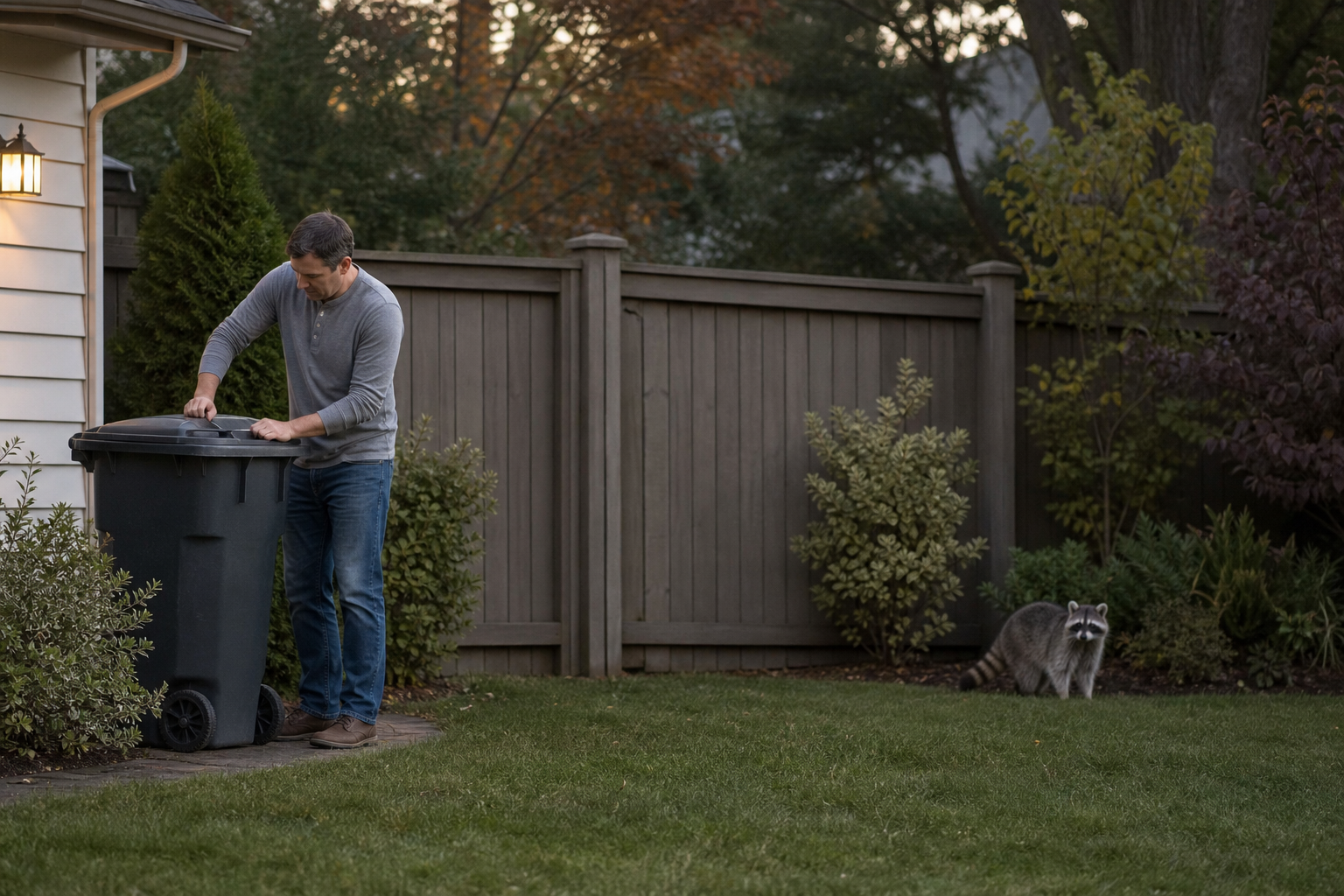
The best way to get rid of raccoons in your yard is to remove food and shelter, then block access once you know no animal is trapped inside. Don’t approach, corner, poison, or relocate a raccoon yourself. Wildlife laws vary, and a den may contain dependent young.
Quick answer: Secure garbage, bring pet food indoors, remove fallen fruit, pause bird feeding, and protect compost. If a raccoon is living under a structure or acting strangely, contact local animal control or a qualified wildlife professional before attempting exclusion.
First, find out why the raccoon is visiting
A raccoon crossing the yard once may simply be passing through. Repeated visits usually point to a reliable meal, water source, or sheltered den.
From indoors or at a safe distance, check for:
- Garbage cans tipped over or lids pulled open
- Pet food or water left outside overnight
- Spilled birdseed beneath feeders
- Fallen fruit, unsecured compost, or garden produce
- Grubs around freshly disturbed soil or sod
- Openings beneath decks, sheds, porches, or crawl spaces
- Access to chimneys, attics, garages, or outbuildings
- Repeated droppings in one location, sometimes called a raccoon latrine
Tracks, noises, and damaged trash can support your suspicion, but one sign alone doesn’t confirm which animal is responsible. A trail camera can help you monitor activity without confronting the visitor.
How to get rid of raccoons in your yard safely
1. Remove outdoor food every evening
Bring pet bowls inside before dusk and clean up spilled food. Keep barbecue grease, food packaging, and household waste out of reach.
If you feed birds, temporarily take feeders down and sweep up seed. Raccoons can climb poles and may return for food scattered underneath.
Harvest ripe produce and pick up fallen fruit daily. Use a sturdy cover on compost, and don’t add exposed meat, fish, dairy, or greasy scraps.
2. Secure garbage and recycling
Use cans with tight, locking lids. If your existing lids lift easily, store the cans in a closed garage or secure enclosure when possible.
Put garbage out on collection morning rather than leaving it overnight. Rinse food residue from recycling according to local collection rules.
3. Remove easy access to shelter
Trim branches that provide a route to the roof, while avoiding dangerous ladder or cutting work. Repair damaged vents and screens, and have a secure chimney cap installed if needed.
Do not seal a hole simply because you haven’t seen an animal that day. Raccoons may rest quietly inside, and mothers can leave young behind while foraging. Closing the opening too early can trap an animal in the building or separate a mother from her young.
A wildlife professional can inspect the space, determine whether it is occupied, and plan exclusion around local rules and the animals’ life stage.
4. Use mild, temporary deterrence
A motion-activated sprinkler may make an open lawn less comfortable without requiring close contact. Keep it aimed away from sidewalks, neighboring property, electrical equipment, and places where it could create a slipping hazard.
Noise, lights, and odors often lose their effect as raccoons become accustomed to them. Treat deterrents as support for food removal and exclusion, not as the main solution.
Don’t use mothballs, household cleaners, ammonia mixtures, homemade pepper sprays, or poison. These can harm people, pets, and other wildlife, and their use may violate pesticide labels or local law. If considering a commercial repellent, use only one labeled for raccoons and the specific outdoor location, and follow the complete current label.
Avoid trapping or relocating a raccoon yourself
Trapping rules differ by state and community. Relocation may be prohibited, can spread disease, and may leave young behind. A trapped raccoon can also bite or scratch when frightened.
Call local animal control, your state wildlife agency, or a qualified wildlife-control professional before setting any trap. Ask how the animal will be handled and how the entry point will be secured afterward. Removing one raccoon without correcting the attraction often leaves the yard open to another.
Treat droppings and unusual behavior cautiously
Raccoon droppings can carry roundworm eggs and other germs. Keep children and pets away from suspected latrine areas, and don’t sweep, vacuum, or stir up dry material. Heavy contamination, droppings in an attic, or waste on porous materials is a good reason to seek professional cleanup guidance.
Seeing a raccoon during daylight does not by itself mean it has rabies. However, avoid any raccoon that is unusually aggressive, disoriented, partly paralyzed, circling, staggering, or unable to move normally. Keep everyone indoors and contact animal control.
If a person is bitten or scratched, or raccoon saliva reaches broken skin, the eyes, nose, or mouth, wash the area promptly with soap and water and contact a healthcare provider or local public-health department immediately. Contact a veterinarian if a pet may have interacted with the animal.
Monitor before closing the case
After removing attractants, watch the area for several nights using observations from indoors or a camera. Check whether garbage remains undisturbed and whether activity around decks, sheds, and rooflines has stopped.
If visits continue, there may be a den, an overlooked food source, or a neighboring attraction. That is the point to request an inspection rather than escalating to risky trapping or improvised chemicals.
