

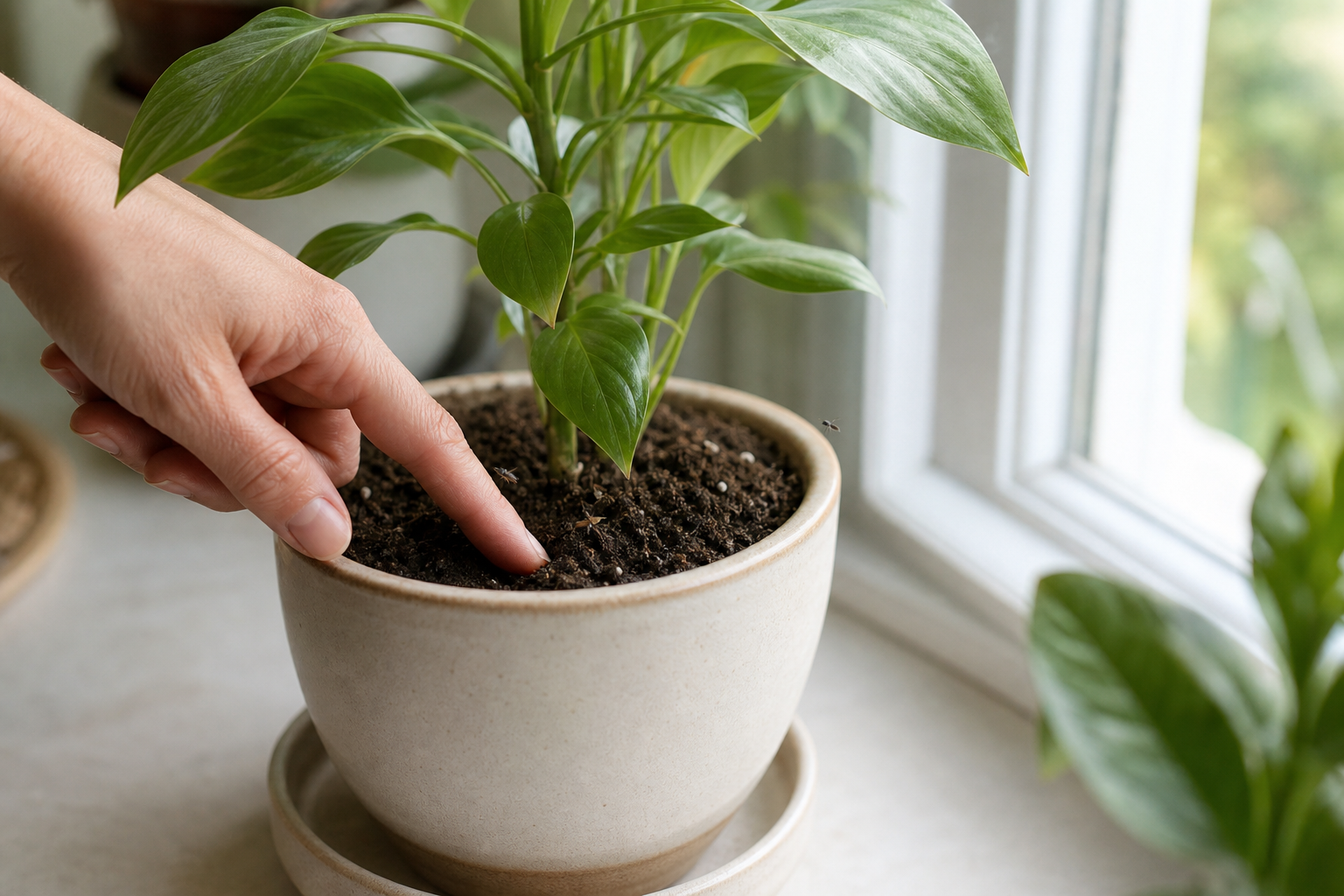
Fungus gnats are small flies commonly associated with damp potting soil. They are usually more annoying than harmful to established houseplants, so begin by adjusting conditions around the soil rather than treating every tiny fly as a plant problem.
Check whether adults gather near pots and whether soil stays wet for long periods. Let the surface dry as much as the plant can tolerate, then monitor whether activity drops.
Confirm that plants are the likely source
Adult fungus gnats are dark, small flies with clear wings. You may see them hovering around a pot, resting near a window, or lifting off when you water. They can be confused with fruit flies and other small indoor flies, so their location matters more than a quick glance.
Look at several pots, not just the nearest one. Pay attention to soil that stays wet, pots without good drainage, and new plants brought home recently. Yellow sticky cards near a pot can help detect adults, but they do not solve soil conditions by themselves.
Adjust watering before adding treatment
Fungus gnats prefer damp potting media. Let the upper surface dry between waterings as far as that plant's care needs allow. Do not let a moisture-loving plant wilt to follow a general rule. Review its light, pot, drainage, and watering needs instead.
Empty standing water from saucers after watering when that suits the plant. If a pot has no drainage or soil stays soggy, consider whether the container, mix, or watering routine needs to change. Persistent wet soil can signal a plant-care issue separate from gnats.
Inspect the pot gently
Clear fallen leaves and old plant material from the soil surface. Inspect for compacted soil, poor drainage, or a smell that suggests roots stay too wet. Aggressively digging into roots can create a bigger plant problem than the flies.
If a plant is struggling and the medium remains wet despite adjusted watering, repotting into a clean container with fresh appropriate medium may be reasonable. Do that because the plant needs it, not automatically because a few adults appeared.
Use traps as a check, not a complete fix
Yellow sticky cards can catch some adults and show whether activity is rising or falling. Place them where children and pets cannot reach them. Fewer flies over time is a good sign, but continue watching soil moisture and nearby pots.
Avoid homemade pesticide mixtures. If you choose a pest-control product, make sure it is labeled for indoor houseplants and fungus gnats, and follow the current label exactly.
When to get more help
If plants are declining, roots appear unhealthy, or flies persist after moisture and sanitation changes, ask a local nursery, extension service, or plant professional to help identify the problem. It may not be fungus gnats, and another issue may be keeping soil too wet.
The next action is simple: identify the pots with persistently damp soil, make one careful care adjustment, and monitor adults for a week or two.
Avoid changing everything at once
It is tempting to repot, fertilize, spray, and change the watering schedule all in one day. That makes it hard to tell what helped and can stress a plant. Start with moisture and cleanup, then reassess. Add only one new intervention at a time when you have a clear reason for it.
Keep new plants apart briefly before placing them among an established collection. That simple observation period can help you notice pests or watering issues before they spread through your routine.
Take a photo of the plant and note its watering date before changing care. That gives you a simple baseline when you reassess soil moisture and adult activity.
