

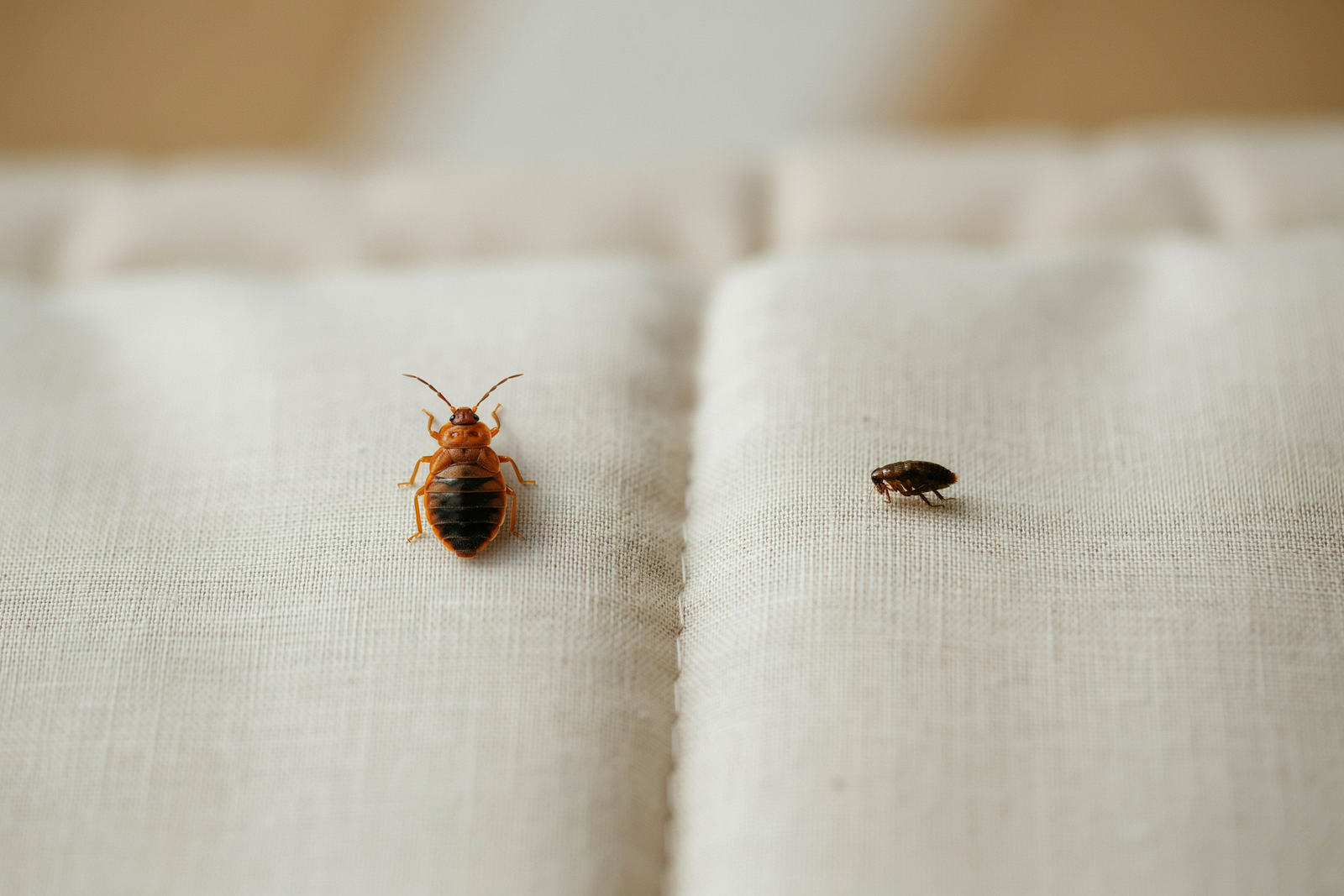
The quickest way to compare bed bugs vs fleas is to inspect the insect and where you found it. Fleas are small, narrow-bodied jumpers often associated with pets. Bed bugs are broader, flat crawlers that hide near sleeping areas. Don’t identify either pest from bites alone. Capture a specimen with clear tape or in a sealed container before starting treatment.
Quick answer: An insect that jumps is more likely to be a flea. A flat, oval insect crawling along a mattress seam or bed frame may be a bed bug. Location and movement are useful clues, but a specimen provides stronger evidence.
Bed Bugs vs Fleas at a Glance
- Bed bugs: Flat, oval, reddish-brown insects about the size of an apple seed when fully grown. They crawl but don’t jump or fly.
- Fleas: Much smaller, dark reddish-brown insects with narrow bodies and powerful back legs. They can jump quickly.
- Typical bed bug location: Mattress seams, box springs, bed frames, upholstered furniture, and cracks near sleeping areas.
- Typical flea location: Pet bedding, rugs, upholstered furniture, floor cracks, and places where animals rest.
- Other bed bug evidence: Shed skins, tiny pale eggs, dark spotting, or live insects.
- Other flea evidence: Live jumping insects, flea dirt in an animal’s coat, or activity around pet resting areas.
These clues can overlap. A small insect beside a bed isn’t automatically a bed bug, especially if a pet regularly sleeps nearby.
Compare the Insects Themselves
A clear specimen is the best place to start. Use a flashlight and avoid crushing the insect if possible.
Bed bug appearance and movement
Adult bed bugs are broad, oval, and visibly flattened from top to bottom. Their bodies become longer and more swollen after feeding. Younger bed bugs are smaller and lighter in color, which can make them harder to recognize.
Bed bugs move by crawling. They cannot jump or fly. If the insect repeatedly springs away when disturbed, it is unlikely to be a bed bug.
Flea appearance and movement
Adult fleas are usually much smaller than adult bed bugs. Their bodies are compressed from side to side, giving them a thin appearance when viewed from above. Their long back legs are adapted for jumping.
Fleas may disappear from view almost instantly when disturbed. That jumping behavior is one of the strongest practical differences between fleas and bed bugs.
Inspect the Places Each Pest Uses
For suspected bed bugs, begin where people sleep or remain still for long periods. Check:
- Mattress piping, seams, labels, and tufts
- The box spring, especially its underside and corners
- Joints, screw holes, and cracks in the bed frame
- Headboards and nearby baseboards
- Seams and folds in upholstered chairs or sofas
- Bedside furniture and items stored under the bed
Look for live insects, pale eggs, shed skins, and groups of dark spots. One mark by itself doesn’t confirm bed bugs.
For suspected fleas, concentrate on animals and the places they spend time. Check:
- Pet bedding and blankets
- Rugs and carpet edges
- Upholstered furniture
- Floor cracks and spaces beneath furniture
- Porches, crawl spaces, or sheltered areas used by animals
A veterinarian can check a pet’s coat and help distinguish flea dirt from ordinary debris. Even homes without pets can develop fleas if rodents, wildlife, or a previous animal host has been present.
Why Bites Cannot Settle the Question
Skin reactions vary widely. Bed bug and flea bites can both appear as itchy red bumps, while some people show little or no visible reaction. The location or arrangement of marks may suggest possibilities, but it cannot identify the insect with certainty.
Seek medical advice for severe swelling, signs of infection, worsening symptoms, or any reaction that concerns you. Breathing difficulty or another severe allergic reaction requires urgent medical help.
What to Do While You Confirm the Pest
Avoid moving bedding, furniture, or loose belongings into other rooms. Moving items can spread bed bugs, while unnecessary pesticide use can expose people and pets without solving the problem.
Instead:
- Capture the insect. Use clear tape or a tightly sealed container.
- Photograph it closely. Include a coin or ruler for scale without opening the container.
- Vacuum visible insects and nearby cracks. Empty the vacuum into a sealed bag and place it in outdoor trash.
- Wash affected bedding when appropriate. Follow fabric-care instructions and dry washable items thoroughly using heat the fabric can safely tolerate.
- Continue inspecting. Record where and when you find insects rather than relying on skin marks.
A local extension office, public-health agency, veterinarian, or licensed pest professional may be able to identify a collected specimen.
Treatment Changes Depending on the Pest
Bed bug control usually requires a coordinated plan. It may include reducing clutter, vacuuming targeted areas, laundering suitable items, using bed-bug-proof mattress and box-spring encasements, and placing monitoring interceptors beneath bed legs. Repeated inspection is important because eggs and hidden insects can survive incomplete treatment.
Flea control must address both the animal host and the home. A veterinarian can recommend an appropriate treatment for each pet. Indoor steps often include frequent vacuuming and washing pet bedding. Flea development stages can remain in carpets and protected spaces, so improvement may take repeated cleaning and monitoring.
Don’t use outdoor, livestock, or dog-only flea products on another animal. Cats can be especially sensitive to ingredients found in some dog treatments. Use only products labeled for the confirmed pest, animal or indoor location, and follow the complete current label.
Avoid total-release foggers as a shortcut. They may not reach the cracks and sheltered areas where these pests develop, and incorrect use can create fire, exposure, and residue hazards.
When Professional Help Makes Sense
Consider a licensed pest professional when you confirm bed bugs, find insects in several rooms, live in connected housing, or continue seeing activity after careful DIY steps. Bed bugs often hide in places homeowners cannot inspect or treat effectively.
Professional help is also sensible when flea activity continues after veterinary care, cleaning, and monitoring, or when rodents or wildlife may be maintaining the problem. Renters should report suspected activity promptly according to their lease and local housing procedures.
Your next step is to capture a specimen and inspect the location where it appeared. Whether it jumps, where it hides, and what other evidence surrounds it will point you toward the right response.
