

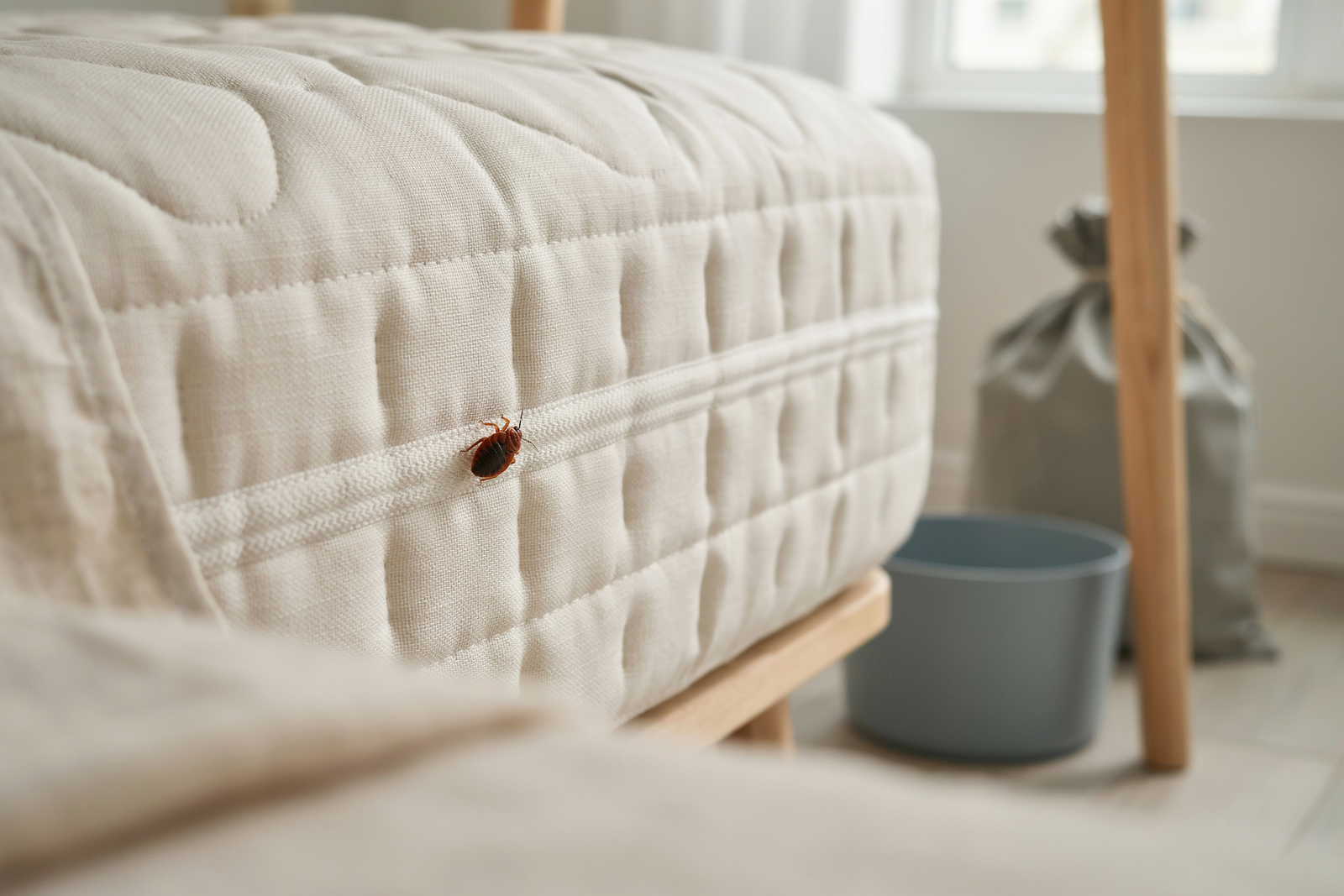
What kills bed bugs reliably is controlled heat, direct steam, certain labeled pesticides, and carefully planned professional treatment. Start by confirming the pest, containing affected belongings, and running dryer-safe items on high heat. Don’t spray randomly or move belongings between rooms, because that can spread the problem.
Quick answer: High dryer heat can kill bed bugs and eggs in clothing and bedding. Steam can kill bugs it reaches directly. Bed bug pesticides may help when the label permits the exact use. No single spray, vacuuming session, or homemade mixture reliably eliminates an established infestation.
First, make sure you have bed bugs
Skin marks alone cannot confirm bed bugs. Reactions vary, and many insects and health conditions can produce similar-looking marks.
Inspect mattress seams, the box spring, the bed frame, headboard joints, and nearby furniture. Useful evidence includes:
- Live, flat, reddish-brown bugs about the size of an apple seed
- Small pale eggs or empty eggshells in protected cracks
- Shed skins
- Dark spotting along seams, joints, or hiding places
- A specimen identified by a qualified pest professional or local extension service
If possible, capture the insect in a sealed container or on clear tape without crushing it. Correct identification prevents unnecessary pesticide use and changes which treatment will work.
What kills bed bugs and their eggs?
Bed bugs hide in narrow cracks, and their eggs are easy to miss. A method may kill every bug it touches while leaving hidden insects alive. Effective control usually combines several methods with follow-up monitoring.
High heat in a clothes dryer
A hot dryer is one of the most useful household tools for treating suitable fabrics. Place dry or washed clothing, bedding, curtains, and other dryer-safe items in the dryer and use the hottest setting the material can tolerate for at least 30 minutes.
Washing alone may not kill every life stage. The dryer’s sustained heat is the important part. Check fabric-care instructions, avoid overloading the drum, and keep treated items in clean sealed bags or containers until the room is under control.
Do not try to heat rooms with space heaters, ovens, fireplaces, or other improvised equipment. These methods create fire and carbon-monoxide risks and may drive bugs deeper into walls without heating every hiding place enough to kill them.
Direct steam
Steam can kill bed bugs and eggs when it contacts them at a lethal temperature. It can be useful along mattress seams, upholstered furniture, baseboards, and cracks that tolerate moisture and heat.
Move the steamer slowly and avoid a forceful airflow that could scatter bugs. Test a hidden area first because steam can damage finishes, electronics, fabrics, and glued materials. Steam only treats the places it reaches, so it must be paired with inspection and monitoring.
Labeled bed bug pesticides
Some pesticides can kill bed bugs, but results depend on the active ingredient, the hiding place, and whether the local population is resistant. A product that kills exposed bugs may have little effect on eggs or insects concealed inside furniture and walls.
Use only a currently registered product whose label specifically lists bed bugs and allows use in that indoor location. Follow the entire label, including placement, protective measures, ventilation, and re-entry instructions. Never apply extra product, combine pesticides, or put a pesticide on mattresses, bedding, clothing, or skin unless the label expressly allows that use.
Desiccant products work by damaging the insect’s protective outer coating, but inhaling their dust can be harmful. Use only a registered pesticide product labeled for bed bug control. Pool-grade or food-grade diatomaceous earth is not a substitute for a labeled bed bug pesticide.
Professional heat treatment
Licensed professionals may use specialized equipment to raise and monitor temperatures throughout a room or structure. This is different from turning up the thermostat or using portable household heaters.
Professional heat can reach many hiding places and kill multiple life stages, but cold spots can allow survival. The treatment may still require preparation, monitoring, and additional targeted control.
Methods that help but rarely solve the problem alone
Several nonchemical tools reduce the number of bugs or make them easier to find:
- Vacuuming: Removes exposed bugs, eggs, and debris. Concentrate on seams and cracks, then immediately seal and discard the vacuum contents as directed for your machine.
- Mattress and box-spring encasements: Trap bugs already inside and remove many hiding places. Choose sturdy, bed bug-resistant encasements and leave them installed rather than opening them to check.
- Bed-leg interceptors: Help detect bugs moving between the floor and bed. Keep the bed slightly away from walls and prevent bedding from touching the floor.
- Clutter reduction: Makes inspection and treatment easier. Don’t carry loose items into unaffected rooms.
- Sealing cracks: Reduces hiding places after inspection and treatment. In apartments, adjoining units may also need evaluation.
These steps support control, but they don’t guarantee that hidden bugs are gone. Continue checking monitors, bed joints, and nearby furniture after treatment.
What does not work reliably?
Bug bombs and total-release foggers
Foggers do not reach many bed bug hiding places and should not be the only control method. Misuse can also cause pesticide exposure, fire, or explosion. Never use more foggers than a label permits or place them in small enclosed spaces contrary to the directions.
Rubbing alcohol, fuels, and homemade sprays
Rubbing alcohol may kill an exposed bug, but it evaporates quickly and does not reach an infestation. It is also highly flammable. Gasoline, kerosene, and other fuels should never be used for pest control.
Bleach, vinegar, essential-oil mixtures, and household cleaners are not dependable whole-infestation treatments. Mixing cleaners or pesticides can release dangerous fumes or create other exposure risks.
Mothballs
Mothballs are pesticides intended for specific uses in tightly sealed storage spaces when the label permits. Scattering them around a bedroom or placing them under furniture is not an appropriate bed bug treatment and can expose people and pets to harmful vapors.
Throwing out the mattress immediately
A mattress can sometimes be treated and protected with an encasement. Replacing it before controlling the room may waste money, and moving an uncovered mattress can spread bugs through the building.
If furniture must be discarded, wrap or contain it before moving it and follow local disposal requirements. Mark or damage it so someone else does not bring it into another home.
A practical bed bug treatment sequence
- Confirm the insect. Save a specimen or request identification if the evidence is uncertain.
- Contain affected fabrics. Move them in sealed bags, not loose baskets.
- Use dryer heat where appropriate. Store treated belongings separately from untreated items.
- Vacuum and inspect carefully. Focus on the bed, nearby furniture, cracks, and edges.
- Install encasements and monitors. These simplify inspection and show whether activity continues.
- Choose only targeted, labeled treatment. Avoid random spraying and homemade mixtures.
- Check again regularly. Finding no bugs for a few days does not prove they are gone.
When to call a bed bug professional
Professional help is a sensible next step when identification remains uncertain, bugs appear in several rooms, repeated DIY work fails, or many hiding places cannot be reached. It is also appropriate when health conditions, pregnancy, asthma, children, or pets make pesticide decisions more complicated.
In apartments and other connected housing, tell the landlord or property manager promptly and follow local reporting rules. Bed bugs can move between units, so treating one room without inspecting nearby areas may not solve the problem.
Ask a licensed pest professional how the insect will be confirmed, which methods will be combined, what preparation is necessary, and how follow-up inspections will determine success. Until then, keep sleeping areas monitored and belongings contained rather than moving to another room.
