

The most effective way to get rid of flies outside is to remove what is feeding or breeding them. Start with trash, pet waste, fallen fruit, food spills, and damp organic buildup. Traps can reduce adult flies, but pesticides and traps alone rarely solve an active breeding source.
Quick answer: Empty and clean waste containers, collect pet waste, remove decaying material, and keep outdoor food covered. Watch where flies gather for several minutes. Their preferred location often leads you to the source.
First, confirm where the flies are gathering
Before treating the whole yard, observe the flies during daylight. Check where they land, whether they return to one spot, and whether you see larvae nearby.
Inspect these common problem areas:
- Under and around trash, recycling, and compost containers
- Beneath loose trash bags or accumulated debris
- Around pet waste, animal bedding, or spilled animal food
- Under grills and outdoor cooking equipment with grease buildup
- Around fallen or overripe fruit
- In damp organic material near an outdoor drain
- Near a damaged sewer line, dead animal, or neglected shared dumpster
A sudden concentration of metallic green or blue flies can point to decaying animal material or waste. Gray house flies commonly develop in manure, garbage, and other moist organic matter. Tiny flies around fermenting fruit or recycling may be fruit flies, while fuzzy, mothlike flies near drains may be drain flies.
These clues narrow the search, but appearance alone may not confirm the species. If the insects bite, resemble wasps, or cannot be identified, don't assume ordinary fly-control steps will work.
How to get rid of flies outside step by step
1. Remove breeding material
Collect pet waste regularly and seal it in the appropriate outdoor container. Pick up fallen produce, spilled food, and decaying plant material. Clean grease and food residue from beneath grills and outdoor tables.
If you find maggots in loose waste, remove the material rather than spraying only the visible larvae. Wear household gloves, seal the waste, and wash your hands afterward.
A dead animal may be hidden under a deck, inside a wall, or in another place you cannot safely reach. Don't enter crawl spaces, climb onto roofs, or handle unknown wildlife to retrieve it.
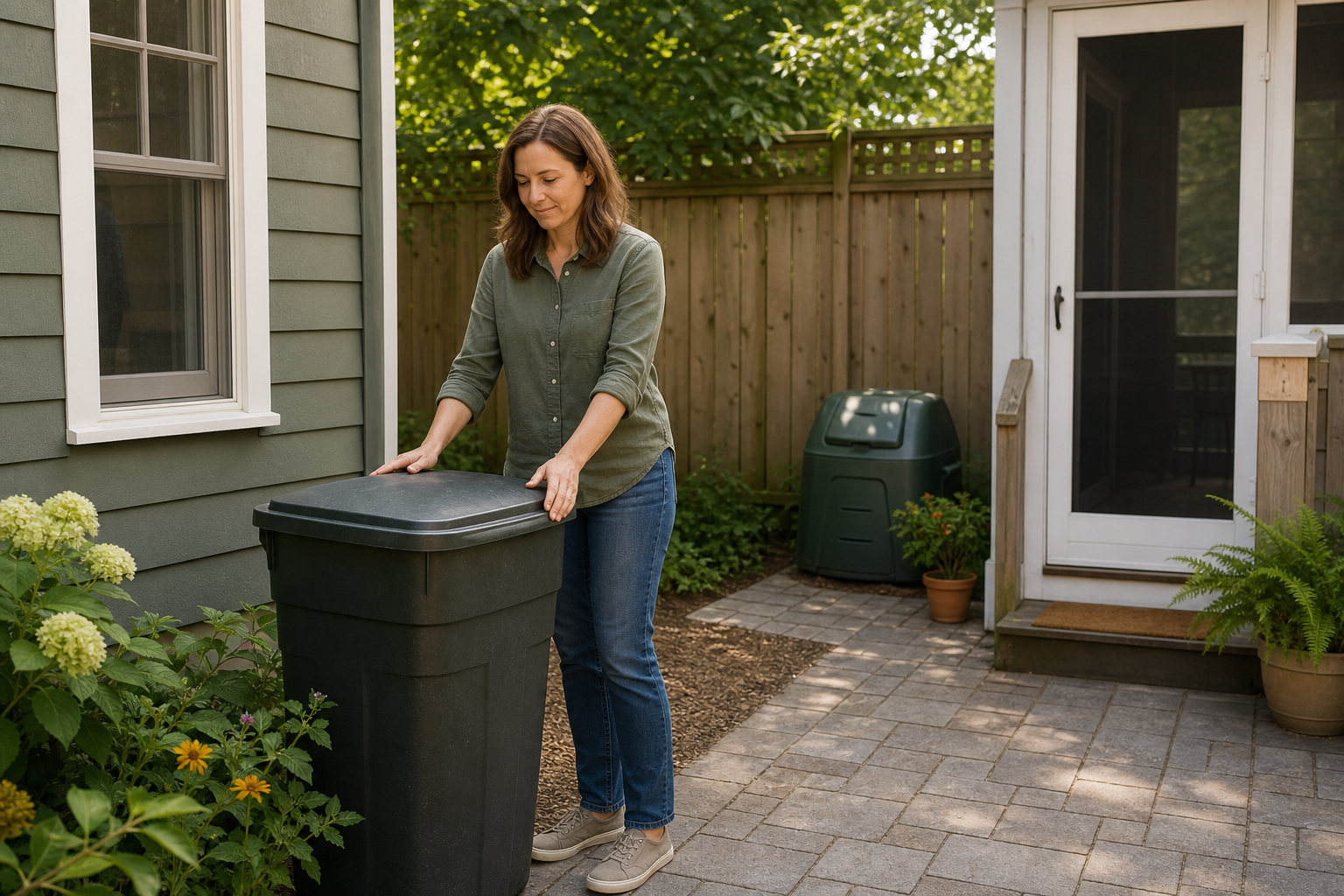
2. Improve trash and recycling storage
Use containers with lids that close completely. Replace cracked bins and avoid letting bags extend under the lid. Rinse food containers before recycling when local recycling instructions allow it.
Clean residue from the inside and outside of bins with detergent. Keep dirty wash water out of storm drains and follow local wastewater rules. Let containers dry before adding new bags.
Move waste containers away from doors, windows, and outdoor seating when practical. This does not eliminate flies, but it keeps the most attractive area farther from people and entry points.
3. Manage compost carefully
Keep food scraps buried beneath dry leaves or other suitable compost material. Avoid adding items prohibited by your local composting program, which may include meat, grease, dairy products, or pet waste.
Turn or manage the pile according to the composting method you use. A pile that remains wet, exposed, and food-rich can support fly development.
4. Clean damp buildup
If flies cluster around an accessible outdoor drain, clean the cover and reachable surfaces. Organic film inside a drain can support some small fly larvae.
Don't pour bleach, pesticide, or homemade chemical mixtures into a drain. Products can react dangerously, damage plumbing, contaminate waterways, or violate local rules. A persistent sewage odor, recurring backup, or inaccessible buildup needs a plumber or other qualified professional.
Keep flies away from the patio
Once the main source is under control, make the sitting area less attractive:
- Cover food and drinks until they are served.
- Clear plates, cans, and spills soon after eating.
- Store pet food indoors between meals.
- Repair door and window screens.
- Keep exterior doors closed or use a properly fitted screen door.
- Clean beneath furniture and cooking equipment, not just visible surfaces.
Flies already developing in nearby material may continue emerging for several days. Improvement should become noticeable as sanitation interrupts the breeding cycle.
Use outdoor fly traps carefully
A fly trap can help monitor activity or reduce some adult flies. It cannot compensate for an overflowing bin, animal waste, or another breeding source.
Some traps use strong-smelling attractants and may draw flies toward their immediate area. Place them away from doors, food-preparation surfaces, seating, play areas, and neighboring property. Follow all placement, maintenance, and disposal directions supplied with the trap.
Avoid indiscriminate bug zappers or broad outdoor spraying. These approaches may kill non-target insects without addressing the material producing the flies.
If you use a pesticide, choose only one whose current label lists the confirmed pest and the exact outdoor location. Follow the complete label, including directions for placement, protective measures, children and pets, food areas, pollinators, storage, and disposal. Never apply more than directed or mix products together.
Monitor before adding more control
Check the problem area at the same time each day for about a week. Look for fewer adult flies, no new larvae, and cleaner waste areas. Continue removing pet waste and food residue even after activity drops.
Get qualified help if large numbers persist after the sources are removed, larvae keep appearing from an unknown location, or you suspect a sewer defect or inaccessible carcass. A landlord or property manager may need to address shared dumpsters, plumbing, or conditions outside a renter's control.
Start by watching the flies for several minutes, then clean the one area receiving the most activity. That focused source removal is usually more useful than treating the entire yard.
