
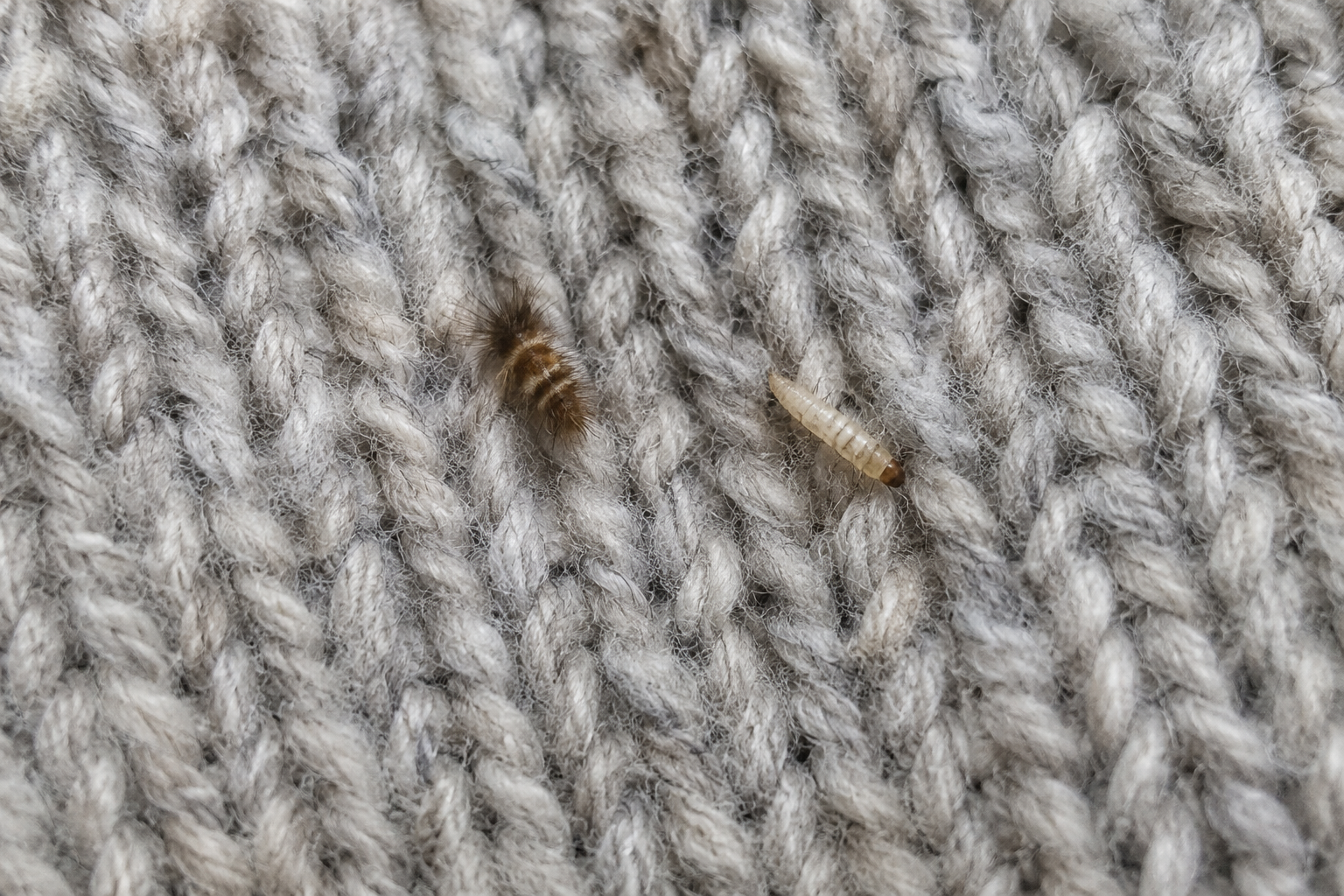
Carpet beetle larvae are usually brown, bristly, and visibly segmented. Clothes moth larvae are typically pale caterpillars with brown heads, often surrounded by silk. Place a suspected specimen in a sealed container for inspection, and don’t spray until you know which pest and source you’re dealing with.
Quick answer: Bristly, brown, carrot-shaped larvae point toward carpet beetles. Smooth, cream-colored larvae with silk webbing or a portable case point toward clothes moths.
Carpet Beetle Larvae vs Clothes Moth Larvae at a Glance
Use several features together rather than relying on damaged fabric alone.
- Carpet beetle larvae: Brown or tan, banded, and covered with obvious hairs or bristles. Many are wider near the head and narrower toward the rear.
- Clothes moth larvae: Cream or off-white with a distinct brown head. Their bodies look relatively smooth, although fine hairs may be visible under magnification.
- Carpet beetle signs: Bristly shed skins, irregular fabric damage, and larvae near lint, pet hair, dead insects, or stored natural materials.
- Clothes moth signs: Silken tubes, webbing, feeding tunnels, or small cases attached to fabric.
- Movement: Carpet beetle larvae often crawl away from light. Clothes moth larvae usually remain close to a food source and may retreat into silk.
Size varies with age and species, so measurements alone rarely settle the identification.
Look for Hairs, Silk, and Body Shape
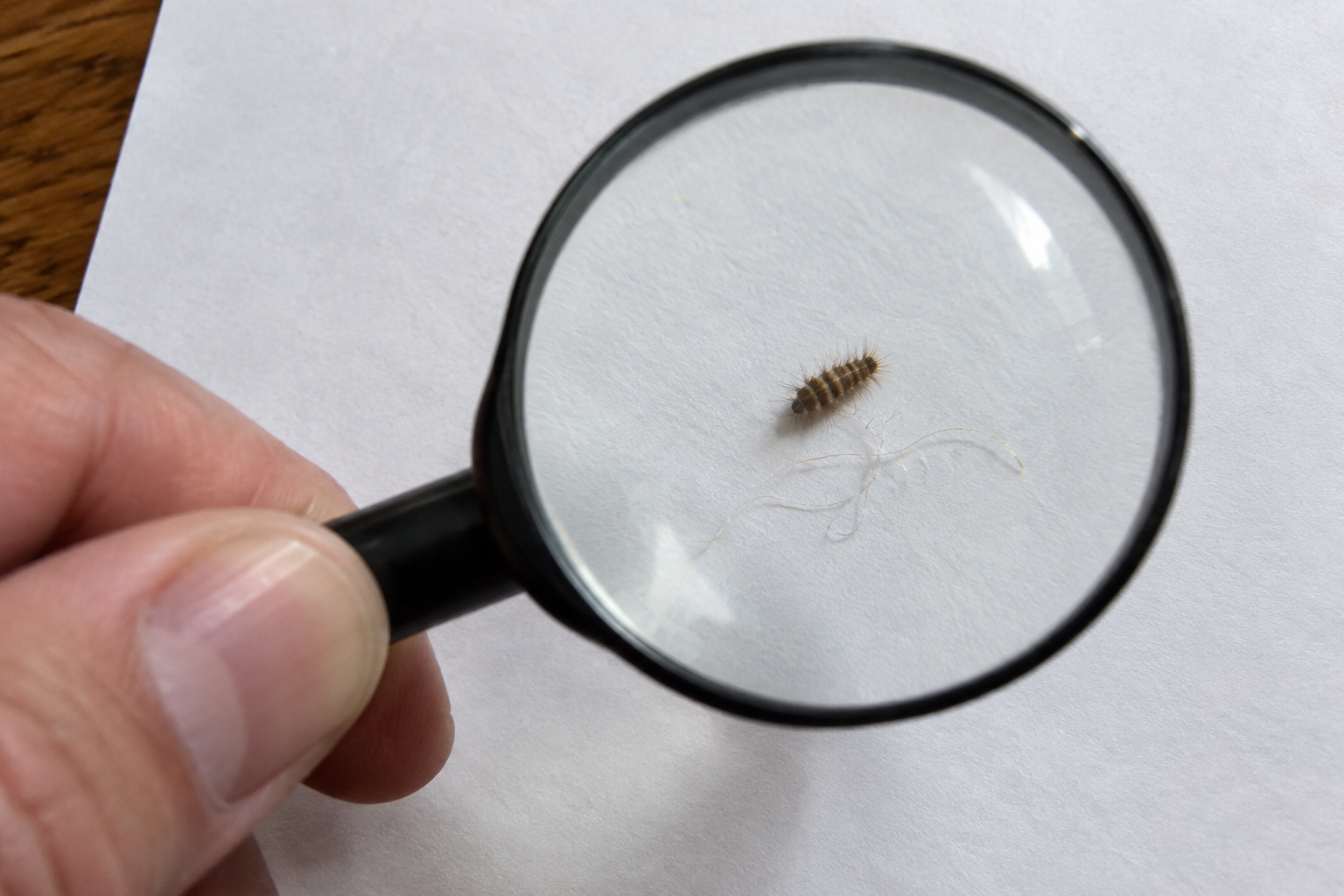
Body covering is usually the clearest difference. Carpet beetle larvae have conspicuous hairs, sometimes with longer tufts at the rear. Their abandoned skins remain hairy and may look like empty, striped shells.
Clothes moth larvae look more like small caterpillars. They have pale bodies, defined heads, and short legs near the front. Their most useful clue is silk rather than body hair.
Two common clothes moth groups leave different silk signs:
- Webbing clothes moth larvae make loose silk tunnels or patches across the material.
- Casemaking clothes moth larvae carry narrow silken cases covered with fibers from the item they’re eating.
Dust, lint, and loose fibers can stick to either insect. Examine a collected specimen under bright light or with a magnifier before deciding.
Compare the Damage and Its Location
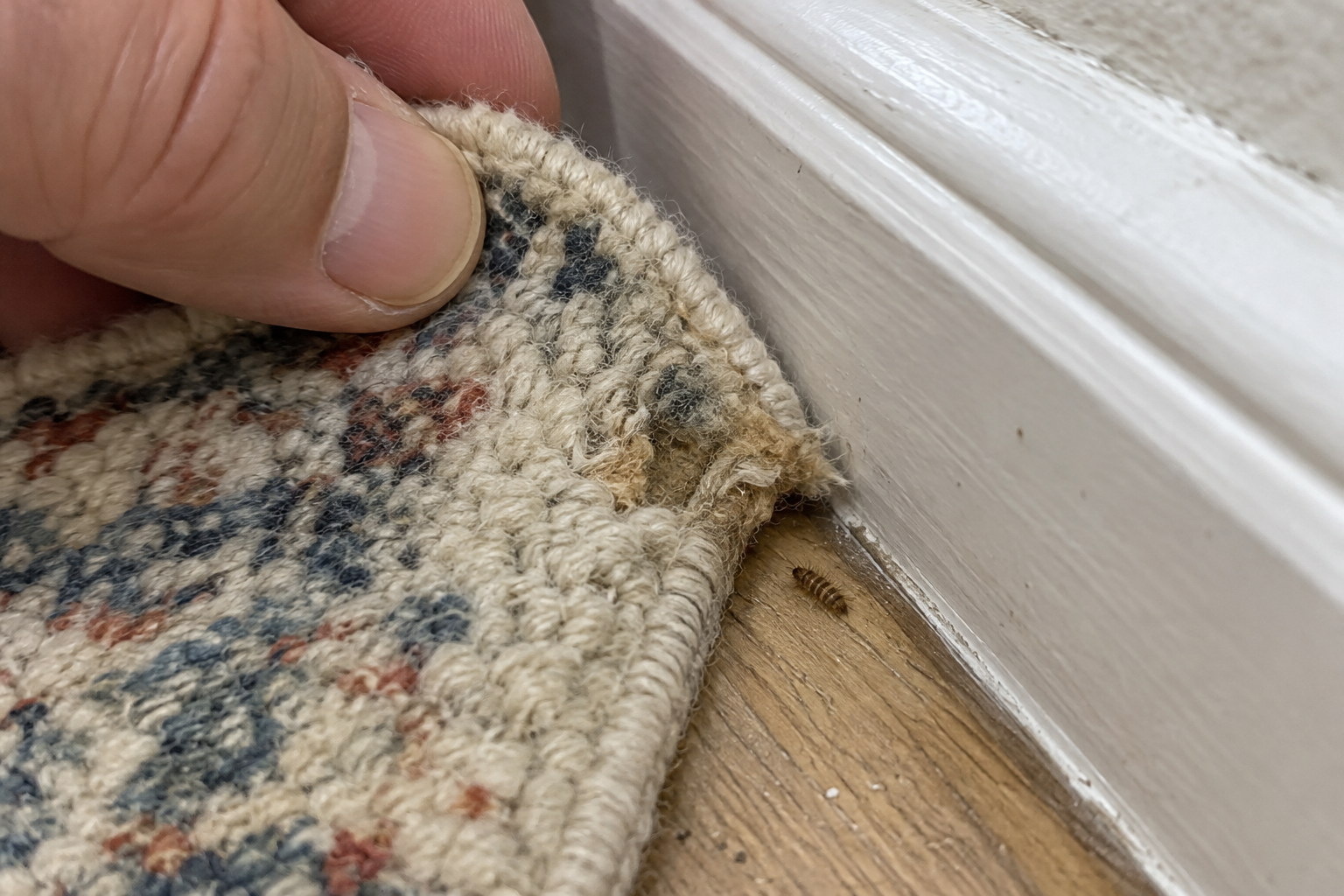
Both pests can damage wool, fur, feathers, felt, silk, and other materials containing animal fibers. Damage alone cannot confirm which one is present.
Carpet beetle damage may appear as scattered holes or worn patches. Larvae also feed where lint, shed hair, feathers, and dead insects collect. Check these places:
- Along baseboards and carpet edges
- Beneath heavy furniture and rugs
- Inside floor vents and closets
- Around stored woolens, taxidermy, or feather-filled items
- Near accumulations of pet hair or insect remains
Clothes moth damage is more likely in dark, quiet storage areas. Look closely at folds, cuffs, collars, rug undersides, and fabric that remained undisturbed for months. Silk, attached fibers, or granular debris around a damaged area strengthens the case for moth larvae.
Damage to cotton or synthetic fabric does not automatically rule either pest out. Blended materials may contain wool, and stains from food, perspiration, or body oils can make otherwise unsuitable fabric more attractive.
Adult Insects Provide Supporting Evidence
Adult carpet beetles are small, rounded beetles. Depending on the species, they may appear mottled, dark brown, or black. Finding several near windows can support a carpet beetle identification because adults are attracted to light.
Adult clothes moths are small, narrow-winged moths that tend to avoid bright, open areas. They are often buff or straw-colored. Unlike many outdoor moths, they commonly run or make short flights when disturbed.
An adult found in another room isn’t proof that it caused the fabric damage. Trace the problem back to larvae, shed skins, silk, or an active feeding site.
What to Do After You Identify the Pest
Start by isolating affected items in sealed bags or containers. This limits movement while you inspect nearby textiles and decide how each item can be cleaned.
For either pest:
- Check the item’s care instructions. Launder, dry-clean, or use another suitable cleaning method that won’t damage it.
- Vacuum the source area carefully. Concentrate on cracks, carpet edges, closet corners, shelf joints, and spaces beneath furniture.
- Remove lint and animal hair. Carpet beetle larvae can persist on small food deposits even after damaged clothing is removed.
- Inspect nearby natural-fiber items. Keep clean items separated until the inspection and cleanup are complete.
- Empty the vacuum promptly. Seal the debris before placing it in an outdoor trash container.
Freezing can be appropriate for some items, but household freezer conditions and exposure times vary. Don’t assume a brief period in a freezer will control every life stage, especially inside a thick or tightly packed object.
Avoid Broad Spraying and Misused Mothballs
Don’t spray clothing, bedding, or storage areas indiscriminately. Pesticides won’t correct an overlooked source, and many products cannot legally or safely be used directly on fabrics.
Mothballs are pesticides intended for specific enclosed-space uses described on their labels. They should not be scattered through open closets, attics, or living spaces. If you use any pesticide, choose one labeled for the confirmed pest and exact location, then follow the complete current label.
Pheromone traps can help monitor certain clothes moths, but they generally attract adult males rather than eliminating larvae. A trap catch should lead to a focused inspection, not replace one.
When Professional Identification Makes Sense
Consider a licensed pest professional when you cannot distinguish the specimens, damage continues after cleaning, or larvae appear across several rooms. Help is also useful when the source may be inside inaccessible vents, wall spaces, old nests, or large rugs and furnishings that cannot be cleaned easily.
Save a specimen, shed skin, or clear close-up photo. Record where each sign appeared and which materials were damaged. That evidence makes identification and targeted treatment more reliable.
After cleanup, inspect vulnerable items and the original source area every few weeks. New larvae, fresh silk, or expanding damage means the source remains active and needs another focused inspection.