
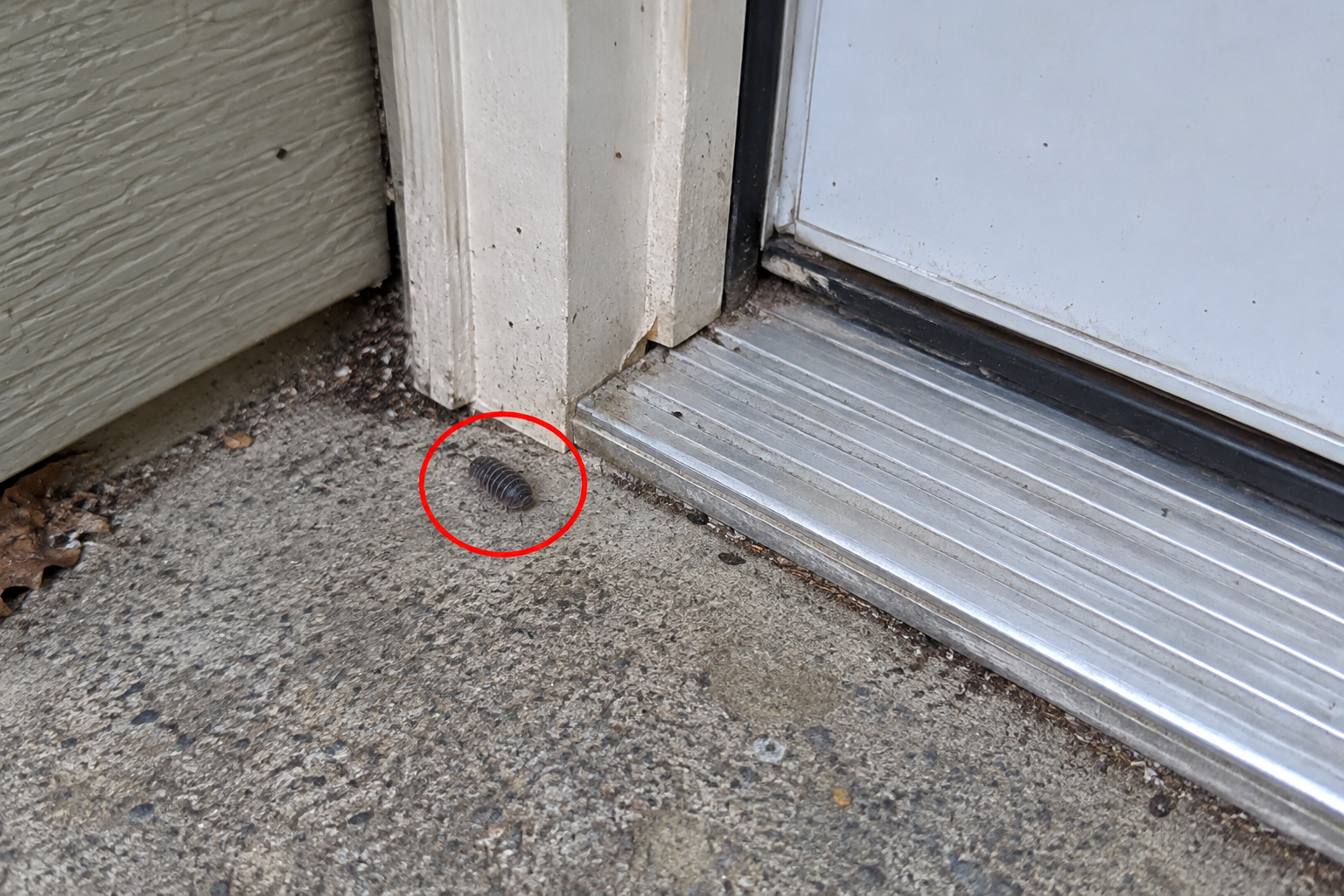
Sowbugs and pillbugs in the house usually point to excess moisture or an easy entry from damp ground outside. Sweep or vacuum up the ones you see, then check for leaks and wet areas rather than spraying the room. Frequent sightings may indicate a moisture problem that needs attention.
Quick answer: Remove visible bugs, dry the affected area, clear damp material away from the foundation, and seal appropriate gaps. Don’t seal drainage openings or wall weep holes.
Are They Sowbugs or Pillbugs?
Sowbugs and pillbugs are small, gray or brown creatures with segmented, armored-looking bodies. They are land-dwelling crustaceans rather than insects, and they need moist conditions to survive.
The easiest distinction is how they respond when disturbed:
- Pillbugs can roll into a tight ball. They are also called roly-polies.
- Sowbugs cannot form a complete ball. Two small tail-like projections may be visible at the rear.
Both have seven pairs of legs as adults. Millipedes, which are sometimes confused with them, have longer bodies and many more visible legs. If the pest has pincers, produces a strong odor, or doesn’t match these features, avoid assuming it is a sowbug or pillbug.
These creatures don’t bite, sting, infest food, or normally damage household materials. Most feed on decaying plant matter outdoors. A few found inside are generally accidental visitors, not evidence of an indoor colony.
Why Sowbugs and Pillbugs Come Inside
Moisture is the main reason sowbugs and pillbugs gather near a home. They normally live under mulch, stones, boards, flowerpots, leaf litter, and other material that holds water.
They may enter through gaps at ground level when outdoor conditions become unusually wet, hot, cold, or dry. Common entry points include:
- Gaps beneath exterior doors
- Cracks along the foundation
- Openings around pipes, cables, and vents
- Poorly fitted basement windows
- Attached garages and damp crawl spaces
Indoors, they often appear in basements, laundry rooms, bathrooms, garages, and near sliding doors. Dry living spaces don’t usually support them for long, so dead pillbugs along a wall can still indicate where they entered.
Repeated sightings in one damp room deserve a closer look. Check for plumbing leaks, condensation, poor drainage, or water entering through the foundation.
What to Do When You Find Them Indoors
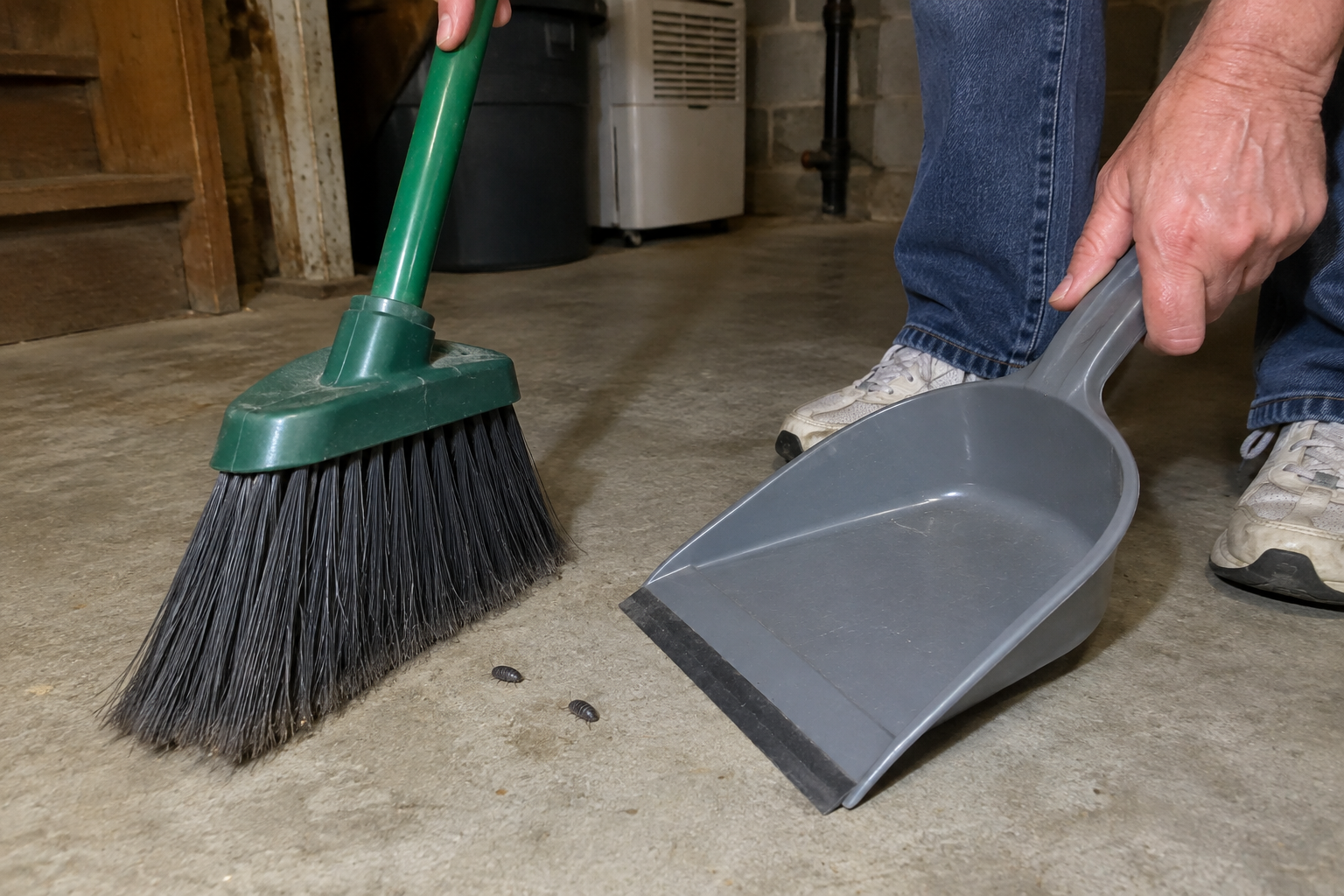
Remove visible sowbugs and pillbugs with a vacuum, broom, or dustpan. Empty the vacuum afterward so captured bugs don’t crawl back out.
Next, inspect the immediate area for moisture. Look beneath sinks and appliances, around floor drains, behind stored boxes, and where pipes enter walls. In basements, check for damp foundation surfaces, condensation, and water staining.
Correct the source instead of only drying the visible floor. Repair leaking plumbing, improve ventilation where practical, and use a dehumidifier according to its instructions if indoor humidity remains high. Renters should document persistent dampness or leaks and report them to the property owner or manager.
Avoid crushing large numbers against walls or carpeting. Simple mechanical removal is cleaner and usually sufficient.
Reduce Damp Shelter Around the Foundation
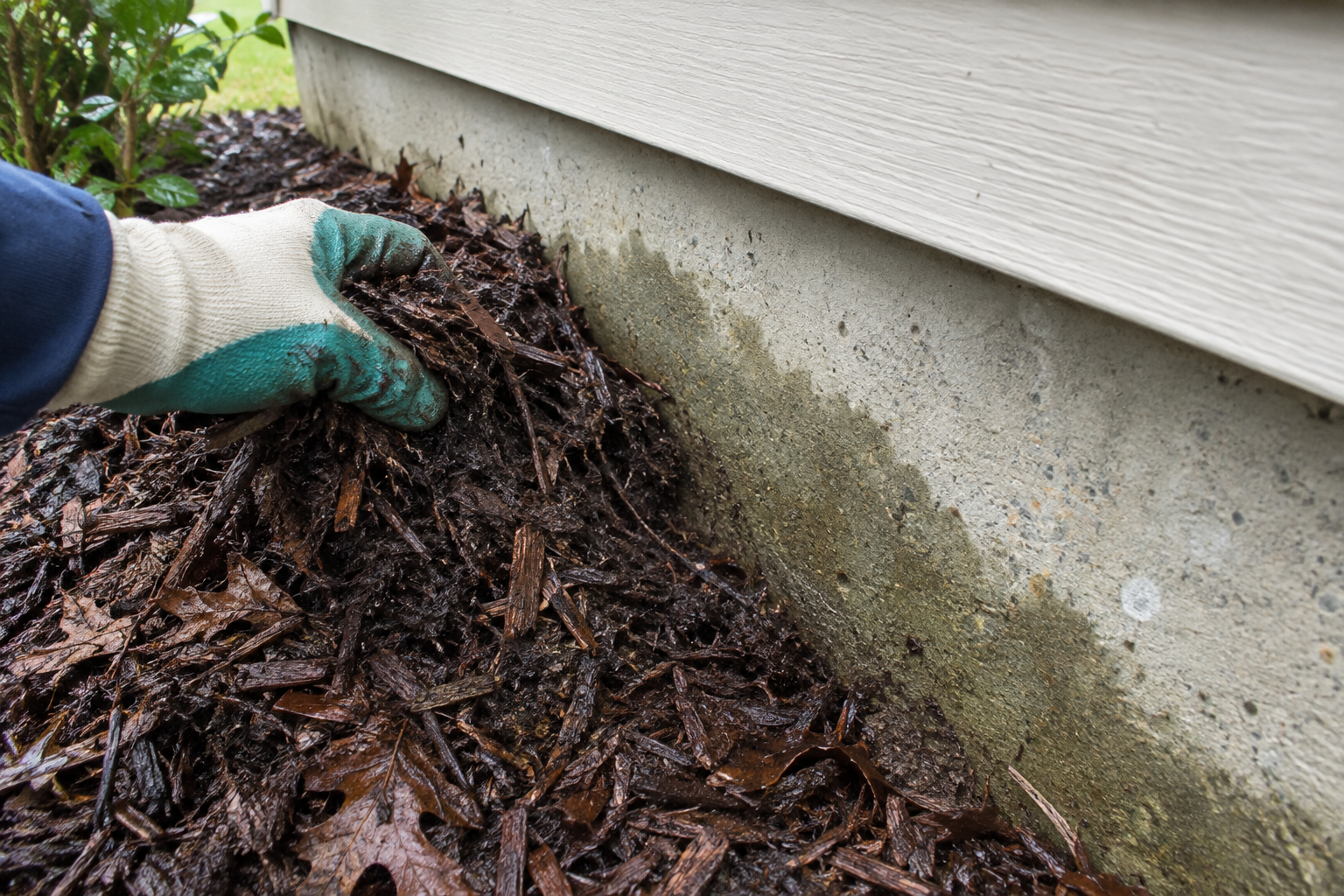
Move moisture-holding material away from the exterior wall where practical. Thick leaf litter, stacked boards, firewood, overturned containers, and dense ground cover can create favorable shelter beside entry points.
Check that gutters and downspouts move water away from the foundation. Address low areas where water collects after rain. Avoid overwatering planting beds next to the house, but don’t remove useful landscaping solely because a few pillbugs are present.
Mulch naturally supports decomposers such as sowbugs and pillbugs. You don’t need to eliminate all mulch, but avoid piling it against siding, door thresholds, or foundation vents.
Seal Entry Points After Addressing Moisture
Exclusion works best after wet conditions have been corrected. Install or replace door sweeps, repair damaged screens, and seal suitable cracks around ground-level doors, windows, pipes, and cables.
Do not block openings designed to drain or ventilate the building. These may include brick weep holes, foundation vents, drainage channels, and certain siding gaps. If you’re unsure why an opening exists, ask a qualified building professional before closing it.
Inspect stored items before bringing them inside from a garage, porch, or garden. Flowerpots, damp cardboard, and items left on soil can carry occasional hitchhikers.
Are Pesticides Necessary?
Indoor pesticides are rarely the best first response to sowbugs or pillbugs. Spraying visible individuals does not correct the moisture and access conditions bringing them inside.
If exclusion and moisture correction fail, proper identification should come before any pesticide use. Use only a product whose current label permits use for the confirmed pest in that specific location. Follow the complete label, especially around children, pets, food areas, and water.
Broad or repeated indoor spraying is unlikely to solve a continuing drainage, leak, or structural access problem.
Monitor for Continued Activity
Track where and when you find new bugs for one to two weeks after making corrections. A declining count suggests that drying and exclusion are working.
Persistent activity can help locate the source. Daily sightings beside one doorway suggest an entry gap, while repeated findings near plumbing may point to hidden moisture.
Consider professional help if large numbers continue appearing, the source is inside an inaccessible crawl space or wall, or you cannot identify the pest confidently. A plumber, drainage contractor, building specialist, or licensed pest professional may be more appropriate depending on what you find.
Start by removing today’s bugs and inspecting the dampest nearby area. Fixing that moisture source is usually the step that makes the lasting difference.