
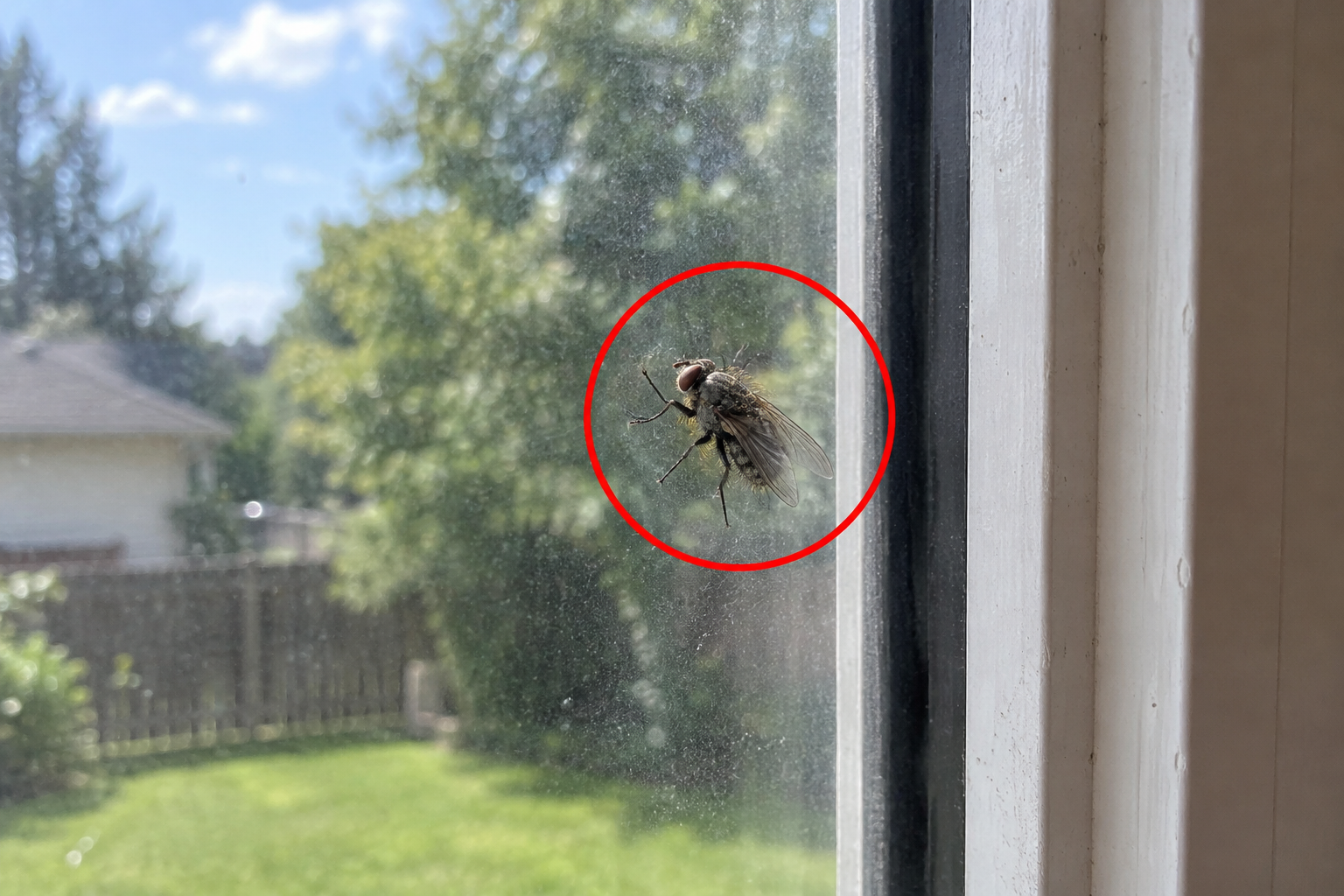
Cluster flies at windows are usually trying to leave a building, not searching for food or a place to reproduce. Vacuum up the visible flies, check that they match cluster-fly traits, and avoid spraying rooms without knowing where the insects came from.
Quick answer: Cluster flies enter wall spaces and attics to spend the winter. Warmth wakes them, and sunlight draws them toward windows. Remove the flies you can see, then seal exterior gaps before their next fall migration.
Why cluster flies gather at windows
Cluster flies spend cold periods in protected parts of buildings, including wall voids, attics, roof spaces, and gaps around windows. They may remain hidden for months after entering in late summer or fall.
Sunlight and indoor warmth can bring them out of those spaces. Once active, they move toward the brightest area, which is often a sunny window. This is why several flies can appear together on glass, curtains, or window trim.
Their appearance doesn’t necessarily mean they recently entered through that window. They may have emerged through gaps around trim, light fixtures, attic hatches, baseboards, or other openings connected to hidden spaces.
Unlike house flies, cluster flies don’t normally reproduce in garbage, drains, or food inside a home. Their immature stages develop outdoors in association with earthworms. Indoors, the adult flies are primarily a nuisance.
Check whether they are cluster flies
Don’t identify a fly by its location alone. Several kinds of flies head toward windows, and a different species may point to a food, moisture, drain, or dead-animal source.
Cluster flies commonly have these features:
- A dull gray body, usually somewhat larger than a typical house fly
- Fine yellowish or golden hairs on the upper body
- Slow, sluggish movement, especially after emerging in cool weather
- A tendency to gather in groups near windows or in upper rooms
- Wings that overlap when the fly is resting
Compare those signs with other common possibilities:
- House flies are generally more active and may be associated with exposed garbage, manure, or other decaying material.
- Blow or bottle flies often have shiny blue, green, or bronze bodies. Repeated indoor activity can indicate decaying organic matter somewhere nearby.
- Drain flies are much smaller, fuzzy, and moth-like. They are usually found around wet drains or other areas with persistent organic buildup.
- Fungus gnats are tiny, dark, delicate flies commonly associated with damp potting soil.
A close, well-lit photograph or intact specimen can help a pest professional or local extension office confirm the identification.
What to do about cluster flies at windows now
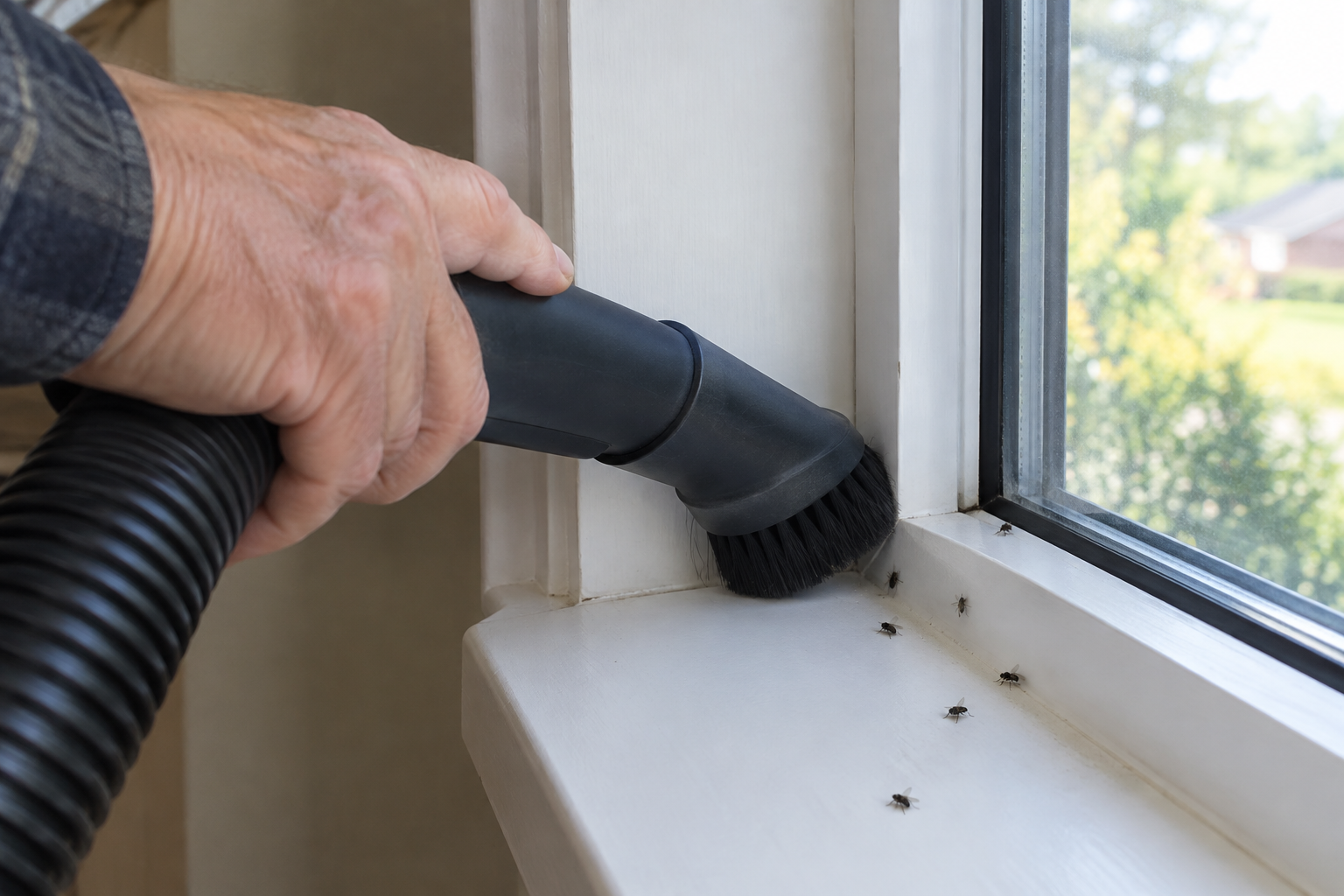
Use a vacuum to collect accessible flies from glass, trim, curtains, walls, and ceilings. A hose attachment lets you remove them without crushing them, which can leave marks on light-colored surfaces.
Empty the vacuum outside soon afterward. If your vacuum uses a removable bag, seal it before disposal. Check behind curtains and along the top edge of window trim for additional flies.
Repair damaged window screens, but remember that screens won’t solve activity coming from inside walls. You can also close gaps around interior window and door trim with an appropriate sealant. This reduces the number of flies reaching occupied rooms while you investigate exterior entry points.
Avoid relying on room foggers or widespread indoor spraying. These treatments may not reach flies sheltering inside walls, and dead insects left in hidden spaces can attract other pests. If you use any pesticide, it must be labeled for the confirmed pest and the specific indoor or exterior location. Follow the complete current label.
Find and seal likely entry points
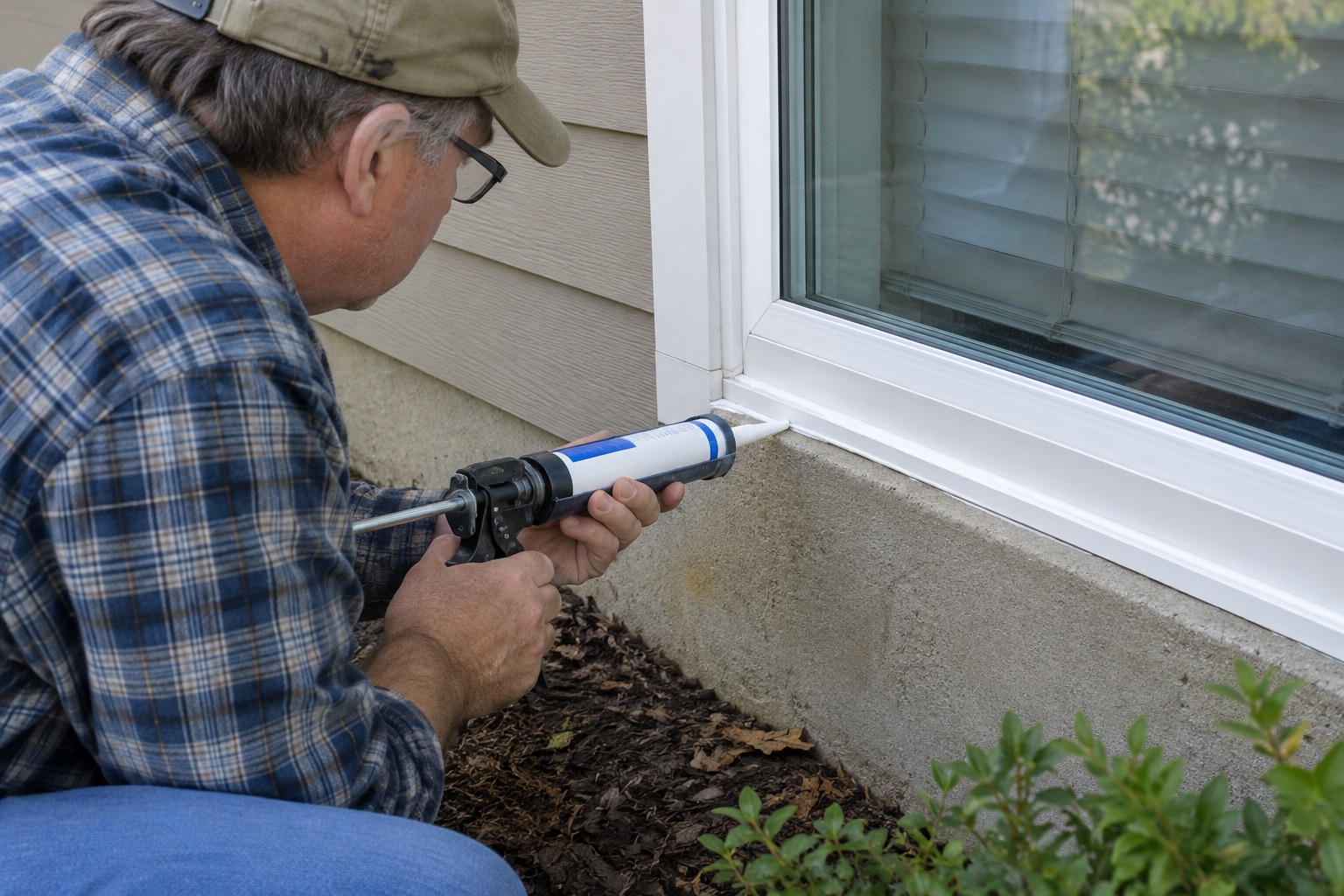
Exterior exclusion is the most useful long-term step. Inspect the upper and sun-warmed sides of the building, because cluster flies often gather on those surfaces before finding shelter.
Look for gaps around:
- Window and door frames
- Soffits, fascia, eaves, and roof edges
- Siding joints and exterior trim
- Attic, roof, and crawl-space vents
- Pipes, cables, and utility lines entering walls
- Loose screens or weatherstripping
- Cracks where different building materials meet
Seal suitable cracks, replace failed weatherstripping, and repair screening with materials intended for that part of the building. Don’t block vents, drainage openings, or other features needed for ventilation and moisture control.
Complete exterior repairs before late summer or early fall when possible. Once flies are already inside hidden spaces, sealing may reduce movement into rooms but won’t remove the insects already sheltering in the structure.
Use safe access methods during inspection. Leave high roofs, unstable ladders, damaged siding, and difficult upper-story openings to a qualified contractor or pest professional.
Monitor for a pattern
Record where and when the flies appear. Cluster-fly activity often peaks on warm, sunny days during fall, winter, or early spring. A few sluggish flies emerging intermittently fits that pattern better than constant fly activity around food or drains.
Recheck sealed areas and window screens after several weeks. If flies continue appearing from one wall, ceiling fixture, or attic opening, that location may lead to a larger hidden resting area.
When professional help makes sense
Consider a licensed pest professional when large numbers return each year, the entry points are high or inaccessible, or you cannot identify the flies confidently. Professional inspection is also useful when shiny bottle flies, persistent odors, or concentrated activity suggest a different source inside a wall, chimney, or roof space.
Renters should document the location, dates, and approximate number of flies and report recurring activity to the landlord or property manager. Building-wide gaps and exterior repairs may not be within a tenant’s control.
For now, remove the visible flies and photograph an intact specimen. Then inspect accessible exterior gaps and plan repairs before the next cool-weather migration.