

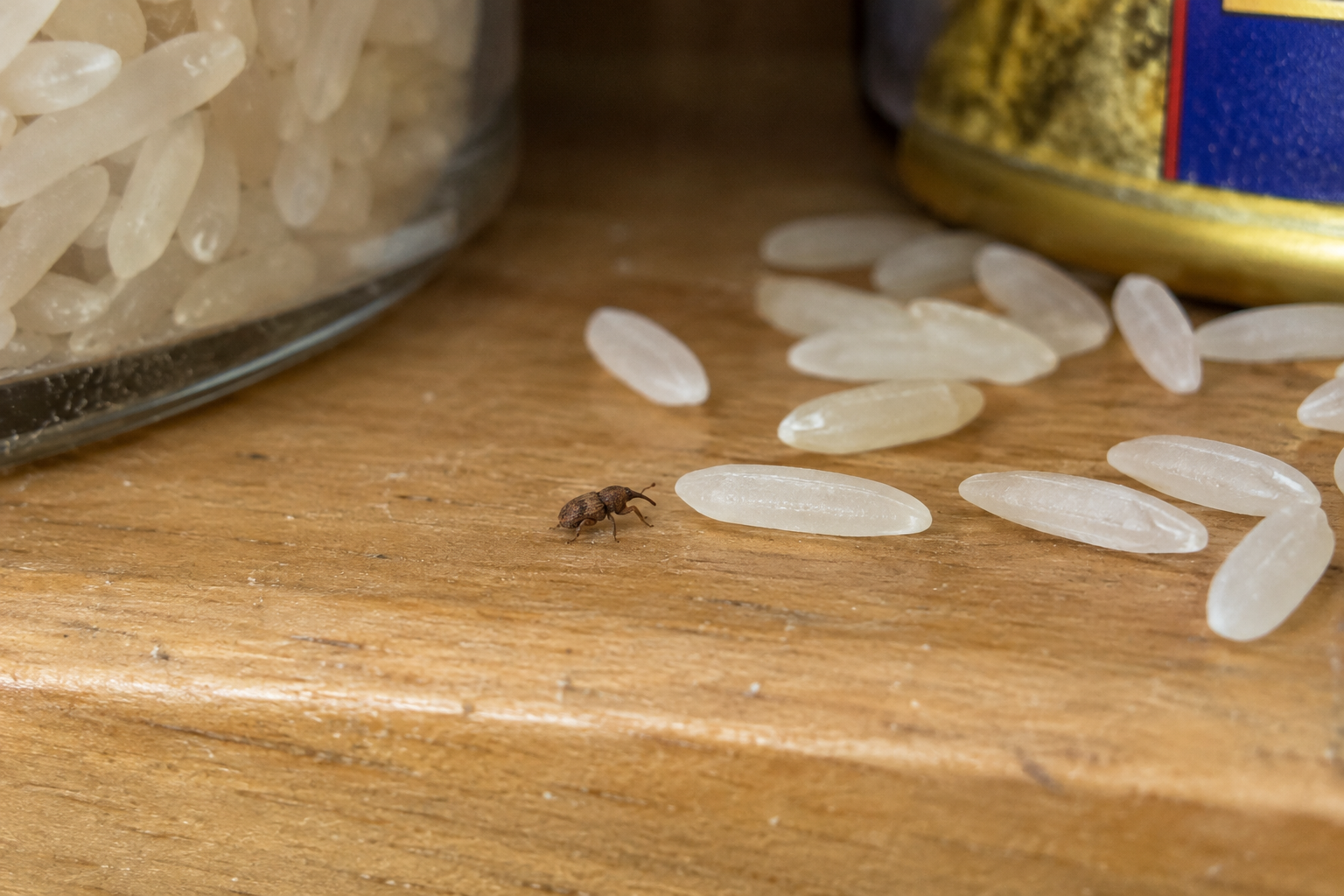
The most effective way to stop pantry beetles and weevils is to find and remove the food containing them. Start by inspecting every dry food package near where you found the insects. Don’t spray shelves or food packages as a first response, especially where pesticide residue could contact food or dishes.
Quick answer: Empty the affected cabinet, inspect every package, discard contaminated food in a sealed bag, vacuum shelf seams, and store clean food in tight-fitting containers. Continue checking for adults because hidden packages may contain the remaining source.
Confirm that the insects are coming from stored food
Finding a small brown beetle in the kitchen doesn’t confirm a pantry pest by itself. Adults can wander away from their food source and appear on walls, counters, ceilings, or windows.
Evidence inside a package is more useful. Look for:
- Live or dead beetles among the food
- Small larvae, shed skins, or powdery debris
- Round exit holes in grains, beans, pasta, or packaging
- Fine dust collecting beneath a package
- Food kernels that appear hollow or damaged
- Insects gathered along package seams and folds
Weevils usually have a noticeable snout and commonly develop inside whole grains or seeds. Other pantry beetles may attack flour, cereal, spices, dried fruit, pasta, nuts, or processed grain products. Because several species look similar, focus first on finding the infested food rather than naming the exact beetle.
Inspect more than the obvious packages
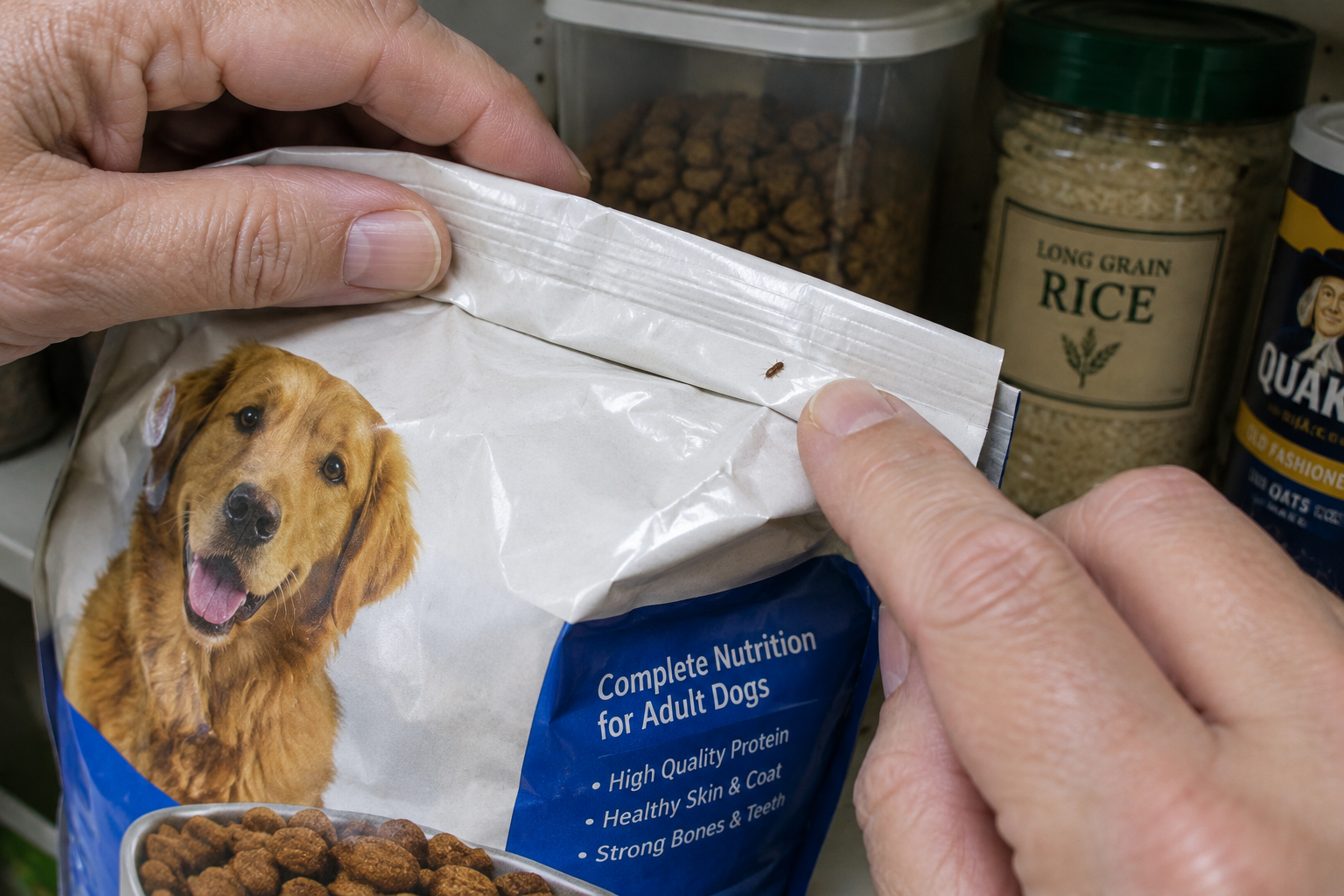
Empty the cabinet completely and examine one item at a time under good light. A package can be infested even when its exterior looks undamaged. Tiny insects may enter through loose seams, while some infestations begin before a product reaches the home.
Check opened and unopened packages, including:
- Flour, rice, oats, cereal, pasta, and baking mixes
- Dried beans, corn, seeds, and nuts
- Spices, tea, chocolate, and powdered foods
- Dried fruit and dried mushrooms
- Pet food, animal treats, and birdseed
- Decorative dried corn, seed crafts, and dried flowers
Pay particular attention to old products pushed behind newer ones. Also inspect shelf-pin holes, drawer corners, spilled food under liners, and the space beneath removable shelves.
If insects appear in several cabinets, expand the search rather than assuming each cabinet has a separate problem. Adults can travel surprisingly far from one forgotten bag of food.
Remove the food source safely
Discard food containing insects, larvae, webbing, exit holes, or unexplained powder. Place it in a sturdy bag, close the bag, and move it out of the living area promptly. This keeps insects from escaping into another cabinet.
You may also choose to discard nearby opened packages that cannot be inspected thoroughly. Thin paper, cardboard, and loosely folded plastic offer less protection than intact glass, metal, or rigid plastic containers.
Don’t rely on picking out visible insects. Eggs and larvae can remain hidden inside individual grains or package seams. Food contaminated by moisture, mold, droppings, or an unidentified substance should not be salvaged.
Clean the cabinet after removing packages
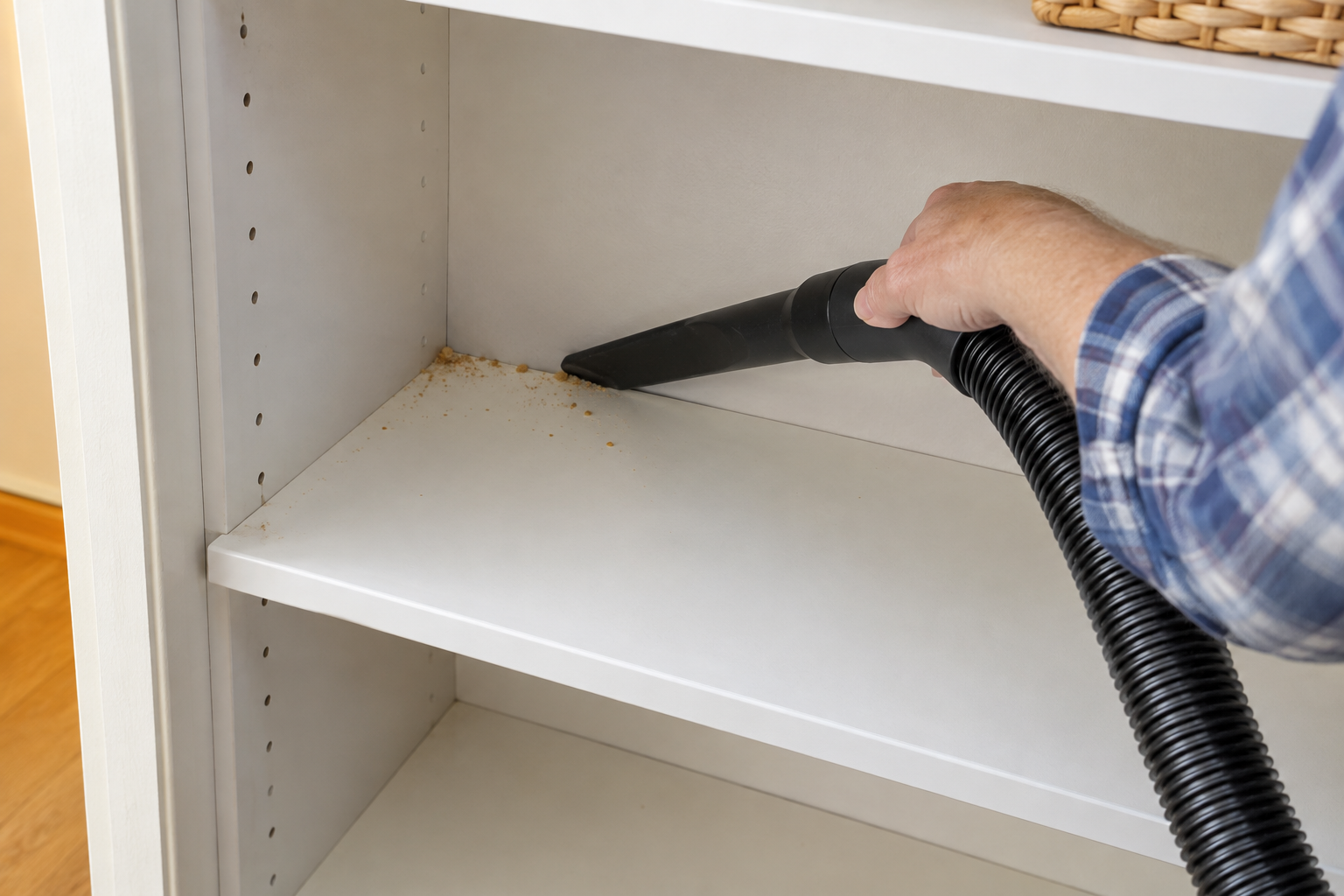
Vacuum loose food and insects from corners, cracks, shelf supports, and the edges where shelves meet walls. Empty the vacuum outdoors afterward, or seal and discard its contents, so captured insects cannot crawl back out indoors.
Wipe shelves with ordinary household cleaner according to its directions. Cleaning removes food dust and makes new activity easier to see, but stronger cleaners won’t solve an infestation hidden inside a package.
Avoid applying insecticide to shelves as a substitute for source removal. If pesticide use is being considered, the pest and application location must appear on the product’s current label. Follow the complete label, including all food-area restrictions. Never apply a product directly to food or food-contact surfaces unless the label specifically allows that use.
Protect food that appears unaffected
Return inspected food in containers with tight-fitting lids. Glass, metal, and sturdy plastic provide better protection than cardboard boxes or thin bags. Labeling containers with the purchase date can also help you use older products first.
Clean spilled flour, cereal, seeds, and pet food promptly. Buy quantities that you can use within a reasonable period, especially for products that tend to remain untouched at the back of a cabinet.
Don’t combine new food with an older batch until you know the older food is clear. Mixing them can spread a hidden problem and make the original source harder to identify.
Monitor for remaining pantry beetles and weevils
Check cabinets weekly for insects, fresh powder, or new package damage. A few adults may appear after cleanup because insects already developing in hidden spaces can finish emerging. Activity should decline when the main food source is gone.
Sticky traps can help show whether adult insects remain, but they don’t remove eggs or larvae inside food. Place any trap only as its directions allow, and keep it away from children, pets, exposed food, and food-contact surfaces.
If activity continues, repeat the package inspection and include less obvious materials such as pet treats, birdseed, spices, and decorative seed items.
When professional help makes sense
Consider a licensed pest professional when beetles keep appearing after repeated source checks, identification remains uncertain, or insects seem to come from wall or ceiling spaces. Help may also be useful in an apartment building, where the source could be in another unit or shared storage area.
Before an inspection, record where and when you see insects. Save a specimen in a sealed container if you can do so without touching it directly. That evidence can help distinguish a stored-food pest from a beetle associated with wood, fabric, fungi, or another source.
For now, isolate suspect packages, remove confirmed contaminated food, and leave the cleaned shelves easy to inspect. A clear cabinet and weekly checks will show whether you found the source or need to widen the search.
