
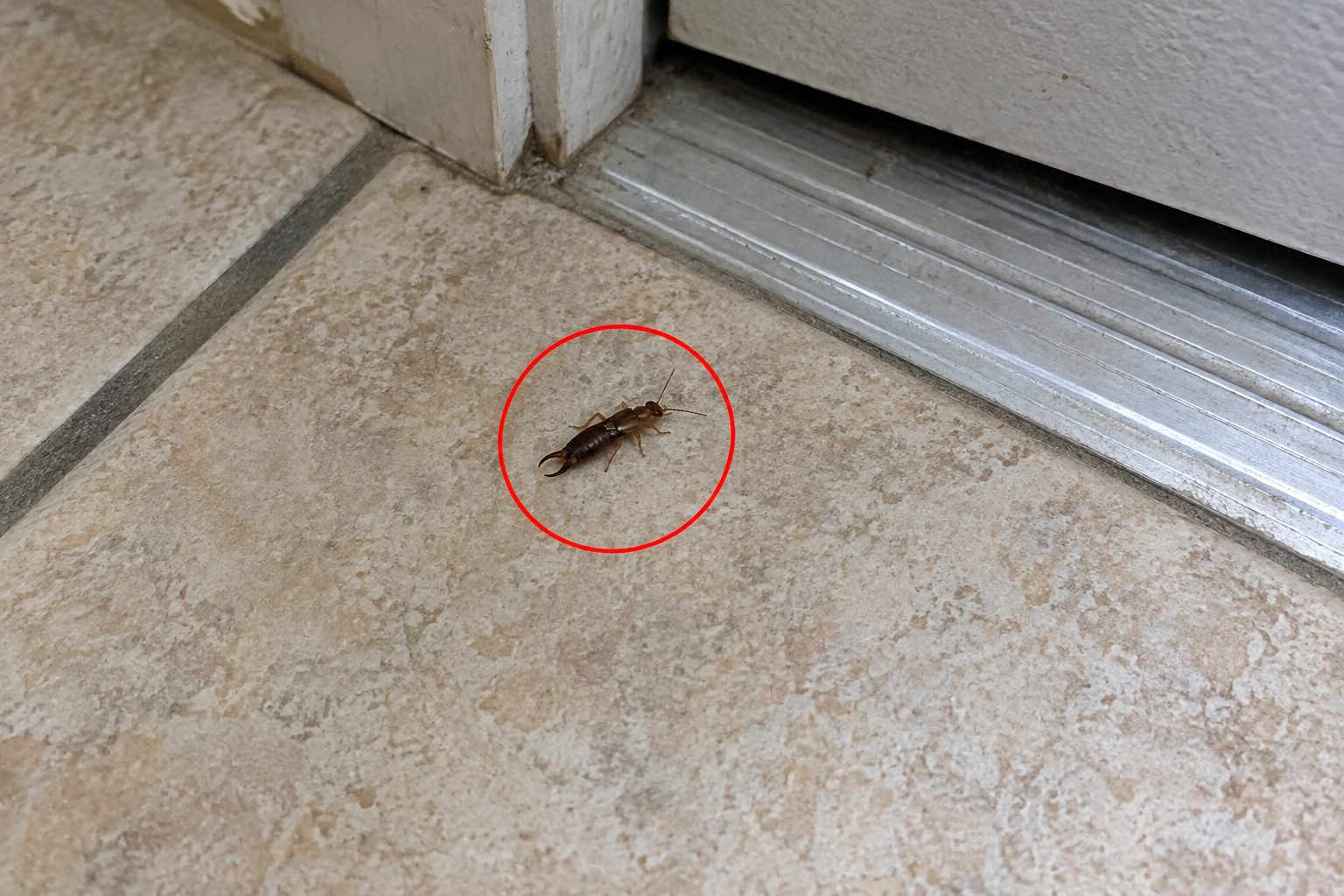
Earwigs in the house usually came from outdoors through a small gap or were carried inside with stored items. Vacuum up the insects you find, then check for damp areas and nearby entry points. One earwig doesn’t usually indicate an indoor infestation, but repeated sightings can signal excess moisture or an opening that needs attention.
Make Sure It Is an Earwig
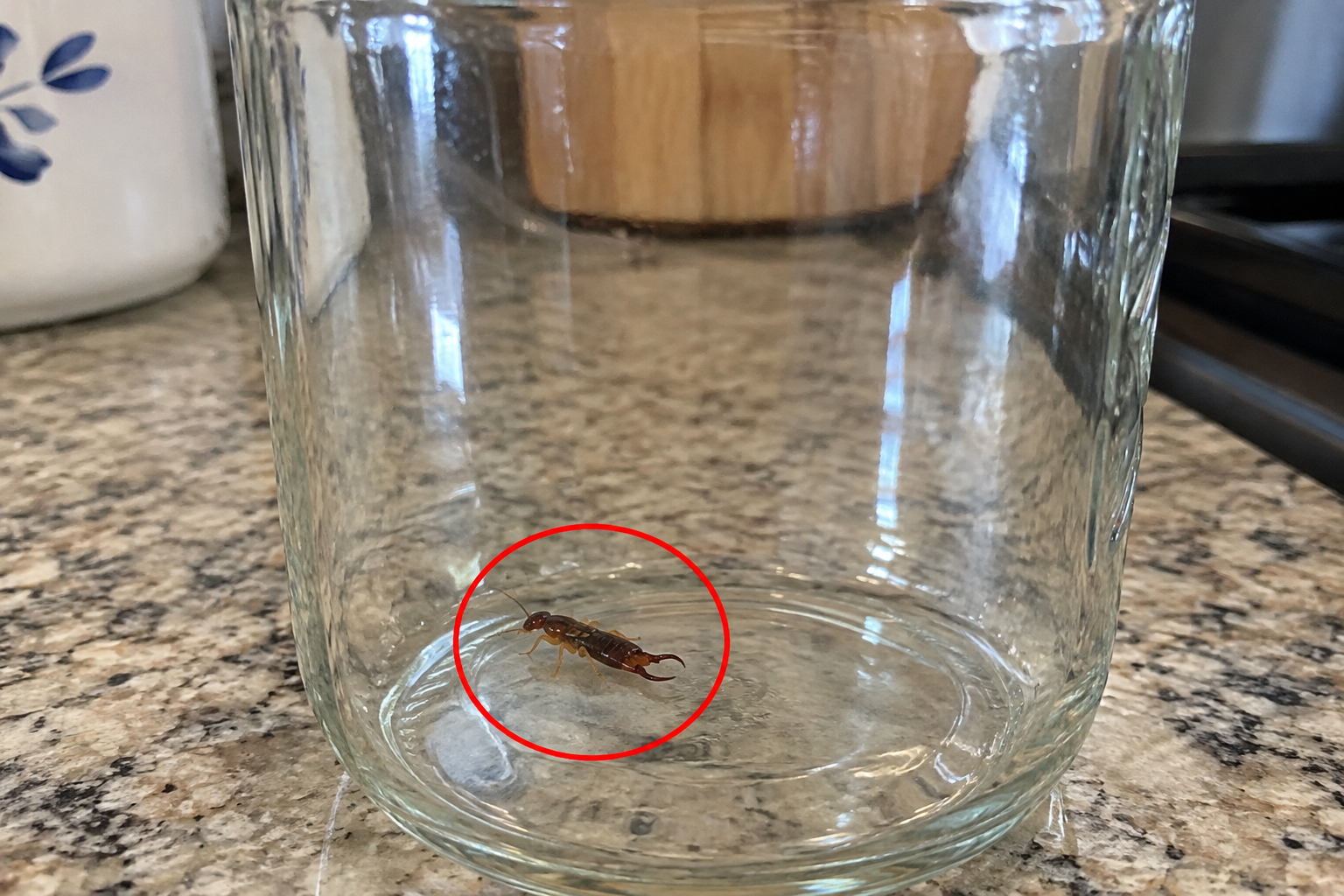
An earwig’s most recognizable feature is the pair of forceps-like appendages at the end of its abdomen. These are often called pincers. The insect also has six legs, long antennae, and a narrow, flattened body that is usually brown or reddish-brown.
Adult earwigs vary by species and age, so color and size alone aren’t reliable. Use several visible features before deciding what you found.
Common look-alikes include:
- Cockroach nymphs: Oval-bodied insects without rear pincers. They may have two short appendages at the rear instead.
- Silverfish: Tapered, silvery insects with three long, thread-like projections at the tail.
- Ground beetles: Hard-bodied insects that may wander indoors but lack an earwig’s obvious pincers.
Earwigs don’t seek out human ears. Their pincers are mainly used for defense and mating. An earwig may pinch when handled or trapped against skin, but it isn’t venomous. Avoid picking one up with bare hands.
Where Earwigs in the House Come From
Most earwigs live outside in cool, protected places with moisture and decaying plant material. They hide during the day and become active at night.
Typical outdoor hiding places include:
- Damp mulch, leaf litter, and ground cover
- Spaces beneath stones, boards, pots, and landscape timbers
- Dense vegetation beside the foundation
- Woodpiles and other materials resting on soil
- Cracks around patios, steps, and foundation edges
Earwigs can enter beneath doors or through gaps around windows, utility lines, vents, and foundation joints. They may also hitchhike indoors in potted plants, cardboard boxes, newspapers, or firewood.
Hot, dry weather can push them toward cooler shelter. Heavy rain and saturated soil can also drive them out of outdoor hiding places. Once inside, they often appear in basements, bathrooms, laundry rooms, kitchens, and other areas where moisture is available.
Most homes are too dry for earwigs to thrive for long. A few wandering insects generally don’t mean they are reproducing inside. Frequent activity in one damp area deserves a closer inspection.
What to Do When You Find One
Remove visible earwigs with a vacuum or capture them in a container and release them away from the building. Empty the vacuum promptly so a live insect cannot crawl back out.
Place sticky monitoring traps along walls in rooms where sightings continue. Keep traps where children and pets cannot touch them. These traps can help show whether earwigs are entering from a particular doorway, basement wall, or plumbing area, but they won’t correct the source.
Avoid spraying baseboards or entire rooms for an occasional earwig. Broad indoor treatment usually adds unnecessary pesticide exposure without fixing moisture or entry gaps.
Check Moisture Before Sealing Gaps
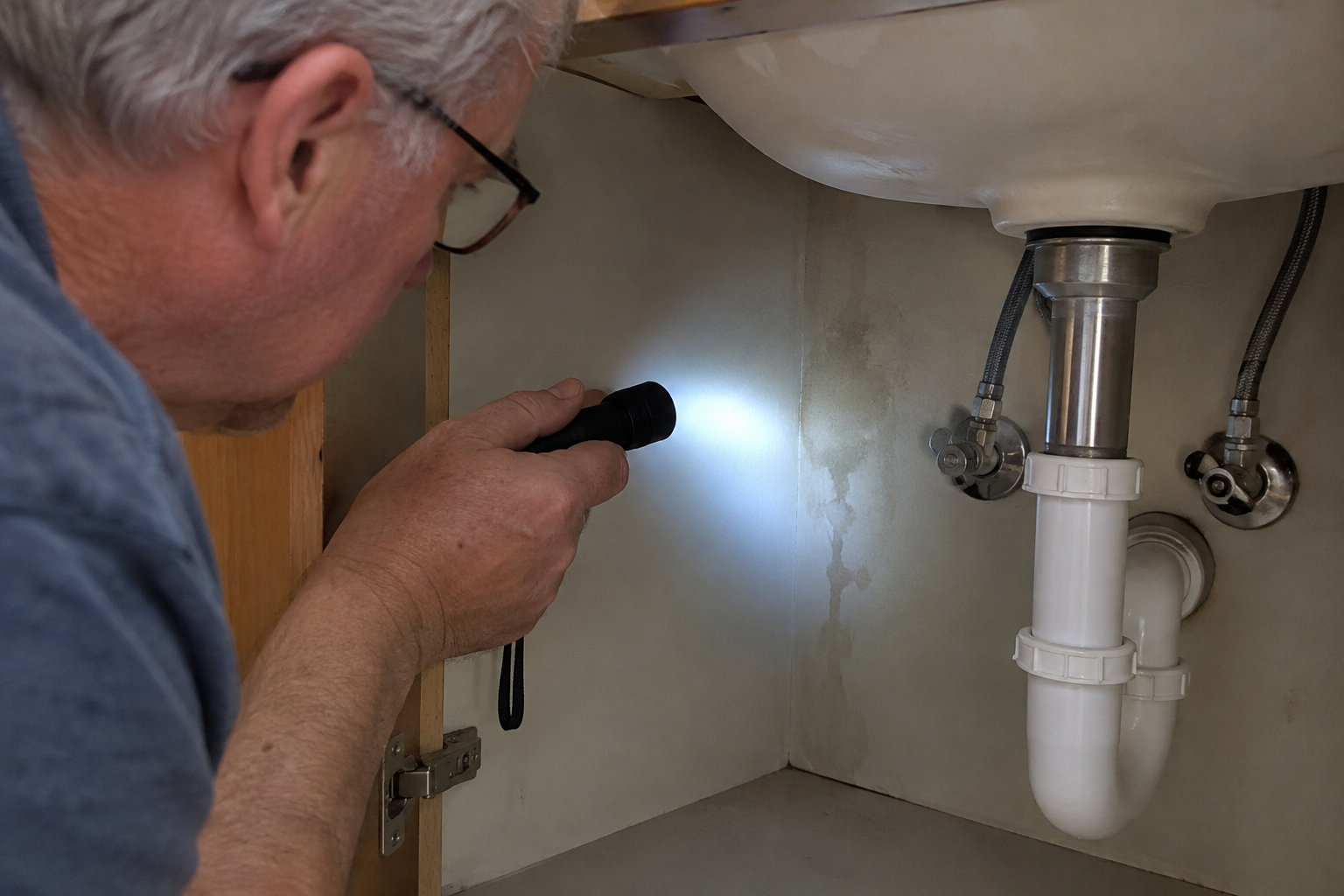
Start your inspection where earwigs appear most often. Look beneath sinks, around toilets, near floor drains, beside washing machines, and where pipes enter walls. Check for dripping plumbing, condensation, wet stored materials, or water entering through a basement wall.
Outside, inspect gutters and downspouts for overflow. Water should move away from the foundation rather than collect beside it. Adjust irrigation so it doesn’t repeatedly soak the wall, doorway, or foundation planting beds.
Allow damp areas to dry and repair leaks when possible. A dehumidifier may help in a persistently humid basement, but it won’t replace repairs for active water intrusion.
How to Keep Earwigs Out
Seal likely entry points after addressing moisture. Focus on practical openings rather than trying to make every surface airtight.
Useful exclusion steps include:
- Replace damaged door sweeps and weatherstripping.
- Repair torn window screens.
- Seal gaps around pipes, cables, window frames, and foundation joints.
- Close cracks where steps, patios, or siding meet the building.
- Keep exterior doors closed when they aren’t in use.
Reduce shelter immediately beside the house. Rake back heavy leaf litter, avoid piling mulch against siding, and trim dense plants that hold moisture against the foundation. Store firewood and spare lumber off the ground and away from exterior walls.
Inspect potted plants, boxes, and firewood before bringing them inside. Shaking or brushing these items outdoors can prevent accidental hitchhikers.
Outdoor lighting can increase insect activity near entrances. When practical, turn off unnecessary lights near doors or position fixtures farther from the building.
When Recurring Earwigs Need More Help
Consider a licensed pest professional if earwigs continue appearing after moisture correction and exclusion, if large numbers emerge from places you cannot inspect, or if water damage may be involved. A professional can confirm the insect, locate overlooked entry routes, and determine whether targeted treatment is justified.
If you choose a pesticide, use only a product labeled for earwigs and for the exact indoor or outdoor location involved. Follow the complete current label, including placement and precautions. Don’t apply garden products indoors or assume that more product will work better.
Renters should document recurring sightings, leaks, and damaged door seals, then notify the property manager according to the lease and local requirements. Coordinated repairs may be necessary when insects move through shared walls or common areas.
After making corrections, monitor the affected rooms for one to two weeks. A clear decline suggests the insects were occasional outdoor invaders. Continued sightings point to an unresolved moisture source, entry gap, or sheltered area that needs another inspection.